
USP <797>: What It Means for Pharmacy Safety and Sterile Compounding
When pharmacies mix sterile medications like IV bags or injections, they’re following a strict set of rules called USP <797>, a set of standards developed by the United States Pharmacopeia to ensure sterile compounding is safe and contamination-free. Also known as USP Chapter <797>, it’s not a suggestion—it’s a legal requirement for any pharmacy that prepares injectables, chemotherapy, or IV nutrition.
USP <797> governs everything from the air quality in the compounding room to how pharmacists wash their hands and what type of gloves they wear. It defines clean rooms, laminar airflow workstations, and how often surfaces must be cleaned. It also requires staff training, environmental testing, and documentation of every step. Why? Because one contaminated IV bag can kill a patient. The standards were tightened after outbreaks linked to unsterile compounding—like the 2012 fungal meningitis outbreak that killed 64 people and sickened over 750. That tragedy forced every pharmacy in the U.S. to take USP <797> seriously.
USP <797> doesn’t just apply to hospitals. It covers retail pharmacies that compound injectables, hospice providers, and even clinics that prepare steroids or pain meds. It’s tied to other key concepts like sterile compounding, the process of preparing medications without introducing microbes, and pharmacy safety, the system of checks and procedures designed to prevent medication errors. These aren’t abstract ideas—they’re daily practices that prevent infections, overdoses, and deaths. If a pharmacy skips hand hygiene or uses expired solutions, they’re breaking USP <797>. And if they’re caught, they can lose their license.
What you’ll find in the posts below are real stories and practical guides tied to this standard. You’ll see how double-checking medication strength stops errors before they happen, how pharmacists use secure messaging to clarify compounding protocols, and how lab monitoring calendars help catch side effects from improperly prepared drugs. You’ll also read about how herbal supplements and common OTC meds can interfere with sterile preparations if not handled correctly. These aren’t random articles—they’re all connected to the same goal: making sure every injection, every IV, every compound is safe. Because when it comes to sterile meds, there’s no room for guesswork.
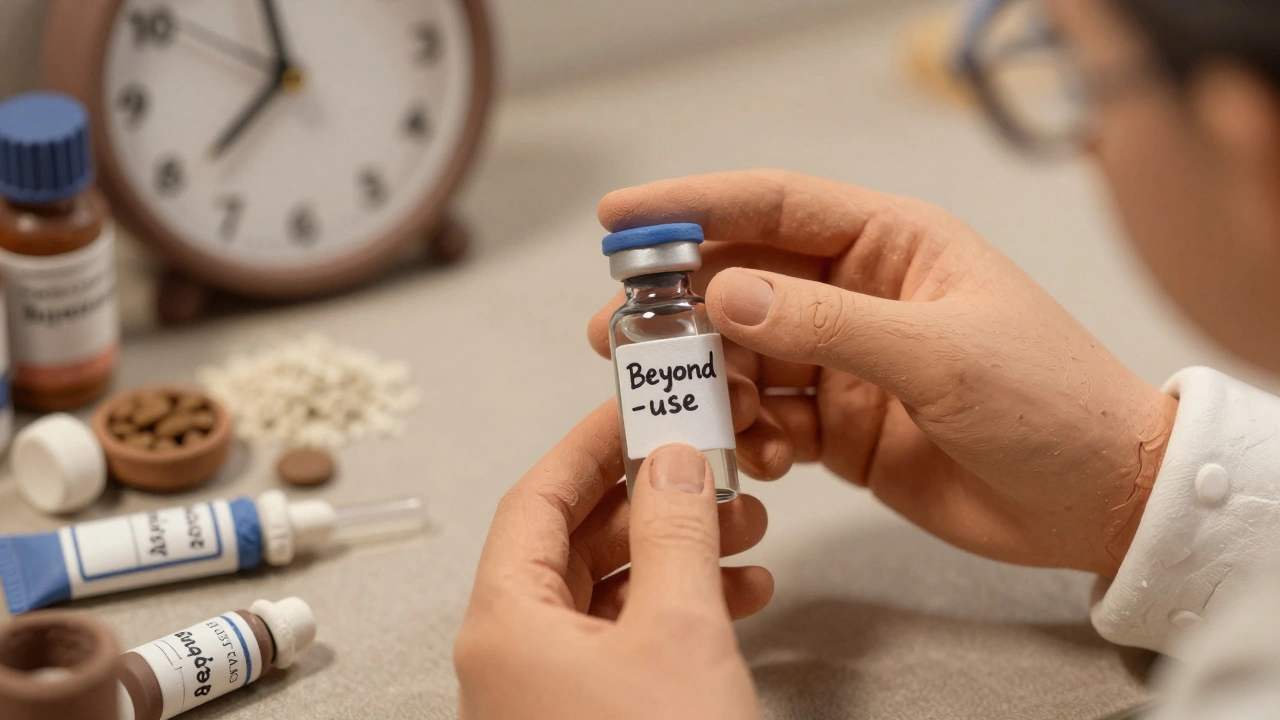
How to Interpret Beyond-Use Dates for Compounded Medications
Beyond-use dates for compounded medications aren't just labels-they're critical safety deadlines. Learn how they're set, why they differ from expiration dates, and how to protect yourself from unsafe meds.