
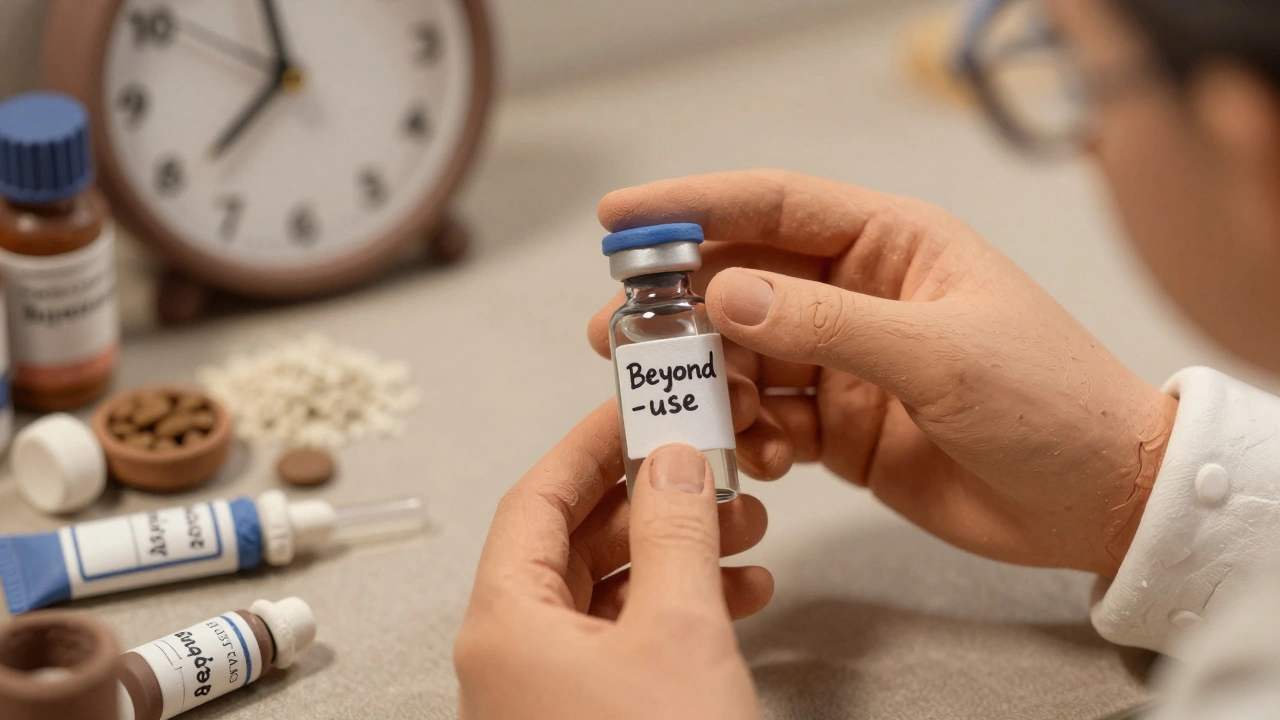
When you pick up a compounded medication from your pharmacy, it doesn’t come with a shiny FDA expiration date like the pills you get from a big drugmaker. Instead, it has a beyond-use date - a label that says, "Don’t use this after this day." But what does that really mean? And why does it matter so much?
Unlike mass-produced drugs that go through years of stability testing before hitting shelves, compounded medications are made one at a time, often to fit a patient’s exact needs - maybe they’re allergic to a dye, need a liquid form because they can’t swallow pills, or require a dose that doesn’t exist commercially. Because these aren’t standardized products, they don’t get the same safety guarantees. That’s where the beyond-use date (BUD) comes in. It’s not just a suggestion. It’s a hard deadline set to protect you from degraded medicine, contamination, or worse - toxic breakdown products.
What Exactly Is a Beyond-Use Date?
A beyond-use date is the last day a compounded medication is considered safe and effective to use. It’s calculated from the day the medication was made, not the day you picked it up. For example, if your pharmacist mixes your hormone cream on Tuesday and assigns a BUD of 30 days, you must stop using it by the end of the 30th day - even if you haven’t finished the tube.
This isn’t arbitrary. It’s based on science. The U.S. Pharmacopeia (USP) Chapter <797> sets the rules for how pharmacists determine these dates. They must consider things like: What’s in the formula? Is it water-based? What kind of container is it in? Will it be stored in the fridge or on the counter? All of these factors affect how quickly the active ingredient breaks down or how likely bacteria are to grow.
Think of it like a homemade soup. You can leave it on the counter for a few hours, but if you don’t refrigerate it, it’ll spoil. Now imagine that soup is a medicine you’re giving to a child with cancer or an elderly person on IV therapy. One mistake in the BUD can mean the difference between healing and hospitalization.
Why BUDs Are Different From Expiration Dates
Here’s the key difference: expiration dates are backed by years of lab testing. The manufacturer tests the exact same formula, in the exact same bottle, under real-world conditions - heat, light, humidity - for months or even years. They track how the drug breaks down over time. That’s why a bottle of amoxicillin might have an expiration date of two years.
Compounded medications? No such luxury. There’s no big company running stability studies on your custom thyroid cream or your child’s peanut-free allergy shot. So pharmacists have to estimate the BUD using one of four methods: checking the manufacturer’s data on the raw ingredients, looking up published studies, consulting trusted compounding references, or - ideally - running their own tests.
But here’s the problem: most pharmacies don’t run tests. A 2022 survey found only 37% of compounding pharmacies use properly validated methods to measure how the drug degrades. That means a lot of BUDs are based on guesswork. And guesswork can be dangerous. A 2021 FDA recall pulled over 1,200 compounded sterile products because they were being used past their safe window - leading to infections in patients.
How Pharmacists Actually Assign BUDs
There’s a real process behind it - even if not everyone follows it perfectly. The American Society of Health-System Pharmacists (ASHP) recommends five steps:
- Identify every ingredient and its concentration in the formula.
- Determine the risk level: low, medium, or high. Water-based injectables are high-risk. Creams and oral liquids are usually medium. Dry powders are low.
- Check the original manufacturer’s stability data for each active ingredient.
- Look up published studies on that exact combination - not just similar ones.
- Apply professional judgment, within USP limits.
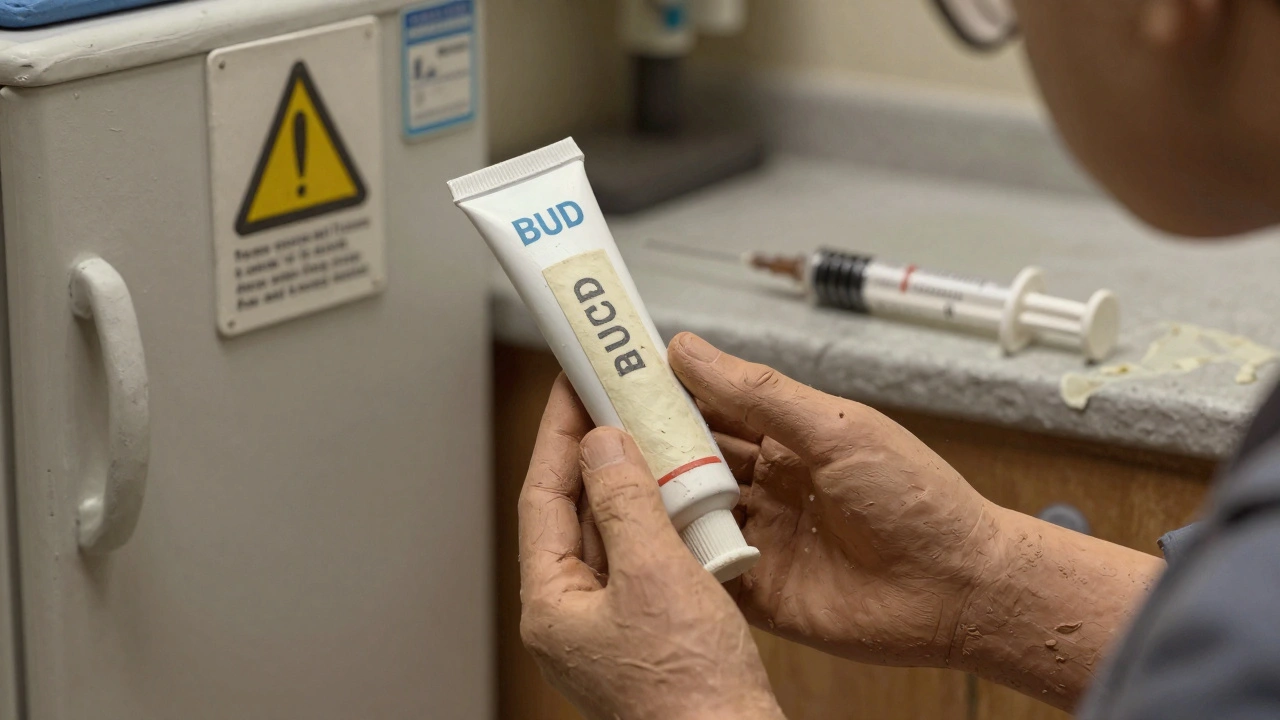
For example, a low-risk compounded cream stored in a sealed tube at room temperature might get a BUD of 180 days. But if that same cream is made with water and stored in a syringe? That’s a high-risk scenario. The BUD drops to 24 hours - even if the manufacturer says the ingredient lasts a year.
Why? Because syringes aren’t designed for storage. They’re meant for immediate use. Plastic can leach chemicals. Air can get in. Bacteria can grow. And that’s exactly what happened in a 2022 case where a pharmacy assigned a 30-day BUD to insulin in a syringe - based on vial data. The insulin degraded. Patients got sick.
The Hidden Risks: Containers, pH, and Excipients
It’s not just the drug itself. The whole package matters.
Container type? Glass is better than plastic for most formulations. Plastic can absorb active ingredients or release chemicals that speed up breakdown. A 2021 study showed that changing the container alone could shorten a BUD by up to 40%.
What about pH? If your compounded medication has a different pH than the original commercial version - say, a liquid version made to be less acidic for a child’s stomach - that can make the drug break down 3.7 times faster. That’s not a small change. It’s a major reason why you can’t just copy an expiration date from a pill and slap it on a liquid.
And excipients? Those are the inactive ingredients - preservatives, flavorings, thickening agents. They’re not harmless. One study found that changing a single preservative in a compounded eye drop altered the degradation rate by 63%. That’s why testing the full formula - not just the active ingredient - is the only reliable way to set a BUD.
What Happens When BUDs Are Ignored
The consequences aren’t theoretical.
In 2023, the FDA issued 34% more warnings about incorrect BUDs than the year before. One pharmacy in Texas had to shut down after patients developed bloodstream infections from compounded saline solutions used past their BUD. Another in California had to recall over 2,000 doses of compounded pain cream because it lost potency - patients weren’t getting relief, and some developed rashes from degraded chemicals.
Even more worrying: 41% of retail compounding pharmacies still assign BUDs for syringes based on vial data. That’s like using the shelf life of a canned soup to decide how long a homemade soup in a takeout container will last. It’s not just wrong - it’s risky.
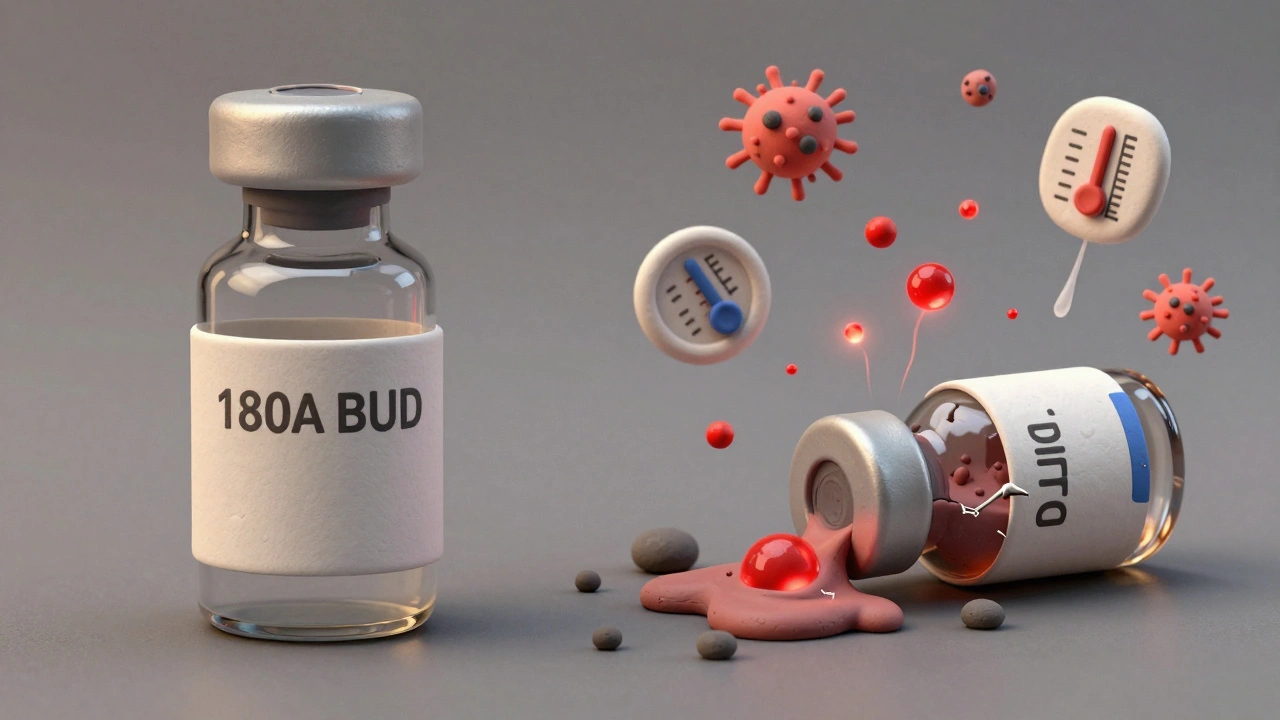
And it’s not just about contamination. Degraded drugs can become toxic. For example, some antibiotics break down into compounds that can damage kidneys. Hormones can turn into estrogen-like substances that trigger unwanted side effects. These aren’t rare events. A 2022 study in the Journal of the American Pharmacists Association found that 12.7% of medication errors involving compounded drugs were linked to incorrect BUDs.
What You Should Do as a Patient
You don’t need to be a chemist to stay safe. Here’s what you can do:
- Always ask your pharmacist: "What’s the beyond-use date, and how was it determined?" Don’t accept "It’s fine for 30 days" without context.
- Check the container. Is it a syringe? A glass vial? A plastic tube? Each has different risks.
- Store it exactly as instructed. If it says "refrigerate," don’t leave it on the bathroom counter.
- Look for changes. If the liquid looks cloudy, the cream has separated, or there’s an odd smell - don’t use it. Even if it’s before the BUD.
- Ask if the pharmacy uses the International Journal of Pharmaceutical Compounding’s Stability Database. If they don’t, ask why.
And if you’re unsure? Call the pharmacy. Ask them to explain their BUD. If they can’t - or if they get defensive - consider getting the medication filled elsewhere. Your safety isn’t worth guessing.
The Future: More Testing, More Accountability
Change is coming. USP’s 2024 draft update requires direct stability testing for any compounded medication with a BUD longer than 30 days. That’s a big shift. Right now, most BUDs beyond 30 days are based on literature - not hard data. That will change.
Some pharmacies are already using real-time monitoring systems. One company, Epicur Pharma, tested a smart label system that tracks temperature and light exposure. Pharmacies using it saw a 47% drop in BUD-related errors.
Why does this matter? Because compounded medications are growing fast. In 2022, they made up 7.2% of all prescriptions. By 2030, that number could hit 18.3%. More people will rely on them. More mistakes will happen - unless we get serious about BUDs.
The bottom line: beyond-use dates aren’t bureaucracy. They’re science. And when you’re taking a medication made just for you, you deserve to know it’s safe - not just convenient.
Is a beyond-use date the same as an expiration date?
No. Expiration dates are set by drug manufacturers after years of FDA-approved stability testing on mass-produced drugs. Beyond-use dates (BUDs) are assigned by compounding pharmacists based on scientific estimates, literature, or direct testing - because compounded medications aren’t standardized or FDA-tested. BUDs are typically much shorter and are calculated from the day the medication was made.
Can I use a compounded medication after its beyond-use date if it looks fine?
No. Even if the medication looks normal - no discoloration, no strange smell - it may have degraded at a molecular level. Active ingredients can break down into harmful compounds, or microbial contamination may be invisible. Using a medication past its BUD puts you at risk of reduced effectiveness, allergic reactions, or infection. Always follow the date.
Why do some compounded medications have such short BUDs, like 24 hours?
Water-based formulations, especially those stored in syringes or open containers, are high-risk for bacterial growth. The USP <797> guidelines limit high-risk sterile preparations to 24 hours at room temperature because microbes can multiply rapidly in these conditions. Even if the active ingredient is stable, contamination makes it unsafe. Short BUDs aren’t arbitrary - they’re based on microbiology.
How do I know if my pharmacy is assigning BUDs correctly?
Ask them. A reputable pharmacy will be able to explain the USP risk category of your medication, reference the stability data they used (like USP or the International Journal of Pharmaceutical Compounding), and show you their documentation. If they say "it’s fine for 30 days" without details, or use syringe data for vial-based products, that’s a red flag. Look for pharmacies that are USP-compliant and accredited by PCAB or ACHC.
What should I do if my compounded medication doesn’t have a beyond-use date?
Don’t use it. Federal and state regulations require all compounded medications to have a clear BUD. If your pharmacy didn’t provide one, contact them immediately. If they can’t or won’t give you one, take the medication to another pharmacy for review. Using a compounded product without a BUD is like driving without a license - it’s not just unsafe, it’s against the rules.
Yasmine Hajar
December 5, 2025 AT 15:59My grandma’s chemo cream had a 30-day BUD but she used it for two months because it "looked fine." She ended up in the ER with a skin infection. Don’t be like her. BUDs aren’t suggestions-they’re lifelines.
George Graham
December 7, 2025 AT 03:00I work in a compounding pharmacy and I can tell you-most of the time, we’re winging it. We don’t have the budget for stability testing, so we rely on USP guidelines and gut feeling. It’s not ideal, but it’s what we’ve got. I wish patients knew how much pressure we’re under to get this right.
John Filby
December 8, 2025 AT 05:31So if I make a compounded eye drop and store it in a plastic bottle instead of glass, it could go bad 40% faster? 😳 That’s wild. I always thought if it didn’t look moldy, it was fine. Guess I’ve been lucky so far. Gonna ask my pharmacist next time.
Elizabeth Crutchfield
December 9, 2025 AT 18:38im so glad i read this. i used my compunded pain cream past the date once and my arm got red and itchy. i thought it was just dry skin. now i know better. thx for sharing
Ben Choy
December 10, 2025 AT 15:02This is such an under-discussed issue. In the UK, we’re seeing more compounded meds due to drug shortages. But most pharmacists aren’t trained properly in BUD validation. We need mandatory certification. It’s not just about safety-it’s about trust in the system.
jagdish kumar
December 10, 2025 AT 22:33Science is a cage. The body knows what it needs. Dates are human constructs. Nature doesn’t care about USP chapters.
michael booth
December 11, 2025 AT 15:01Excellent breakdown. The distinction between expiration dates and beyond-use dates is critical for patient safety. Pharmacies must be held accountable. If you can’t validate your BUDs, you shouldn’t be compounding. Period.
Rudy Van den Boogaert
December 12, 2025 AT 19:53My cousin’s oncologist prescribed a compounded hormone therapy. The pharmacy gave her a 90-day BUD on a water-based solution in a syringe. I called them. They said, 'We’ve never had a problem.' I told her to throw it out. She did. Two weeks later, she got a fever. Turns out the solution was contaminated. This isn’t theoretical. It’s happening every day.
Jordan Wall
December 13, 2025 AT 05:59As a regulatory consultant in pharma logistics, I’d argue that the current USP framework is woefully outdated. The reliance on literature-based BUDs for high-risk formulations is a systemic failure. We need real-time degradation sensors integrated into packaging-like those smart labels Epicur Pharma rolled out. Otherwise, we’re just playing Russian roulette with vulnerable patients. 🚨