
After months of cutting calories, counting macros, and pushing through tough workouts, you finally hit your goal. The scale says you’ve lost the weight. But then, slowly, the pounds creep back. You’re not alone. In fact, weight maintenance is the hardest part of the whole journey. Studies show only about 25% of people who lose weight manage to keep it off for more than a year. The rest? They’re back to where they started-or worse.
Why Weight Comes Back (It’s Not Your Fault)
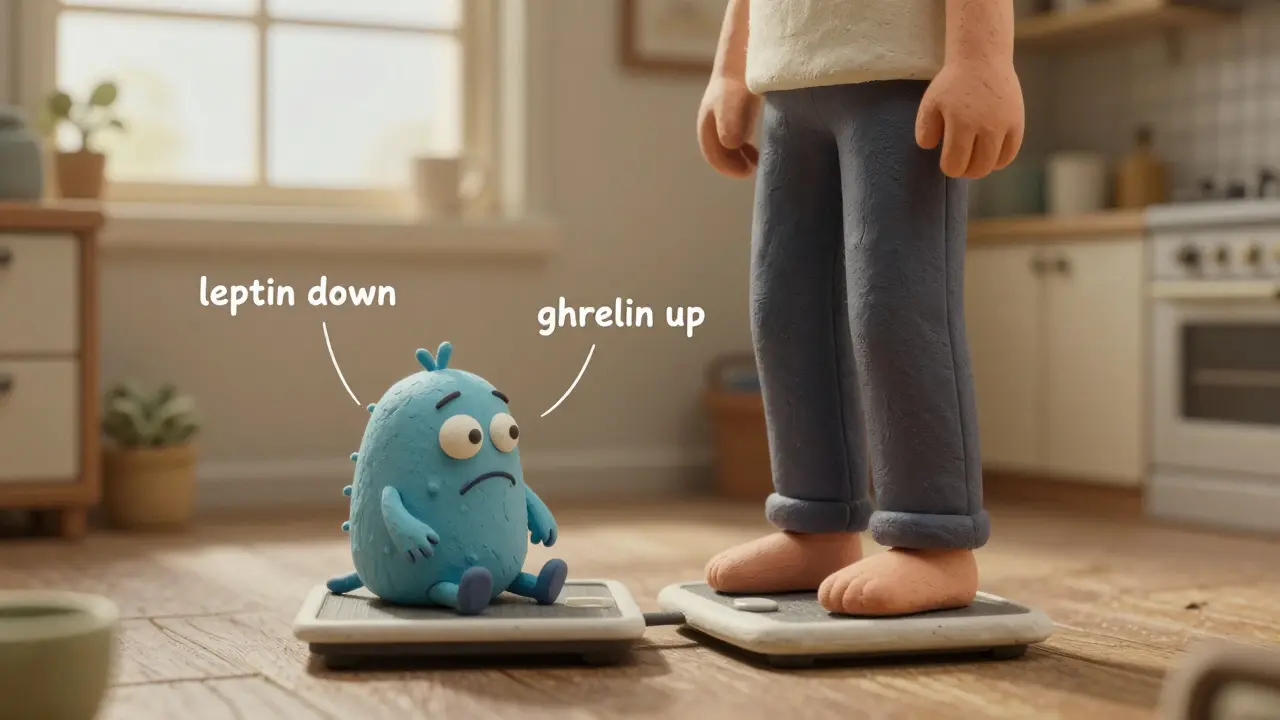
Your body doesn’t see weight loss as a win. It sees it as a threat. When you drop weight, your metabolism slows down-by 15% to 25% more than you’d expect just from losing mass. That’s not laziness. It’s biology. Hormones like leptin, which tell your brain you’re full, drop by nearly half after losing 10% of your body weight. Meanwhile, ghrelin, the hunger hormone, spikes. You’re not weak. You’re fighting a system designed to protect you from starvation. This isn’t just theory. A 2016 study tracked people who lost weight and kept them in a lab for months. Even after they’d settled into their new weight, their bodies burned fewer calories at rest than people who’d never lost weight. It’s like your body hit a reset button and switched to survival mode. And it doesn’t give up easily. Research from Columbia University shows this biological resistance can last for years.What Actually Works: The Science of Keeping Weight Off
The National Weight Control Registry has been tracking over 10,000 people who’ve lost at least 30 pounds and kept it off for a year or more. Their habits aren’t flashy. They’re simple. And they work.- Daily weighing: 90% of successful maintainers weigh themselves at least once a week. Half do it daily. It’s not about obsession-it’s about early detection. A 2-pound gain is easy to fix. A 10-pound gain is a crisis.
- Move every day: The average person in the registry burns 2,800 calories a week through exercise. That’s about an hour of brisk walking or cycling daily. It doesn’t have to be gym sessions. Dancing, gardening, or walking the dog counts.
- Eat breakfast: 78% eat it every day. Not a protein shake. Not a granola bar. Real food. Eggs, oatmeal, fruit. Skipping breakfast leads to overeating later.
- Watch less TV: 75% watch fewer than 10 hours a week. Sedentary time = mindless snacking. The more time you spend sitting, the more calories you consume without realizing it.
Don’t Wait Until You’re Done to Start Maintaining
Most programs treat weight loss and maintenance like two separate phases. Lose weight first. Then, once you’re done, learn how to keep it off. That’s like learning to drive after you’ve already crashed the car. A 2018 study from the University of Florida found people started regaining weight the moment their diet program ended. Why? Because they never learned how to live at their new weight. They were still thinking in terms of “dieting.” The fix? Start maintenance habits while you’re losing weight. Begin weighing yourself daily. Start walking every day. Plan your meals. Get used to eating at maintenance calories-even if you’re still in a deficit. That way, when the diet ends, you’re not jumping into the unknown. You’re already living the life you want to keep.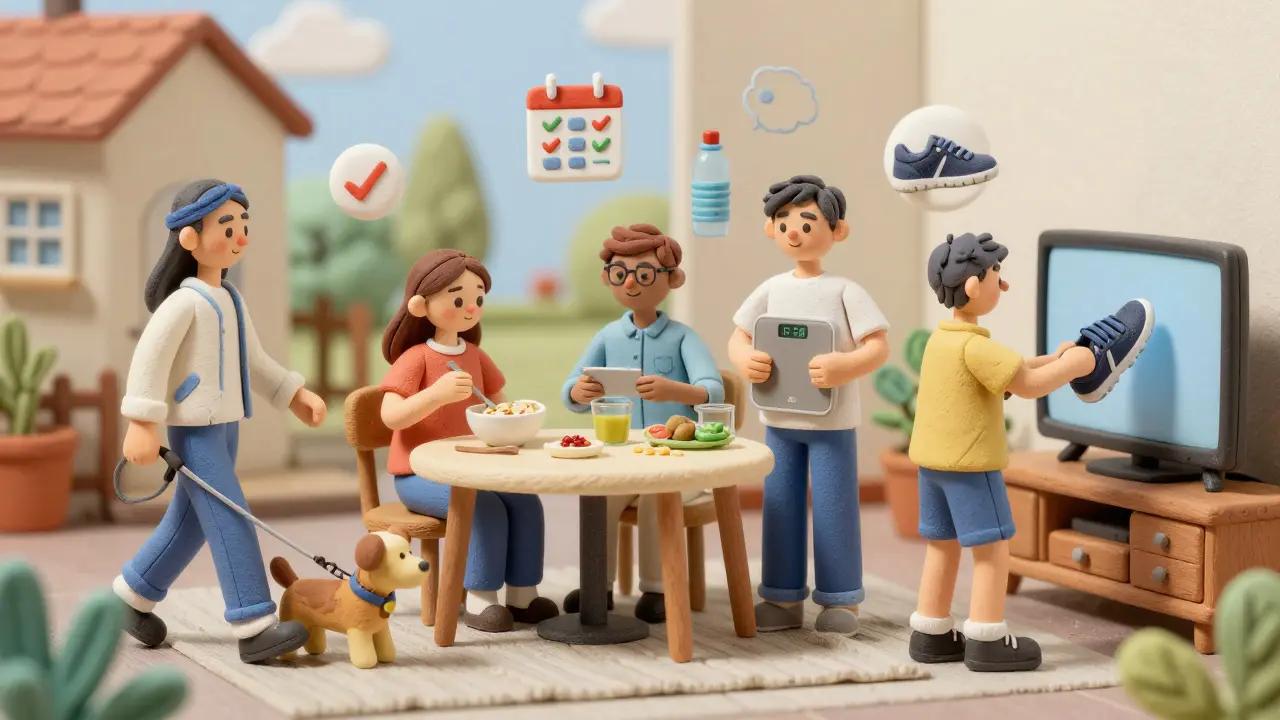
Food Isn’t the Enemy-Rigidity Is
One of the biggest reasons people regain weight isn’t because they ate a slice of pizza. It’s because they ate a slice of pizza and then thought, “I blew it.” So they ate the whole cake. Then the whole box of cookies. Then they gave up. Successful maintainers don’t follow an all-or-nothing rule. They follow the 80/20 rule: 80% of the time, they eat to support their goals. 20% of the time, they eat to enjoy life. One Reddit user wrote: “I stopped calling food ‘good’ or ‘bad.’ I started calling it ‘supportive’ or ‘non-supportive.’ That tiny shift saved my progress.” Plan for slip-ups. Have a strategy for holidays, vacations, and stress days. Pack snacks. Eat a protein-rich meal before a party. Drink water first. These aren’t tricks-they’re insurance policies against the inevitable.Tools That Help (And Ones That Don’t)
There are a lot of apps, programs, and devices promising to help you maintain. Some do. Most don’t.- WW (Weight Watchers): Their 2021 report says 66% of users keep off weight at six months. Their strength? Community support and flexible points system. They don’t ban foods-they teach balance.
- Noom: Uses psychology to rewire eating habits. User reviews are mixed (3.7/5 on Apple), but their focus on behavior change over calorie counting helps some people build lasting habits.
- Smart scales: Devices like Withings or Fitbit scales that track weight daily give you feedback. But they don’t fix behavior. You still need to act on the data.
- Weight loss meds (Wegovy, Zepbound): These drugs-semaglutide and tirzepatide-can help people lose 15-20% of their body weight. But they’re expensive ($1,300+ a month) and only work as long as you take them. Stop the drug? Weight often comes back. They’re tools, not cures.
How to Handle the Holidays (And Other Weight Gain Traps)
Thanksgiving to New Year’s is the most dangerous time for weight regain. Studies show the average person gains 0.8 to 1.2 kg during those six weeks. That’s not much-but most people never lose it. Successful maintainers don’t try to avoid the holidays. They plan for them.- Don’t fast before the big meal. You’ll just overeat.
- Start with protein and veggies. Fill half your plate before touching carbs.
- Drink water between alcoholic drinks.
- Walk after dinner. Even 20 minutes helps.
- Don’t weigh yourself the next day. Your body is holding water. Wait 3-4 days.

Ellie Norris
February 1, 2026 AT 18:34Okay but can we talk about how breakfast isn't just eggs and oatmeal? I eat leftover chili and a banana and it keeps me full till lunch. No one talks about that. Also, my dog is my personal trainer. He needs walks. I need not to gain back 20 lbs. Win-win.
clarissa sulio
February 2, 2026 AT 02:18US studies show this works because Americans are disciplined. In other countries, people just eat carbs and cry. No offense, but if you're not eating like a real American, you're gonna fail.
Vatsal Srivastava
February 3, 2026 AT 06:05Metabolism slows? Wow. Groundbreaking. I'm sure the 12-year-old who lost 50 lbs on TikTok didn't know that. Also, daily weighing? That's not maintenance, that's OCD with a scale. Try living without a number defining your worth. Just a thought.
jay patel
February 3, 2026 AT 15:49Let me tell you about my cousin who lost 80 lbs on keto and gained it all back in 3 months because he started drinking wine with dinner. He said 'I deserved it.' And then he said 'I'm just built different.' Spoiler: he's not. Your body doesn't care if you're 'built different.' It just wants you to stop pretending you're not a human who eats food. Also, I weigh myself daily. I cry. I eat a protein bar. I go again tomorrow. That's the real story.
phara don
February 4, 2026 AT 03:37Interesting. I wonder if the 25% success rate includes people who used GLP-1s? Also, how many of those 10k in the registry had access to therapy, paid personal trainers, or didn't work 60-hour weeks? Just curious. Not trying to dunk, just data.
Dan Pearson
February 4, 2026 AT 17:43Oh wow, someone finally said it: it's not willpower. It's the system. So let me get this straight - we're supposed to fix our environment? Like, actually change the world? Not just eat less pizza? That's wild. I mean, I guess if you're not rich enough to afford a personal chef and a 24/7 gym membership, you're just doomed. Thanks for the hope, bro.
larry keenan
February 4, 2026 AT 20:19The neuroendocrine adaptation following caloric restriction is well-documented in the literature, particularly in the context of adaptive thermogenesis and leptin resistance. The National Weight Control Registry data, while observational, aligns with longitudinal studies on behavioral reinforcement. However, one must consider socioeconomic confounders - access to healthy food, time for physical activity, and psychological support are not universally distributed. The proposed interventions, while statistically significant, may lack ecological validity for marginalized populations.
Nick Flake
February 5, 2026 AT 09:56THIS. This is the message the world needs. 🌱 You’re not broken. Your body isn’t failing you - it’s trying to protect you. And the fact that you’re still here, still trying, even after setbacks? That’s not weakness. That’s courage. Every step, every weighed morning, every walk with your dog - it’s not about the scale. It’s about showing up for yourself. Again. And again. And again. You’re not alone. I see you. Keep going.
Brett MacDonald
February 6, 2026 AT 10:22they say eat breakfast but what if you just dont like breakfast like why do i have to eat eggs if i just wanna drink coffee and stare at the wall for 20 mins
Ansley Mayson
February 7, 2026 AT 15:55So let me get this straight. You're telling me the solution to a systemic problem created by capitalism and food industry manipulation is to walk more and weigh yourself daily? That's it? No mention of food deserts, wage stagnation, or the fact that kale costs more than a Big Mac? This is the same garbage that blames poor people for being fat. Wake up.
Marc Durocher
February 8, 2026 AT 11:50Bro I gained back 15 lbs after my divorce. Started walking at 5am just to get out of the house. Didn't even care about the weight at first. Just needed to not be alone with my thoughts. Now I'm down 8 again. Not because of the scale. Because I learned how to sit with myself. That's the real hack.
Brittany Marioni
February 10, 2026 AT 11:06I love how this article says 'don't wait until you're done'-but what if you're still stuck in the 'trying to lose' phase? What if you've been dieting for 7 years and still haven't hit your goal? Do you just start maintaining while still in a deficit? That feels like trying to drive while putting on your seatbelt. Also, I tried daily weighing. I cried. I deleted the app. I'm back to 'I'll start Monday.' Again.
Bridget Molokomme
February 11, 2026 AT 13:2080/20 rule? Yeah right. I did that. Ate a cookie. Then a whole bag of chips. Then pizza. Then ice cream. Then I cried and ate the whole tub of cookie dough. So now I just eat whatever I want and don't weigh myself. It's called peace. You can have your 'supportive' foods. I'll have my sanity.
Murarikar Satishwar
February 11, 2026 AT 20:40My mom lost 60 lbs in her 50s and kept it off for 12 years. She didn't have a smart scale or a coach. She just cooked at home, walked after dinner every night, and never kept junk in the house. She said, 'If it's not in the house, you can't eat it.' Simple. But hard. Because we live in a world where everything is designed to make you eat more. I'm trying to do the same with my kids now. No soda in the fridge. No chips on the counter. Just fruit, nuts, and water. It's not glamorous. But it works. And it's not about willpower-it's about design. Your environment shapes your behavior more than your motivation ever will.
Monica Slypig
February 13, 2026 AT 14:42So the solution to obesity is to walk more and eat eggs? That's it? No mention of insulin resistance, endocrine disruptors, or the fact that 70% of processed food is engineered to be addictive? This is the same lazy advice that's been recycled since 2005. You're not fighting biology. You're fighting a multibillion-dollar industry that profits from your failure. And you're being told to just eat less and move more? Pathetic.