
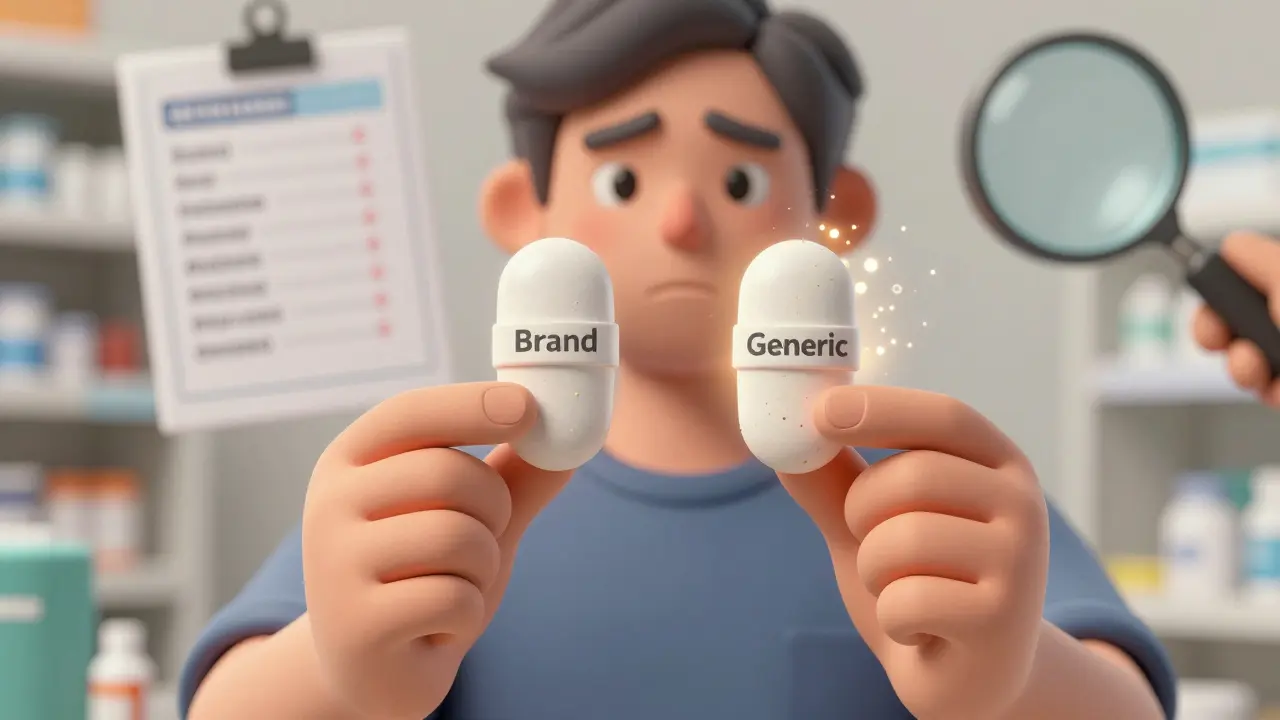
Most people assume that a generic pill is just a cheaper version of the brand-name drug-same active ingredient, same effect. And for most people, that’s true. But for some, switching from a brand-name medication to a generic-or even between two different generics-can trigger strange, sometimes serious side effects. These aren’t imagined. They’re real, documented, and more common than you think.
Why Do Generic Medications Cause Unexpected Reactions?
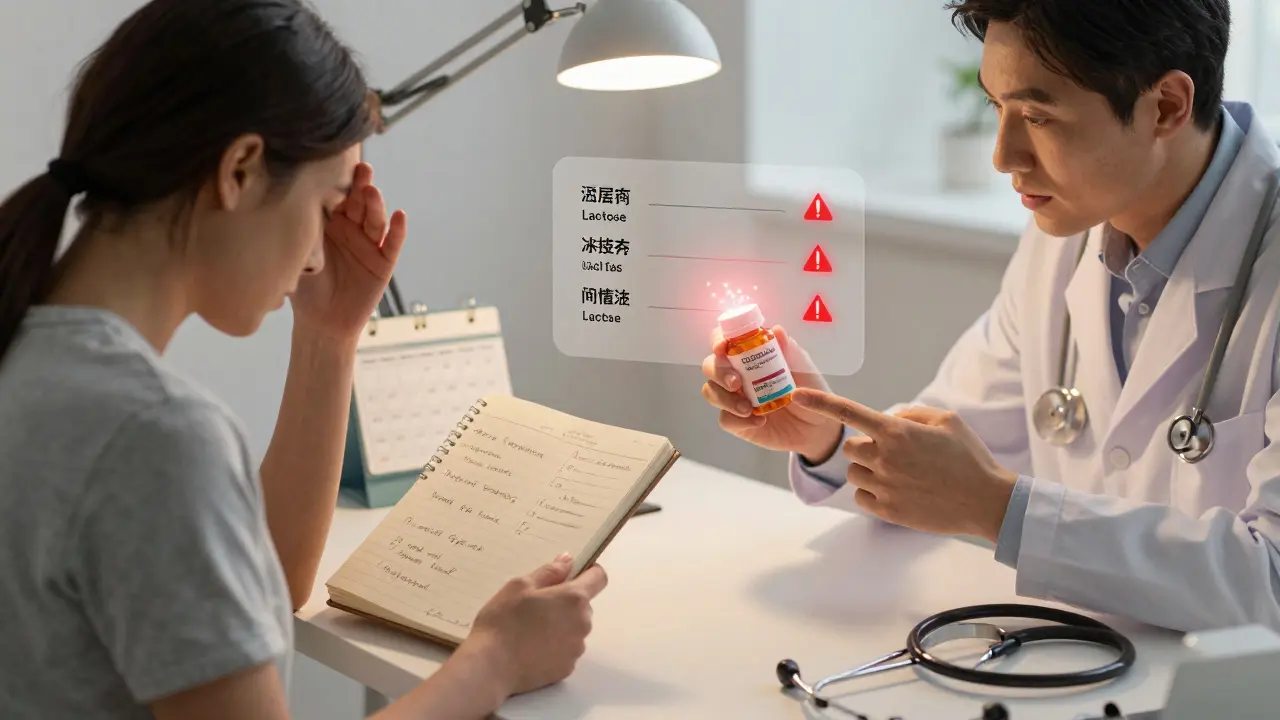
Generic drugs must contain the same active ingredient as the brand-name version, at the same strength and dosage form. That’s the law. But what’s not required to be the same? The inactive ingredients. These are the fillers, dyes, binders, and preservatives that hold the pill together or make it easier to swallow. And for people with sensitivities, these tiny differences can make a huge difference. For example, some generic versions of levothyroxine (used for thyroid conditions) use lactose as a filler. If you’re lactose intolerant, even a small amount can cause bloating, cramps, or diarrhea-symptoms that might be mistaken for your thyroid condition worsening. Another common culprit is red dye 40 or yellow 5, often found in children’s medications or antidepressants. These artificial colors have been linked to headaches, rashes, and even behavioral changes in sensitive individuals. Even preservatives matter. Take eye drops for glaucoma: the brand-name Travatan Z uses a preservative called SofZia, while many generics use benzalkonium chloride (BAK). Patients with sensitive eyes report burning, redness, or blurred vision after switching-not because the active drug changed, but because the preservative irritated their cornea. Manufacturing differences also play a role. A generic made in India might use a different binding agent than one made in the U.S. That can affect how quickly the drug dissolves in your stomach. For drugs with a narrow therapeutic index-like warfarin, levothyroxine, or phenytoin-even a 5% change in absorption can lead to dangerous outcomes: bleeding, seizures, or thyroid crisis.Which Medications Carry the Highest Risk?
Not all generics are created equal. Some medications are far more likely to cause trouble after a switch. The FDA lists 18 drugs as having a narrow therapeutic index (NTID), meaning the difference between a safe dose and a toxic one is very small. These include:- Warfarin (Coumadin): Used to prevent blood clots. A 2020 study found that 14.7% of patients switching to a different generic version had unexpected bleeding events.
- Levothyroxine (Synthroid): For hypothyroidism. A 2023 GoodRx analysis showed 23.7% of patients reported new symptoms-like heart palpitations or anxiety-after switching generics.
- Phenytoin (Dilantin): An anti-seizure drug. Even small changes in blood levels can trigger seizures or toxicity.
- Liium: Used for bipolar disorder. Patients report mood swings, tremors, or nausea after switching manufacturers.
- Amlodipine (Norvasc): A blood pressure medication. One patient reported severe ankle swelling within two weeks of switching to a new generic-confirmed by her doctor as a reaction to the new formulation.
What Do the Side Effects Actually Look Like?
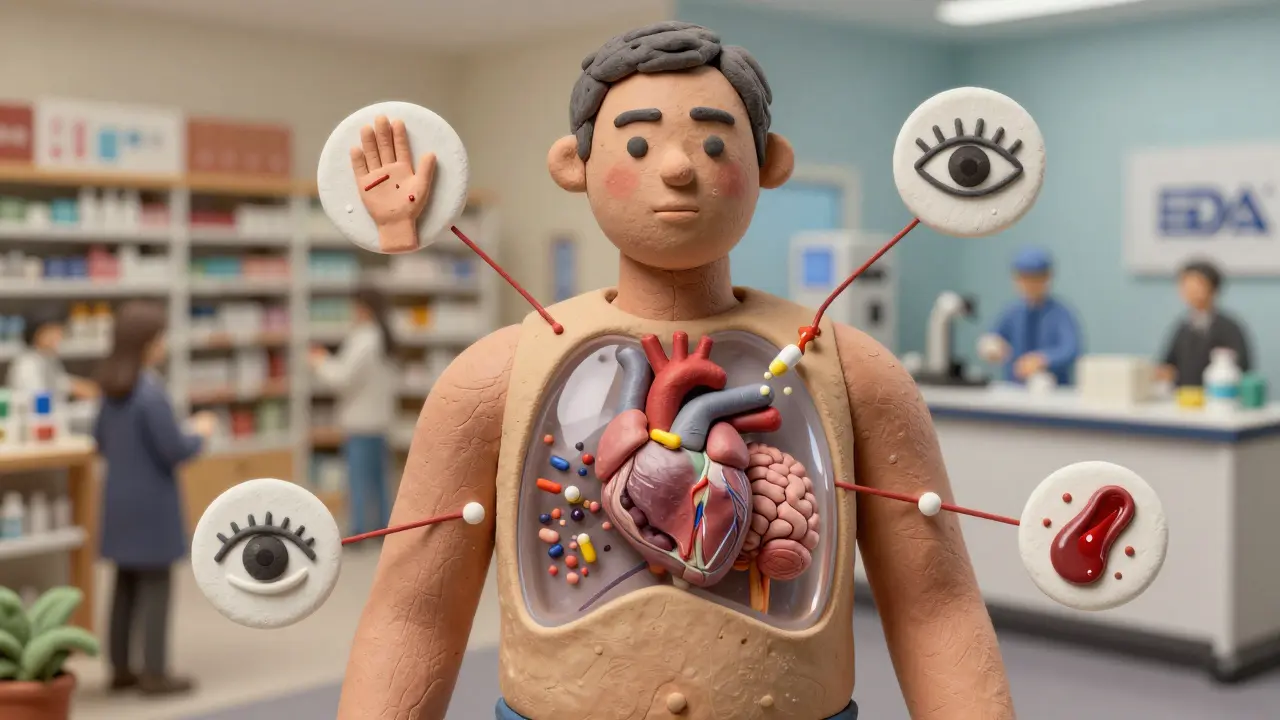
If you’ve recently switched to a generic and feel “off,” here’s what to watch for:- Neurological symptoms: New headaches, dizziness, brain fog, or tingling in hands or feet.
- Cardiovascular changes: Heart palpitations, unexplained spikes or drops in blood pressure, or chest tightness.
- Gastrointestinal distress: Nausea, vomiting, diarrhea, or severe bloating that started after the switch.
- Skin reactions: Rashes, hives, blistering, or peeling skin-especially if it’s painful or spreads quickly.
- Mood or behavioral shifts: Increased anxiety, depression, irritability, or insomnia without other life changes.
- Reduced effectiveness: Your condition seems to be getting worse-seizures returning, thyroid levels dropping again, blood pressure rising despite taking the same dose.
When Should You Call Your Doctor?
You don’t need to panic every time you feel a little off. But here’s when to act:- Call your doctor within 24 hours if you develop new symptoms that started within 1-2 weeks of switching generics and haven’t improved after 3-5 days.
- Go to the ER immediately if you experience:
- Stevens-Johnson Syndrome: A painful, blistering rash that spreads and affects mucous membranes (mouth, eyes, genitals). Linked to lamotrigine, allopurinol, and some antibiotics.
- Priapism: A painful erection lasting more than 4 hours. Seen with trazodone and bupropion.
- Severe allergic reaction: Swelling of the face or throat, trouble breathing, rapid pulse.
- Uncontrolled bleeding: Unusual bruising, nosebleeds, blood in stool or urine-especially if you’re on warfarin.
What You Can Do to Protect Yourself
You don’t have to avoid generics. They save billions of dollars in healthcare costs and are safe for most people. But you can take steps to reduce your risk:- Ask your pharmacist: “Which manufacturer made this version?” Write it down. Keep a small note in your wallet or phone.
- Don’t let your pharmacy switch brands without telling you. In many states, pharmacists can substitute generics without telling you. Ask for the “brand name only” option if you’ve had issues before.
- Track your symptoms. Use a simple journal: date, medication, manufacturer, symptoms. This helps your doctor connect the dots.
- Report side effects. Go to MedWatch and file a report. Include the lot number on the bottle. These reports help the FDA spot dangerous patterns.
- Request consistency. If a specific generic works for you, ask your doctor to write “Dispense as Written” or “Do Not Substitute” on your prescription.
Is There Anything Changing?
Yes. The FDA is starting to take this more seriously. In March 2024, Commissioner Robert Califf announced a new Therapeutic Equivalence Advisory Committee focused on drugs like thyroid meds and anti-seizure drugs-where small differences matter most. A new bill, the Generic Drug Safety Act, introduced in Congress in February 2024, would require manufacturers to notify doctors and pharmacists whenever they change inactive ingredients. The European Medicines Agency already requires manufacturers to prove consistency across batches. The U.S. is catching up.Bottom Line
Generic medications are safe, affordable, and essential to the healthcare system. But they’re not always identical. For a small but significant number of people, switching generics can trigger real, sometimes dangerous side effects. If you’ve recently changed your medication and feel different-especially if it’s been 3-5 days and you’re not getting better-don’t brush it off. Talk to your doctor. Keep track of the manufacturer. And don’t be afraid to ask for the version that works for you.Can generic medications really cause different side effects than brand-name drugs?
Yes. While generics must contain the same active ingredient, they can differ in inactive ingredients like fillers, dyes, and preservatives. These can trigger allergic reactions, digestive issues, or changes in how the drug is absorbed. For drugs with a narrow therapeutic index-like warfarin or levothyroxine-even small differences can lead to serious side effects.
Which generic medications are most likely to cause problems?
Medications with a narrow therapeutic index carry the highest risk. These include warfarin (blood thinner), levothyroxine (thyroid hormone), phenytoin (anti-seizure), lithium (mood stabilizer), and some blood pressure drugs like amlodipine. Studies show higher rates of side effects after switching generics in these categories, especially for thyroid and psychiatric medications.
How do I know if my side effects are from the generic?
If new symptoms started within 1-2 weeks of switching to a generic-and you didn’t have them before-the timing is a strong clue. Keep a symptom journal: note the date, medication name, manufacturer, and what you’re feeling. Bring this to your doctor. In many cases, switching back to the original version (brand or same generic) will resolve the issue.
Should I stop taking my generic medication if I have side effects?
No. Stopping suddenly can be dangerous, especially for drugs like blood pressure or seizure medications. Instead, contact your doctor right away. They can help determine if it’s the medication and whether you need to switch back or try a different generic. Never discontinue without medical advice.
Can I ask my doctor to prescribe only the brand-name drug?
Yes. If you’ve had consistent problems with generics, ask your doctor to write “Dispense as Written” or “Do Not Substitute” on your prescription. Insurance may require prior authorization, but many will approve it if there’s documented history of side effects from generics.
How do I find out which company made my generic medication?
Check the label on the bottle-it usually lists the manufacturer. If not, ask your pharmacist. You can also look up the drug’s National Drug Code (NDC) number on the FDA’s website. Write it down or take a photo so you can track which version works best for you.
Are generic medications made overseas less safe?
About 73% of the active ingredients in U.S. generics come from overseas, mostly India and China. While the FDA inspects facilities, delays and inconsistent enforcement have occurred. A 2022 Government Accountability Office report found that 18.3% of foreign generic manufacturers had inspection delays. This doesn’t mean all overseas generics are unsafe-but it does mean quality control can vary. Tracking your manufacturer helps you spot patterns.
What to Do Next
If you’re currently taking a generic medication and have no issues, keep going. But if you’ve ever felt “off” after a switch, here’s your action plan:- Check your last prescription bottle-write down the manufacturer name.
- Review your symptoms since your last switch. Did they start within a week?
- Call your doctor or pharmacist. Ask: “Could this be the generic?”
- Request to stay on the version that works for you.
- File a report with MedWatch if you had a serious reaction.
Jeanette Jeffrey
December 27, 2025 AT 06:36Oh please. Everyone's just mad because their insurance won't pay for the brand. I've been on generics for 15 years. No issues. Stop playing victim. If you can't tell the difference between anxiety and a pill, maybe you need therapy, not a new prescription.
Shreyash Gupta
December 28, 2025 AT 13:57bro 🤔 i switched from Synthroid to generic and my hair started falling out 😭 then i went back and it stopped. i didn't even know this was a thing until now. also my pharmacist didn't tell me they switched it. smh.
Ellie Stretshberry
December 29, 2025 AT 10:31i had no idea this was a thing. i switched to a generic blood pressure med last month and felt weird for a week. thought i was just stressed. now i get it. gonna call my doc tomorrow. thanks for sharing this.
Zina Constantin
December 29, 2025 AT 15:11This is why we need transparency in pharma. Every pill you swallow has a story-and most people don’t even know who wrote it. If you’re taking something life-changing, you deserve to know the full cast. Not just the lead actor, but the crew behind the scenes too. Your body isn’t a lab rat. It’s sacred.
Dan Alatepe
December 30, 2025 AT 18:53YOOOOOOOOO I switched my lithium generic and for three days I was crying in the shower for no reason. My mom thought I was going through a breakup. I was just chemically betrayed. Now I only take the one with the blue capsule. No one talks about this. But I’m talking now. 🙌
Angela Spagnolo
January 1, 2026 AT 06:33...I just realized... I’ve had migraines since switching my antidepressant generic... I didn’t connect it... I’m so sorry I didn’t listen to my body... I’m going to call my doctor right now... please, someone tell me I’m not alone...
Sarah Holmes
January 2, 2026 AT 15:42It's not just 'side effects.' It's corporate negligence masked as cost-saving. You're being poisoned by profit-driven loopholes. The FDA is asleep at the wheel. This isn't about 'personal responsibility'-it's about systemic failure. I've written to my congressperson. You should too. This isn't a debate. It's a crisis.
Jay Ara
January 4, 2026 AT 06:17man i had the same thing with my seizure med. switched generics and had a mini seizure. doc said it was stress. i knew better. went back to the old one and boom. no more. now i write the maker name on my hand before i take it. simple but it saves lives.
Michael Bond
January 6, 2026 AT 01:23My mom had a reaction to a generic statin. She’s fine now. But this needs more awareness.
Kuldipsinh Rathod
January 6, 2026 AT 03:43i never thought about fillers before. i thought all pills were the same. now i check the label like it's a food ingredient list. weird but worth it.
SHAKTI BHARDWAJ
January 7, 2026 AT 16:50YOU THINK THIS IS BAD?? I switched my thyroid med and my heart nearly stopped. I was in the ER for 8 hours. The pharmacist said 'it's the same thing.' SAME THING?? I nearly DIED because some company wanted to save 3 cents per pill. THIS IS MURDER BY BUREAUCRACY.
Matthew Ingersoll
January 9, 2026 AT 03:01My father’s been on the same generic warfarin for 7 years. No issues. But I get it-some people’s bodies are different. It’s not about fear. It’s about awareness. Track it. Talk to your doctor. Stay informed.