
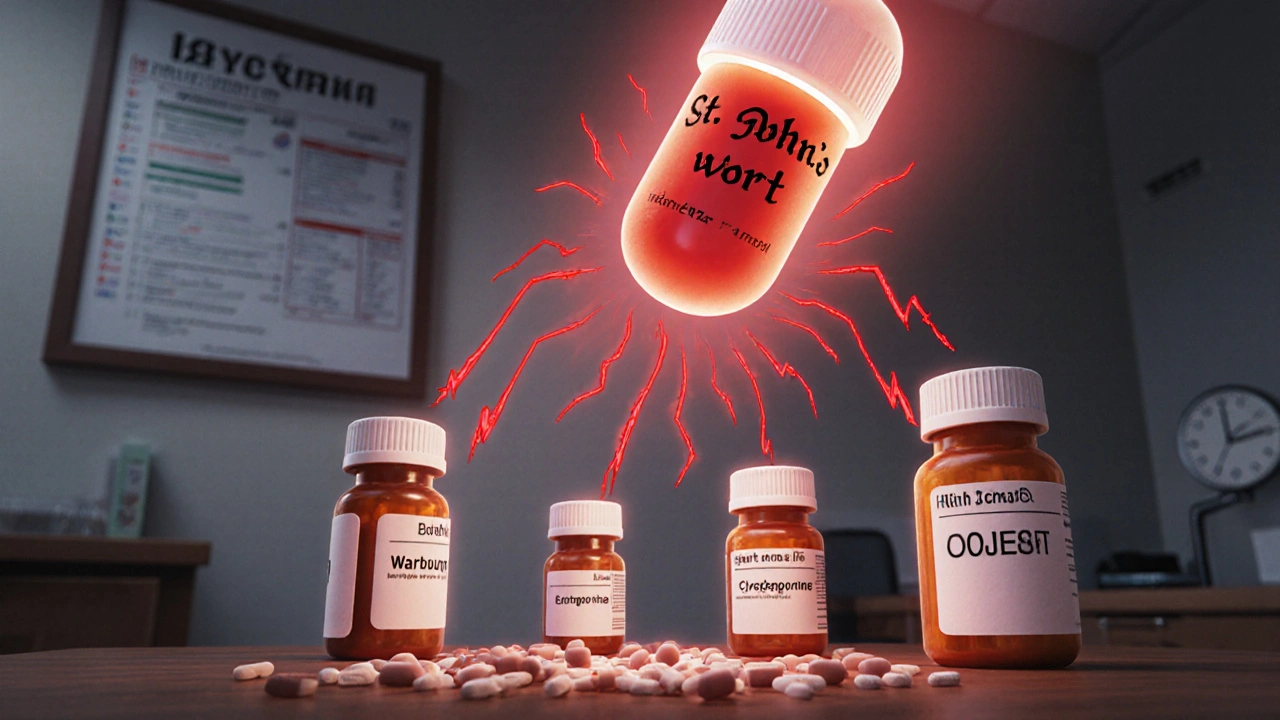
It’s easy to assume that if something is natural, it’s safe. But when you’re taking prescription drugs, St. John’s Wort isn’t just another supplement-it’s a silent saboteur. This herbal remedy, often picked up for mild depression or low mood, can quietly wreck the effectiveness of life-saving medications. And most people have no idea.
Imagine you’re on warfarin to prevent blood clots. Your INR levels are stable. Then you start taking St. John’s Wort because a friend said it helped with their anxiety. Within days, your blood starts clotting differently. Your doctor doesn’t understand why-until they find out you’ve been taking the herb. That’s not hypothetical. It’s happened. In Australia, the Therapeutic Goods Administration (TGA) recorded 22 cases between 1998 and 2000 where St. John’s Wort caused warfarin to lose its effect. One patient’s INR dropped from 2.5 to 1.3 in just seven days. That’s the difference between protection and a stroke.
How St. John’s Wort Breaks Down Your Medications
St. John’s Wort doesn’t just interact with drugs-it actively rewires how your body handles them. The key player? Hyperforin. This compound triggers your liver to crank up production of CYP3A4, an enzyme that breaks down drugs. It also flips on P-glycoprotein, a transporter that kicks medications out of your cells before they can do their job.
Think of it like a factory worker suddenly doubling the speed of the assembly line. Your body starts processing drugs too fast. Instead of staying in your system long enough to work, they get flushed out. Studies show this can slash blood levels of some medications by 30% to 50%. That’s not a small drop. That’s the difference between a drug working and failing completely.
And it’s not just one drug. This effect hits dozens. The TGA lists 12 high-risk categories. You might think you’re safe if you’re only on one prescription. But if you’re on multiple meds-say, a statin, a blood pressure pill, and an antidepressant-you’re stacking the odds.
The Dangerous Trio: Antidepressants, Birth Control, and Blood Thinners
St. John’s Wort’s most dangerous partnerships are with three types of drugs: antidepressants, oral contraceptives, and anticoagulants.
With SSRIs like sertraline or fluoxetine, St. John’s Wort can trigger serotonin syndrome. That’s when your brain gets flooded with too much serotonin. Symptoms? Agitation, rapid heartbeat, high fever, muscle rigidity, seizures. In Australia, six cases were reported where people developed serotonin syndrome after combining St. John’s Wort with their antidepressants. One woman, 42, was admitted to Royal Adelaide Hospital after her symptoms started just three days after adding the herb. She didn’t tell her doctor she was taking it-she thought it was harmless.
Birth control pills? They’re not immune. Ethinyl estradiol, the estrogen in most pills, gets broken down faster. Thirteen documented cases of unintended pregnancy happened in women who took St. John’s Wort while on the pill-even when they took it perfectly on time. One Reddit user wrote: “I had breakthrough bleeding, then found out I was pregnant. My pharmacist didn’t even ask if I took herbs.”
Warfarin is the most notorious. It’s a narrow-therapeutic-window drug. Too little, and you clot. Too much, and you bleed. St. John’s Wort pushes it into the danger zone. A 2023 Johns Hopkins study found that 73% of patients who had an interaction didn’t even know St. John’s Wort could interfere with their meds. And 41% never told their doctor they were taking it.
Transplant Patients and HIV Meds: When the Risk Is Life or Death
If you’ve had a transplant, St. John’s Wort could cost you your new organ. Cyclosporine and tacrolimus-the drugs that stop your body from rejecting the transplant-are metabolized by CYP3A4. St. John’s Wort can drop their levels by 30% to 50%. In one Australian case, a kidney transplant patient’s cyclosporine levels crashed 40% after starting the herb. His doctor said he was “hours away from rejection.” He didn’t know it was dangerous.
Same goes for HIV medications. Protease inhibitors like saquinavir and non-nucleoside reverse transcriptase inhibitors like efavirenz rely on steady blood levels. If St. John’s Wort lowers them by half, the virus can mutate and become resistant. That’s not just treatment failure-it’s a public health risk. The TGA has flagged this as a serious concern since 2021.
Even if you’re not on these drugs, you might be on something else that’s risky. Anticonvulsants like phenytoin? St. John’s Wort can make seizures more likely. Digoxin for heart failure? Levels drop 25%. Benzodiazepines like Xanax? Their effect can vanish. The Mayo Clinic says alprazolam levels fall by 40%-meaning panic attacks return, and you might increase your dose, not knowing why.

Not All Statins Are Equal-Here’s the Breakdown
Many people take statins for cholesterol. You might think they’re all the same. They’re not. St. John’s Wort messes with statins that are processed by CYP3A4: atorvastatin and simvastatin. Their levels drop 30% to 40%. That means your cholesterol could creep back up, and you won’t know why.
But pravastatin and fluvastatin? They use different liver pathways. No major interaction. Same with rosuvastatin-minimal effect. If you’re on a statin and considering St. John’s Wort, ask your pharmacist which one you’re taking. Don’t guess.
What Happens When You Stop Taking It?
People assume if they stop the herb, everything goes back to normal. Not so fast. The enzyme induction doesn’t vanish overnight. It takes up to two weeks for your liver to return to baseline. That means if you stop St. John’s Wort and keep your dose of warfarin or cyclosporine the same, your drug levels can suddenly spike. You could bleed. You could have organ rejection. You could overdose.
This is why the TGA recommends a minimum two-week washout period before starting or stopping any interacting drug. And if you’re on something critical-like warfarin, cyclosporine, or an anticonvulsant-you need blood tests before, during, and after the switch. No exceptions.
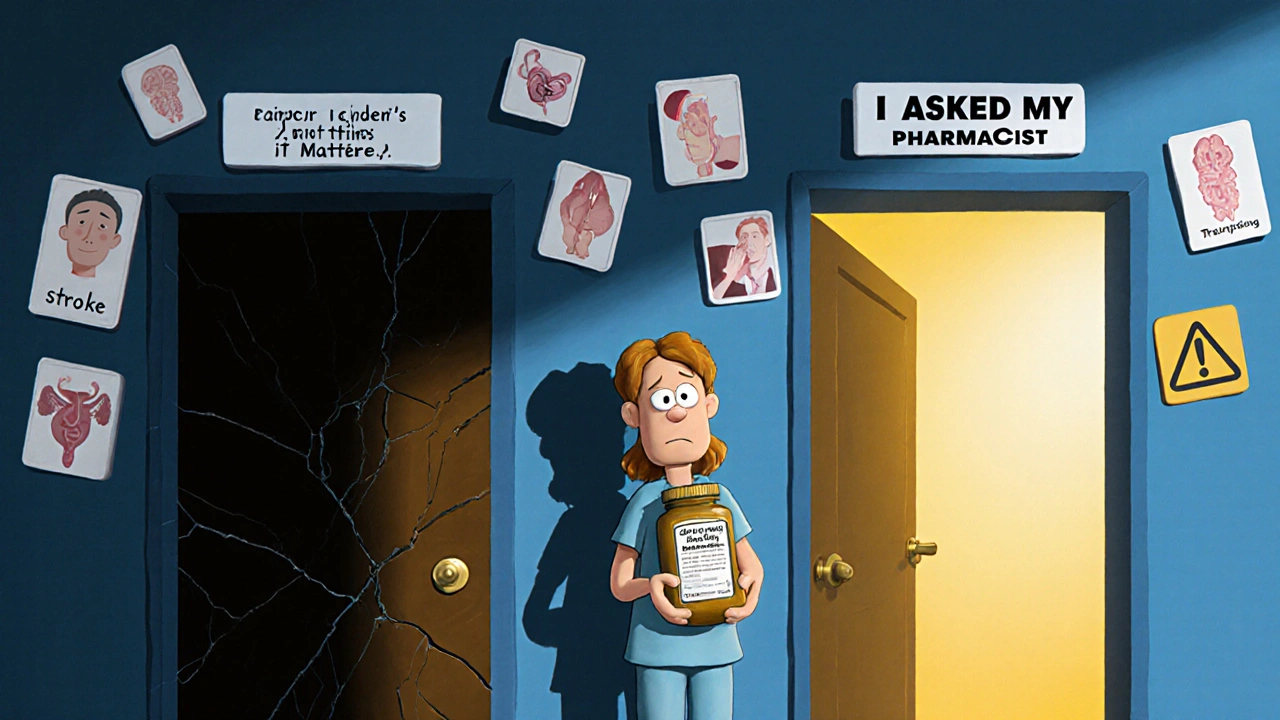
Why People Don’t Tell Their Doctors
It’s not that people are hiding. It’s that they don’t think it matters. “It’s just an herb,” they say. “It’s natural.” But natural doesn’t mean safe. In fact, the FDA requires all St. John’s Wort labels to say: “Ask a doctor before use if you are taking prescription drugs.” That’s not a suggestion. It’s a warning.
And yet, in a 2022 survey of 250 patients on prescription meds, 41% didn’t disclose their herbal supplement use. Why? Because their doctors never asked. Too often, doctors ask, “Are you taking any other medications?” And patients think, “No, just my pills.” They don’t count vitamins, fish oil, or St. John’s Wort as “medications.”
Here’s what you should hear from your doctor: “Do you take any herbal supplements, vitamins, or over-the-counter products?” That’s the right question. And if they don’t ask it, ask them.
What Should You Do?
If you’re on any prescription drug and thinking about St. John’s Wort-stop. Talk to your doctor or pharmacist first. Don’t assume it’s safe. Don’t rely on Google. Don’t trust a friend’s story.
If you’re already taking it:
- Don’t quit cold turkey. Tell your provider.
- Ask if your meds are affected. Use the University of Adelaide’s St. John’s Wort Interaction Checklist-it lists 57 high-risk drugs.
- Get blood tests if you’re on warfarin, cyclosporine, or anticonvulsants.
- Wait two weeks after stopping before starting or adjusting any interacting medication.
And if you’re using St. John’s Wort for depression? There are safer options. Cognitive behavioral therapy (CBT), exercise, and prescription SSRIs have better evidence and far fewer dangerous interactions. The American Psychiatric Association’s 2023 guidelines no longer recommend St. John’s Wort for anyone on prescription meds. That’s not a minor shift. That’s a full retreat from its use in clinical practice.
Bottom Line: Natural Doesn’t Mean Safe
St. John’s Wort isn’t a gentle herbal tea. It’s a potent biochemical agent that changes how your body processes drugs. It doesn’t care if you think it’s harmless. It doesn’t care if you’ve taken it for years. It’s still changing your liver’s behavior.
One person’s relief from low mood shouldn’t cost another person their transplant, their birth control, or their life. If you’re on any prescription medication, treat St. John’s Wort like a drug-because it is. And talk to your doctor before you take another pill.
Can I take St. John’s Wort with my antidepressant?
No. Combining St. John’s Wort with SSRIs, SNRIs, or other antidepressants can cause serotonin syndrome-a potentially fatal condition. Symptoms include confusion, rapid heart rate, high blood pressure, muscle twitching, and fever. Six cases were reported in Australia alone. Even if you feel fine at first, the risk builds over days. Don’t risk it.
Does St. John’s Wort affect birth control?
Yes. It can lower estrogen levels in birth control pills by 25-35%, leading to breakthrough bleeding and unintended pregnancy. Thirteen documented cases of pregnancy occurred in women using both. If you’re on hormonal contraception, St. John’s Wort is not safe. Use a backup method or avoid it entirely.
How long does St. John’s Wort stay in your system?
The herb itself clears in a few days, but its effects on liver enzymes last up to two weeks. That means even after you stop taking it, your body is still breaking down medications faster. Always wait two weeks before starting or adjusting any prescription drug that interacts with it.
Are there any safe herbal alternatives to St. John’s Wort?
Yes. For mild depression, regular exercise, light therapy, and cognitive behavioral therapy (CBT) have strong evidence and no drug interactions. Omega-3 supplements (fish oil) may also help, with minimal risk. Always check with your doctor before starting any new supplement-even if it’s labeled “natural.”
What should I ask my pharmacist about St. John’s Wort?
Ask: “Does St. John’s Wort interact with any of my current medications?” Bring a list of everything you take-including vitamins and supplements. Pharmacists are trained to spot these interactions. Most will check your meds for free when you pick up a prescription. Don’t wait until something goes wrong.
Is St. John’s Wort regulated in Australia?
Yes. Since 2018, all St. John’s Wort products sold in Australia must carry a warning label about drug interactions. The TGA requires this because of documented cases of dangerous interactions. However, it’s still sold over the counter, so it’s easy to buy without realizing the risks.
Karandeep Singh
December 1, 2025 AT 00:35st johns wort is just plant magic bro why u scare people
Debbie Naquin
December 2, 2025 AT 13:41The CYP3A4 induction cascade triggered by hyperforin represents a pharmacokinetic interference of unprecedented clinical significance. This isn't anecdotal-it's enzymatic sabotage. The P-gp efflux upregulation compounds the risk exponentially, particularly in polypharmacy cohorts. Most clinicians still treat herbal agents as benign, but the data is unequivocal: St. John’s Wort is a bioactive modulator, not a supplement.
Suzanne Mollaneda Padin
December 3, 2025 AT 18:48I'm a pharmacist in Chicago and I see this every week. People grab St. John’s Wort at the grocery store like it's vitamin C. I always ask patients: "What else are you taking?" Half the time they say "nothing." Then they pull out a bottle from their purse. We need better labeling-not just on the bottle, but in the system. Pharmacies should flag it automatically when you fill a statin or warfarin. It's not hard. It's just not prioritized.
Mary Ngo
December 5, 2025 AT 13:42Did you know the FDA doesn't regulate herbs? That's because Big Pharma owns the TGA, the WHO, and your doctor's continuing education. They want you dependent on pills. St. John’s Wort has been used for centuries in Europe. The "cases" they cite? Fabricated to push SSRI sales. That woman in Adelaide? Probably had a lab error. They don't want you to know natural remedies work better-and cheaper. Wake up.
Kelly Essenpreis
December 7, 2025 AT 13:41Why is everyone so scared of herbs? I took it for 5 years with my blood pressure med and never had an issue. You guys are just scared of anything that's not patented. My cousin took it with birth control and got pregnant-so what? Maybe she wasn't meant to be a mom. Stop fearmongering. Natural is better. End of story.
Alexander Williams
December 7, 2025 AT 21:43The enzyme induction kinetics of hyperforin are dose-dependent and time-sensitive. The 2-week washout period is conservative-some studies show CYP3A4 normalization takes up to 21 days. Most patients assume clearance = normalization. That’s a fatal misconception. The pharmacodynamic lag is the silent killer here. Clinicians need to treat this like a drug interaction, not a footnote.
Lauryn Smith
December 8, 2025 AT 09:24I was on Zoloft and started St. John’s Wort because I didn’t want side effects. I felt better for a while. Then I got dizzy and had panic attacks. My doctor found out and said to stop it immediately. I didn’t know it could do that. I’m so glad I found this post. If you’re thinking about trying it-don’t. Talk to someone first. It’s not worth the risk.
Amber-Lynn Quinata
December 9, 2025 AT 12:28They’re hiding the truth. 🤫 St. John’s Wort is cheaper than antidepressants. That’s why doctors don’t tell you. 🏥💰 The FDA and Big Pharma are scared because if people knew this worked, they’d stop buying pills. I’ve seen people cured with this. They’re lying to you. 🚨 Don’t trust your doctor. They’re paid by the system. 🤬
Bonnie Youn
December 10, 2025 AT 08:52YOU CAN DO THIS SAFELY 💪 Just talk to your pharmacist before you start. Bring your whole list. Don’t guess. Don’t assume. Ask. And if you’re feeling down? Try walking outside for 20 minutes every day. It’s free. It’s real. And it doesn’t mess with your meds. You got this 🌞
James Allen
December 11, 2025 AT 04:42Look, I get it. You’re scared of herbs. But let’s be real-America is drowning in pills. We’re the only country that needs a warning label on a plant. Meanwhile, Germany uses this as a first-line treatment. We’re so obsessed with patents and profit we forget nature figured this out before we had labs. This isn’t about safety-it’s about control. And I’m tired of it.