
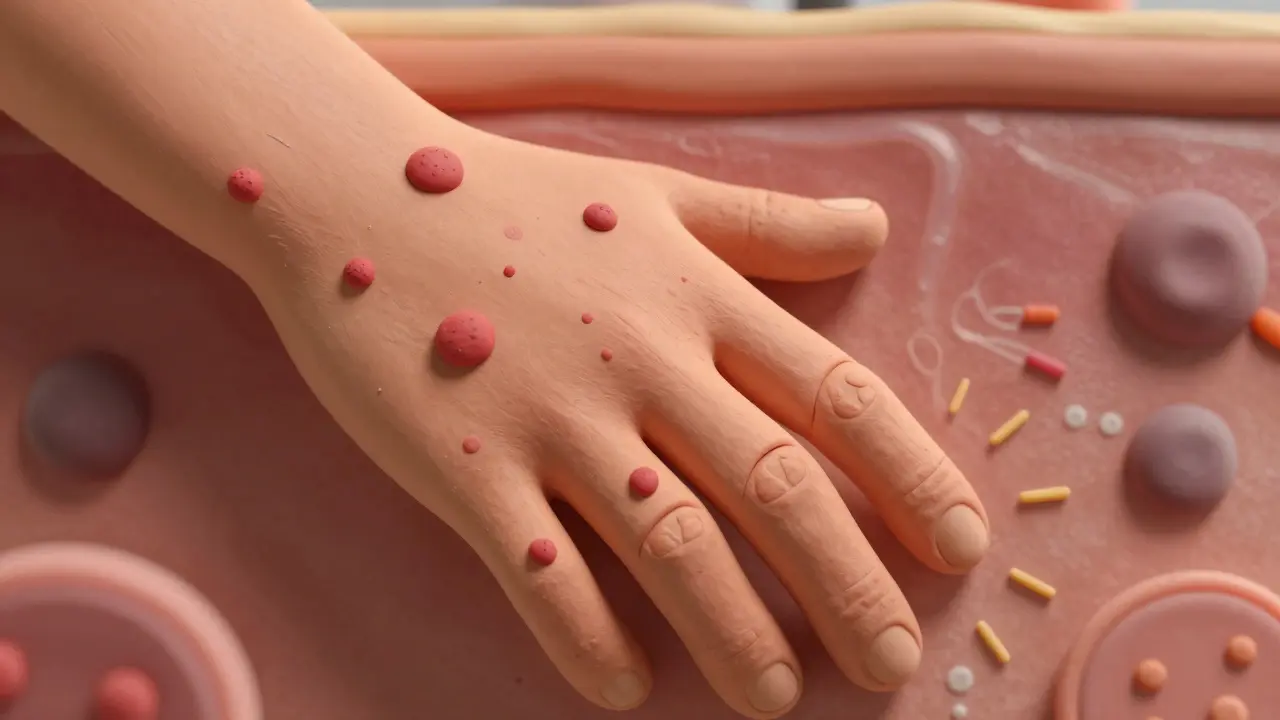
When your skin breaks out in red, scaly patches, it’s easy to think it’s just a cosmetic issue. But for about 1 in 3 people with psoriasis, those patches are a warning sign - not just of skin trouble, but of something deeper: psoriatic arthritis. This isn’t just a coincidence. It’s your immune system turning on itself, attacking both your skin and your joints at the same time.
It Starts With the Skin - But Doesn’t Stop There
Most people notice psoriasis first. Flaky, itchy plaques on elbows, knees, or scalp. But for many, the real problem starts quietly - in the joints. Stiffness in the fingers when you wake up. Swelling in one toe that won’t go away. Pain in the heel that feels like you’ve been running on concrete, even though you haven’t moved all day. The connection isn’t random. Psoriatic arthritis (PsA) develops in roughly 30% of people with psoriasis. And it doesn’t wait. On average, joint symptoms show up 5 to 10 years after the skin first flares. But here’s the twist: in 15% of cases, the joints hurt before the skin ever breaks out. That’s why so many people go years undiagnosed. They see a rheumatologist for stiff knees, a dermatologist for a rash - and no one connects the dots.The Five Faces of Psoriatic Arthritis
PsA doesn’t look the same in everyone. It comes in five distinct patterns, and knowing which one you have changes how you treat it.- Asymmetric oligoarthritis - the most common form - hits fewer than five joints, but not the same ones on both sides. Think: left knee and right wrist. It’s unpredictable, which makes it easy to miss.
- Symmetric polyarthritis mimics rheumatoid arthritis, with matching joints on both sides. But unlike RA, it rarely shows up with positive rheumatoid factor tests.
- Distal interphalangeal predominant (DIP) targets the joints closest to your nails. If you have pitted, crumbling nails and swollen fingertips, this is likely your type.
- Spondylarthritis attacks your spine and lower back. The pain gets worse when you rest, and improves with movement - the opposite of osteoarthritis.
- Arthritis mutilans - rare but devastating - eats away at bone, causing fingers or toes to shorten and twist. It’s called ‘opera glass hand’ because the digits look like they’ve been folded like a tiny pair of opera glasses.
Signs You Can’t Ignore
Some symptoms are unique to PsA. If you have any of these, don’t wait.- Dactylitis - also called ‘sausage digits’ - is when an entire finger or toe swells up like a balloon. It’s caused by inflammation inside the joint and the tendons around it. About half of PsA patients get this.
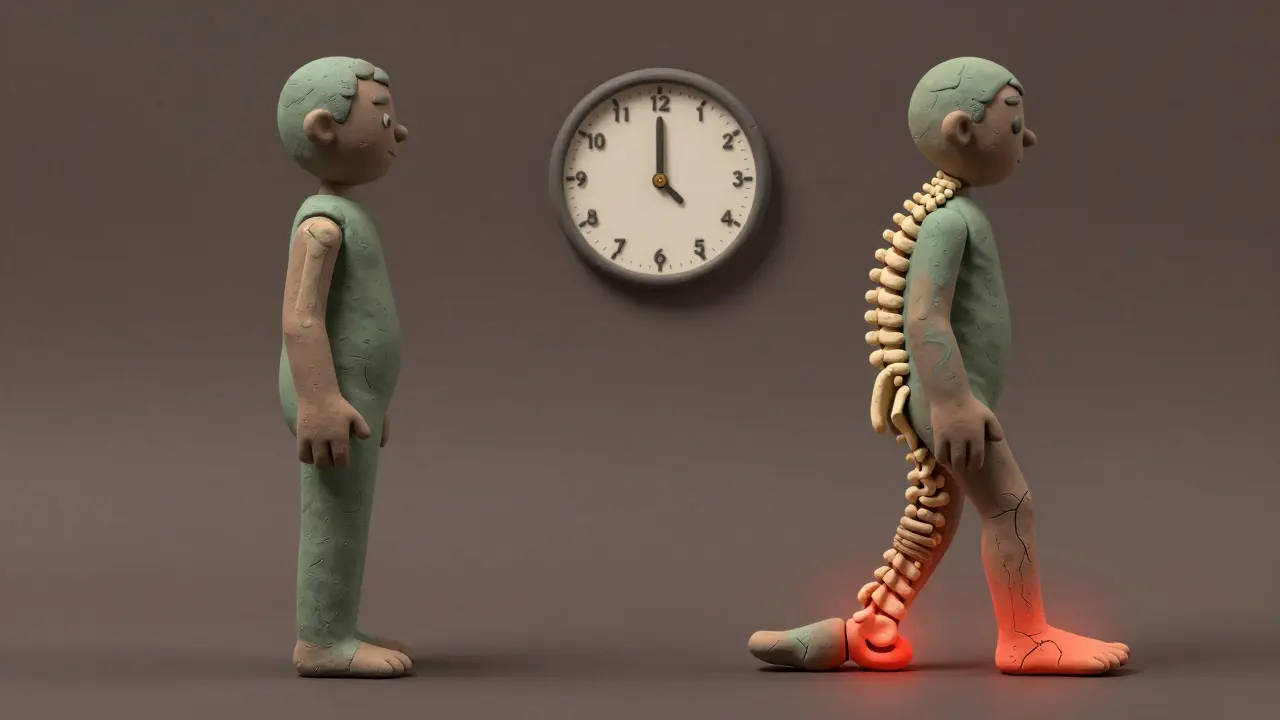
- Enthesitis is inflammation where tendons or ligaments attach to bone. Common spots? The Achilles tendon (28% of patients) and the bottom of the foot (22%). Walking feels like stepping on glass.
- Nail changes are a huge clue. Pitting (tiny holes in the nail), lifting from the nail bed, or yellow-brown discoloration? If you have these and joint pain, the chance you have PsA jumps to 89%.
And it’s not just the joints. Up to 10% of people with PsA get uveitis - eye inflammation that causes redness, pain, and blurred vision. About 7% develop inflammatory bowel disease. This isn’t just a joint disease. It’s a whole-body condition.
Why Diagnosis Takes So Long
The average person waits 2 to 5 years to get a correct diagnosis. Why? Because doctors aren’t trained to look for the link. A 2023 survey from the Psoriasis Foundation found that 43% of patients saw three or more doctors before someone connected their nail changes to their joint pain. One Reddit user wrote: ‘I had 18 months of worsening joint pain before my rheumatologist noticed my nail pitting - by then, I had permanent damage in three fingers.’ The problem isn’t just awareness. It’s testing. Blood tests for rheumatoid factor are negative in PsA. X-rays may look normal early on. But MRI and ultrasound can spot inflammation in tendons and joints long before bones show damage. The key is asking the right questions: Do you have psoriasis? Have your nails changed? Is your pain worse in the morning? Does rest make it worse?What Happens If You Wait
Delaying treatment is risky. A 2022 study from Toronto’s Psoriatic Arthritis Clinic found that people who waited over a year for diagnosis had 3.2 times more joint damage after five years than those treated within six months. Without treatment, PsA doesn’t just hurt - it destroys. Bone erosion, joint deformity, tendon damage. It can leave you unable to grip a cup, climb stairs, or even button a shirt. And it’s not just physical. Sixty-five percent of patients report severe fatigue that makes working, parenting, or even showering feel impossible.Treatment: It’s Not One-Size-Fits-All
There’s no cure, but there are powerful tools - and timing matters.- DMARDs like methotrexate are often the first step. Used in 65% of new cases, they slow inflammation but take weeks to work.
- TNF inhibitors (like adalimumab or etanercept) block a key inflammatory protein. About 65% of patients reach minimal disease activity within six months.
- IL-17 and IL-23 inhibitors (like secukinumab or guselkumab) are newer and often more effective. In one 2023 trial, guselkumab helped 64% of patients achieve major symptom relief in just 24 weeks.
But here’s the catch: 30% of people don’t respond to their first biologic. That’s why treatment is personalized. Your doctor may switch drugs, combine therapies, or try a JAK inhibitor - though those come with higher heart and cancer risks, which is why the FDA requires special monitoring.

Lifestyle Matters More Than You Think
Medication helps, but your daily choices shape how bad it gets.- Obesity doubles your risk of developing PsA. Losing even 10% of body weight can cut inflammation and improve drug response.
- Stress triggers flares in 85% of patients. Meditation, yoga, or even walking daily can help.
- Cold weather worsens stiffness and pain for over half of patients. Keeping joints warm with compression gloves or heated pads makes a real difference.
- Exercise isn’t optional. Low-impact movement - swimming, cycling, tai chi - keeps joints flexible and reduces fatigue.
And don’t ignore your skin. Treating psoriasis with topical creams or light therapy doesn’t just improve appearance - it can reduce joint inflammation too. Dermatologists and rheumatologists working together? That’s the gold standard. Studies show 82% of patients do better with this team approach.
What’s Next
The future of PsA care is personal. Researchers are already testing blood and genetic markers to predict who will respond to which drug. By 2027, doctors may choose treatments based on your unique immune profile - not just trial and error. The good news? Early action works. The GO-ALIVE study showed that starting biologics within six months of symptoms cuts joint damage by 73% over two years. That’s not just a statistic - it’s the difference between keeping your hands and losing them.Frequently Asked Questions
Can psoriasis cause joint pain without skin symptoms?
Yes. While most people develop skin psoriasis first, about 15% of those with psoriatic arthritis experience joint pain, stiffness, or swelling before any visible skin patches appear. This can make diagnosis harder, since doctors may not suspect PsA without the classic skin signs. If you have unexplained joint pain, especially with nail changes or family history of psoriasis, ask about PsA.
Is psoriatic arthritis the same as rheumatoid arthritis?
No. While both cause joint inflammation, they’re different diseases. Rheumatoid arthritis (RA) usually affects the same joints on both sides of the body and tests positive for rheumatoid factor. Psoriatic arthritis is often asymmetric, rarely shows rheumatoid factor, and is linked to skin and nail changes. PsA can also cause enthesitis and dactylitis - two signs almost never seen in RA.
Can psoriatic arthritis be cured?
There’s no cure yet, but modern treatments can put the disease into remission - meaning little to no pain, swelling, or joint damage. Many people on biologic drugs live full, active lives. The goal isn’t just to feel better today, but to stop long-term damage. Early treatment is the key to preserving joint function for decades.
Do I need to see both a dermatologist and a rheumatologist?
Yes, ideally. Psoriatic arthritis affects both skin and joints, so care works best when both specialists work together. Studies show that patients treated by a coordinated team - dermatologist and rheumatologist - have 82% better outcomes than those seeing just one. Your skin doctor can track nail changes and psoriasis flares; your rheumatologist can monitor joint damage and adjust medications.
What triggers psoriatic arthritis flares?
Common triggers include stress (cited by 85% of patients), infections like strep throat (63%), cold weather (57%), injury to a joint or skin, and smoking. Obesity also worsens inflammation. Keeping a daily journal of symptoms, diet, stress levels, and weather can help you spot your personal triggers - and avoid them.
Harbans Singh
December 25, 2025 AT 12:31Been living with this for 8 years. The nail pitting was the first clue for me - thought it was fungus, turned out it was PsA. Took two rheumatologists and one dermatologist to connect the dots. Now on guselkumab and my fingers don’t feel like they’re wrapped in concrete anymore. Don’t wait like I did.
Justin James
December 27, 2025 AT 10:03They don’t want you to know this but the real cause of psoriatic arthritis is glyphosate in your food and vaccines. The pharmaceutical companies make billions off biologics because they don’t want you to detox with apple cider vinegar and clay baths. I’ve been off meds for 3 years and my joints are better than ever - no scans needed. They’ll tell you it’s placebo but your body knows the truth. The system is rigged and your doctor’s just a paid pawn.
Zabihullah Saleh
December 28, 2025 AT 12:02It’s wild how the body doesn’t care about our categories. Skin here, joints there - like we’re compartmentalizing a single war. Psoriasis isn’t a rash. It’s a signal. A scream from the immune system saying ‘I’m confused, I don’t know what’s me anymore.’ We treat symptoms like they’re separate crimes when it’s all one rebellion. We’re just too busy naming things to notice the revolution.
Winni Victor
December 30, 2025 AT 02:42Oh great. Another ‘you’re not just lazy, you have a disease’ PSA. Next they’ll tell me my chronic exhaustion is caused by ‘inflammation’ and not just that I’m an adult who chose to nap instead of adulting.
Lindsay Hensel
December 31, 2025 AT 00:40Thank you for writing this with such clarity. I’ve watched my mother endure 12 years of misdiagnosis - from ‘arthritis of aging’ to ‘stress-induced pain’ - until her fingers began to curl. The moment her rheumatologist noticed the pitting? That was the first time she cried from relief, not pain. This isn’t just medicine. It’s dignity.
Linda B.
January 1, 2026 AT 23:13Did you know the FDA approved biologics after being lobbied by Big Pharma and the American Dermatology Association? The entire PsA narrative was manufactured to sell drugs. Your ‘inflammation’ is just your body trying to heal. Eat more saturated fat. Stop taking statins. Your joints will thank you. The truth is buried under layers of corporate white coats.
Christopher King
January 2, 2026 AT 14:15THIS IS THE SYSTEM. THEY WANT YOU TO THINK IT’S JUST A ‘DISEASE’ SO YOU’LL TAKE THEIR DRUGS AND NEVER QUESTION WHY YOUR IMMUNE SYSTEM IS TURNING ON YOU. THE SKIN ISN’T THE PROBLEM - IT’S THE SYMPTOM. THE REAL ISSUE? TOXINS IN THE WATER. THE 5G SIGNALS. THE FLUORIDE. THEY DON’T WANT YOU TO KNOW THAT YOUR BODY IS TRYING TO EXPULS THE POISON - BUT THEY’LL SELL YOU A $10,000 INJECTION TO SILENCE THE WARNING SIGNS. I’VE SEEN IT. I’VE BEEN THERE. I’M NOT JUST A PATIENT - I’M A WHISTLEBLOWER.
Michael Dillon
January 3, 2026 AT 08:11Y’all are overcomplicating this. I had psoriasis for 15 years, then my knees started acting up. Went to a chiropractor, got adjusted, started doing mobility drills, cut out gluten - boom. No more dactylitis. No biologics. No ‘team approach.’ Just listen to your body. It’s not a mystery. It’s just ignored.
Gary Hartung
January 3, 2026 AT 10:46It’s fascinating, isn’t it? How the medical establishment has, through decades of reductionist thinking, fractured a systemic autoimmune condition into silos - dermatology, rheumatology, immunology - as if the body were a series of disconnected departments. And yet, the patient, the living, breathing organism, is left to navigate this bureaucratic labyrinth alone. The tragedy isn’t the disease - it’s the architecture of care that refuses to see the whole.
Ben Harris
January 4, 2026 AT 12:04I don’t care what the studies say. I’ve been on six different biologics. I’ve spent $200k. My joints still crack like popcorn. And now they want me to do tai chi? Really? My therapist said I need to ‘find joy’ and my rheumatologist said I need to ‘lose weight’ and my dermatologist said I need to ‘stop scratching’ - but nobody asked if I’m tired of being treated like a broken machine. I’m not a case study. I’m a person who just wants to hold my kid without pain.
Jason Jasper
January 5, 2026 AT 12:26I didn’t know about the 15% who get joint pain before skin. I had that. Thought it was just old injury from college soccer. Took three years to get diagnosed. I wish I’d known then what I know now. Just… be persistent. And if your doctor doesn’t ask about your nails, find someone who does.
Carlos Narvaez
January 6, 2026 AT 00:31Surprising how little the medical community understands immune crosstalk. PsA isn’t a coincidence - it’s a cascade. Nail bed, synovium, entheses - all share embryological origins. The skin isn’t ‘connected’ to the joints. They’re the same tissue, misfiring. Your dermatologist should be reading immunology journals. Most aren’t.