
Protein Medication Timing Checker
Medication & Protein Information
Note: For protein-sensitive medications like levodopa, keep protein intake below 15g within 1 hour of taking medication. Many foods contain hidden protein (e.g., granola bars, protein-fortified foods, restaurant salads).
Results
Enter your protein intake and medication timing to see if it's safe.
Why Your Protein Shake Might Be Ruining Your Medication
You take your medication at breakfast, just like your doctor said. But your symptoms don’t improve. Maybe they even get worse. You’re not imagining it. The problem might not be the drug-it could be your protein.
Protein-rich foods like eggs, chicken, tofu, yogurt, and even protein bars don’t just build muscle. They can seriously interfere with how your body absorbs certain medications. This isn’t a myth or a vague warning. It’s backed by decades of clinical research and confirmed by major health agencies worldwide. For people taking drugs like levodopa for Parkinson’s, antibiotics, or even some epilepsy medications, what you eat can make the difference between feeling okay and feeling completely out of control.
How Protein Blocks Medication Absorption
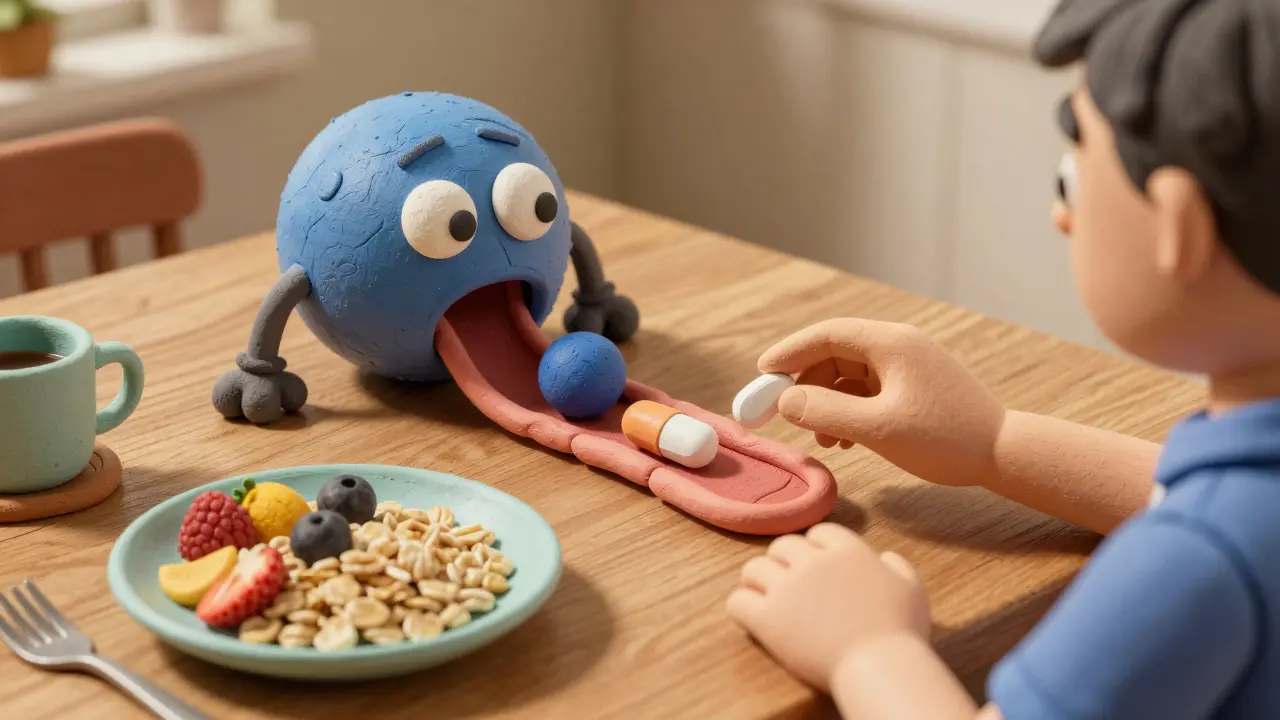
It all comes down to transporters in your gut and brain. Your body uses special channels called Large Neutral Amino Acid Transporters (LNAATs) to move amino acids-the building blocks of protein-from your digestive tract into your bloodstream. But here’s the catch: these same channels also carry certain medications, including levodopa (used for Parkinson’s), some antiepileptic drugs, and even a few antibiotics like penicillin.
When you eat a high-protein meal, your blood floods with amino acids. Suddenly, your transporters are overwhelmed. Medication molecules can’t get through. It’s like trying to walk through a crowded subway turnstile-everyone’s jostling for space, and your pill gets stuck.
Studies show this can cut levodopa absorption by 30% to 50% in about 60% of Parkinson’s patients. That means if you normally get 100% of your dose’s benefit, you might only get 50%. Your tremors come back. Your movements slow. You feel like the medication stopped working-even though it’s still in your system.
Not All Medications Are Affected the Same Way
It’s not a blanket rule. Some drugs barely notice protein. Others are completely thrown off. The key is understanding the Biopharmaceutics Classification System (BCS), which groups drugs by how well they dissolve and how easily they cross membranes.
- BCS Class I drugs (like aspirin or atorvastatin) dissolve easily and pass through membranes without help. Protein barely touches them.
- BCS Class III drugs (like levodopa, metformin, and some antibiotics) dissolve well but struggle to cross membranes. They rely on those amino acid transporters. Protein? Big problem.
Levodopa is the poster child here. It’s a Class III drug. So is gabapentin. So is carbidopa-levodopa combinations. If you’re on any of these, your protein intake matters-big time.
On the flip side, some drugs actually absorb better with protein. Certain antibiotics like amoxicillin show slightly higher blood levels after a protein-rich meal because protein increases blood flow to the gut and slows stomach emptying. But these cases are rare. For most medications, protein = risk.
The Protein Redistribution Strategy That Actually Works
Many patients are told to go on a low-protein diet. That sounds logical-until you realize you’re starving your muscles, weakening your immune system, and risking serious malnutrition. A 2024 study in the Journal of Parkinson’s Disease found that 23% of patients on strict low-protein diets developed muscle wasting within 18 months.
There’s a better way: protein redistribution.
This isn’t about cutting protein. It’s about moving it.
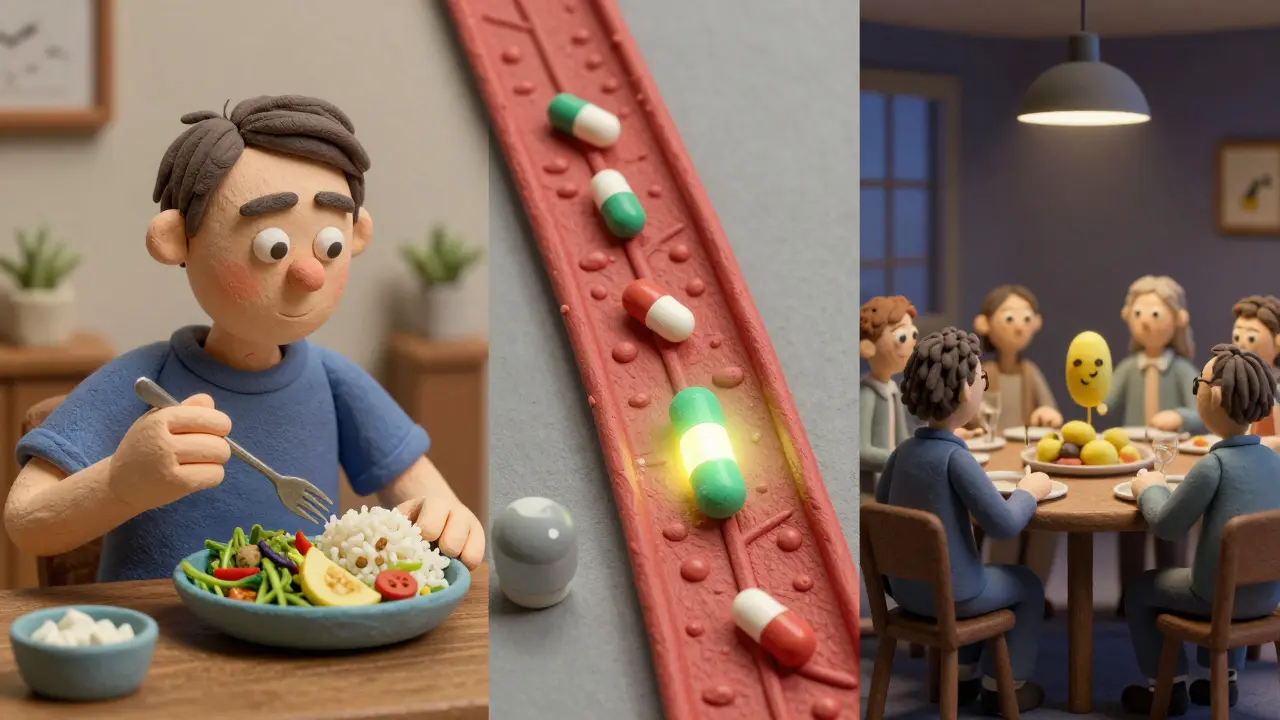
Instead of spreading protein evenly across breakfast, lunch, and dinner, you consume 70% of your daily protein at dinner. That leaves your morning and afternoon meals low in protein-perfect timing for your levodopa or other sensitive meds.
Here’s how it works in real life:
- Breakfast: Oatmeal with berries, toast with jam, fruit, tea. Less than 5g protein.
- Lunch: Salad with veggies, rice, olive oil, apple. Under 10g protein.
- Dinner: Grilled salmon, lentils, quinoa, broccoli. 50-60g protein.
According to the Michael J. Fox Foundation, this simple shift increases ‘on’ time-when symptoms are controlled-by 2.5 hours per day. One Reddit user tracked their symptoms with a wearable sensor and saw their ‘off’ time drop from over 5 hours to just 2.1 hours after switching.
Timing Matters More Than You Think
Even if you eat low-protein meals, timing is everything.
Doctors recommend taking levodopa and similar drugs 30 to 60 minutes before meals. Why? Because it gives the medication a head start. By the time food hits your gut and floods it with amino acids, your drug is already absorbed.
But if you take it with or right after a meal-even a light one-you’re racing against protein. And protein always wins.
The American Academy of Neurology’s 2024 guidelines say: avoid meals with more than 15g protein within an hour of taking your medication. That’s a slice of whole wheat bread, a small yogurt, or a handful of nuts. They’re sneaky.
Need to ease nausea? Have a low-protein snack-like a banana, rice cakes, or a spoonful of applesauce-30 minutes before your pill. That’s enough to settle your stomach without blocking absorption.
What You Don’t Know Is Hiding in Your Food
Most people think protein only comes from meat, fish, and dairy. But processed foods are full of hidden protein.
- A ‘healthy’ granola bar: 7-10g protein
- A protein-fortified oatmeal packet: 12g
- A protein-enhanced yogurt: 15g+
- A ‘high-protein’ energy drink: 20g
And dining out? That’s where things fall apart. A restaurant salad might come with grilled chicken, croutons made with egg wash, and parmesan cheese. You think it’s light. It’s not.
A Mayo Clinic survey found 63% of patients struggle with protein timing when eating out. The solution? Ask for plain grilled meat on the side. Skip the cheese. Order sauces on the side. Choose rice over beans. It’s not about being perfect-it’s about being aware.
Technology Is Helping Patients Take Control
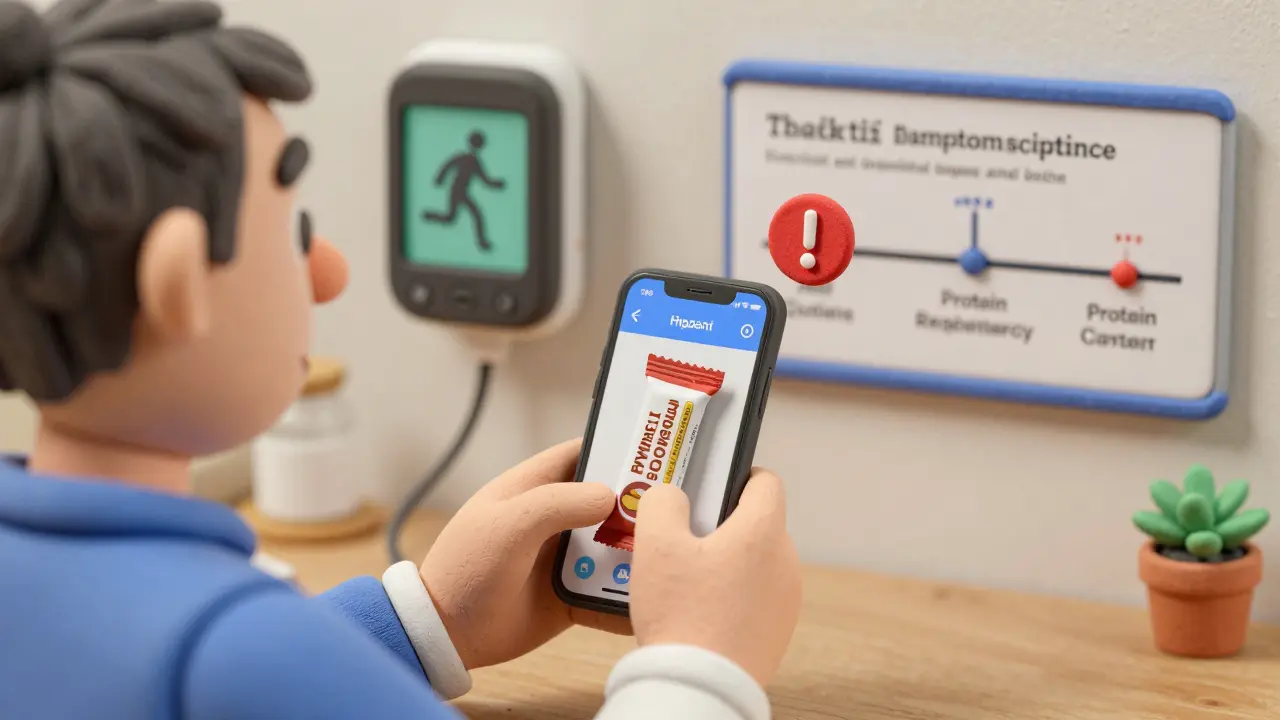
Tracking protein intake used to mean counting grams with a notebook. Now, apps like ProteinTracker for PD (developed by Johns Hopkins) let you scan barcodes, log meals with photos, and get instant protein estimates. Users report 40% fewer timing errors.
Some wearable sensors, like the Kinesia One, track movement patterns and can show you exactly when your medication is working-or failing. Combine that with a food log, and you start seeing patterns no doctor could guess.
Even big pharma is catching on. Since 2022, 78% of pharmaceutical companies use the Biopharmaceutics Drug Disposition Classification System (BDDCS) to flag protein-sensitive drugs. The FDA is now drafting labels that will include a ‘Protein Interaction Score’-just like alcohol warnings.
What You Should Do Right Now
If you’re on a medication that might interact with protein, here’s what to do:
- Check your drug. Is it levodopa, carbidopa-levodopa, gabapentin, or an antibiotic? If yes, protein timing matters.
- Track your meals and symptoms for one week. Note when you take your meds and what you ate.
- Try protein redistribution. Move most of your protein to dinner. Keep breakfast and lunch light.
- Take meds 30-60 minutes before eating. No exceptions.
- Ask for help. Talk to a dietitian who specializes in Parkinson’s or neurology. Most hospitals have them.
Don’t wait for your doctor to bring it up. A 2023 study found that 68% of clinicians never discuss protein timing with patients starting levodopa. That’s not negligence-it’s ignorance. But you can change that.
What’s Next for Protein and Medications
Researchers are exploring new ways to beat this problem. One 2025 study in Nature Medicine found that specific probiotics can reduce amino acid competition by 25%, helping drugs get through. Another trial at Massachusetts General Hospital is testing AI-powered algorithms that adjust medication timing based on your daily protein intake and movement patterns.
And then there’s Duopa-a gel form of levodopa delivered directly into the small intestine. It bypasses the stomach entirely. Since 2015, over 12,000 people have started using it each year. It’s expensive. It’s invasive. But for some, it’s the only way to stay in control.
The message is clear: protein isn’t the enemy. But ignoring it? That’s dangerous.
Can I still eat meat if I’m on levodopa?
Yes-but timing matters. Avoid meat, eggs, dairy, and other high-protein foods within 1 hour before and after taking levodopa. Save your meat for dinner, when you’re not taking your morning or afternoon doses. Most people successfully eat meat daily by shifting protein to the evening.
Do all protein sources affect medication the same way?
Yes. Whether it’s chicken, tofu, lentils, or whey protein powder, all sources break down into the same amino acids that compete with your medication. Plant-based proteins aren’t safer-they’re just as disruptive. Don’t assume ‘natural’ means ‘gentler’ on your drugs.
How do I know if my medication is affected by protein?
Check the drug label or ask your pharmacist. Levodopa, carbidopa-levodopa, gabapentin, methyldopa, and some antibiotics like ampicillin are high-risk. If you notice your symptoms get worse after meals, especially protein-heavy ones, that’s a strong clue. Keep a symptom and food log for 7 days to confirm the pattern.
Is it safe to go on a low-protein diet long-term?
Not without supervision. Cutting protein too much leads to muscle loss, weakened immunity, and fatigue. The recommended daily intake is 0.8-1.0g per kg of body weight. Instead of cutting protein, redistribute it. Focus on timing, not restriction. A dietitian can help you meet your needs without sabotaging your meds.
Can I drink a protein shake with my medication?
No. A typical protein shake contains 20-40g of protein-enough to block levodopa absorption completely. Even if you take your pill an hour before, the shake will flood your system with amino acids as you’re digesting it. Wait at least 2 hours after taking your medication before having a protein shake.
Holly Robin
January 29, 2026 AT 21:20KATHRYN JOHNSON
January 31, 2026 AT 18:40Kelly Weinhold
February 2, 2026 AT 10:57Kimberly Reker
February 4, 2026 AT 09:23Eliana Botelho
February 6, 2026 AT 02:06Rob Webber
February 7, 2026 AT 07:19calanha nevin
February 8, 2026 AT 02:24Lisa McCluskey
February 8, 2026 AT 04:04Niamh Trihy
February 9, 2026 AT 16:44Jason Xin
February 10, 2026 AT 08:39Blair Kelly
February 11, 2026 AT 03:54Gaurav Meena
February 12, 2026 AT 18:05Beth Beltway
February 13, 2026 AT 15:03Natasha Plebani
February 15, 2026 AT 04:57