
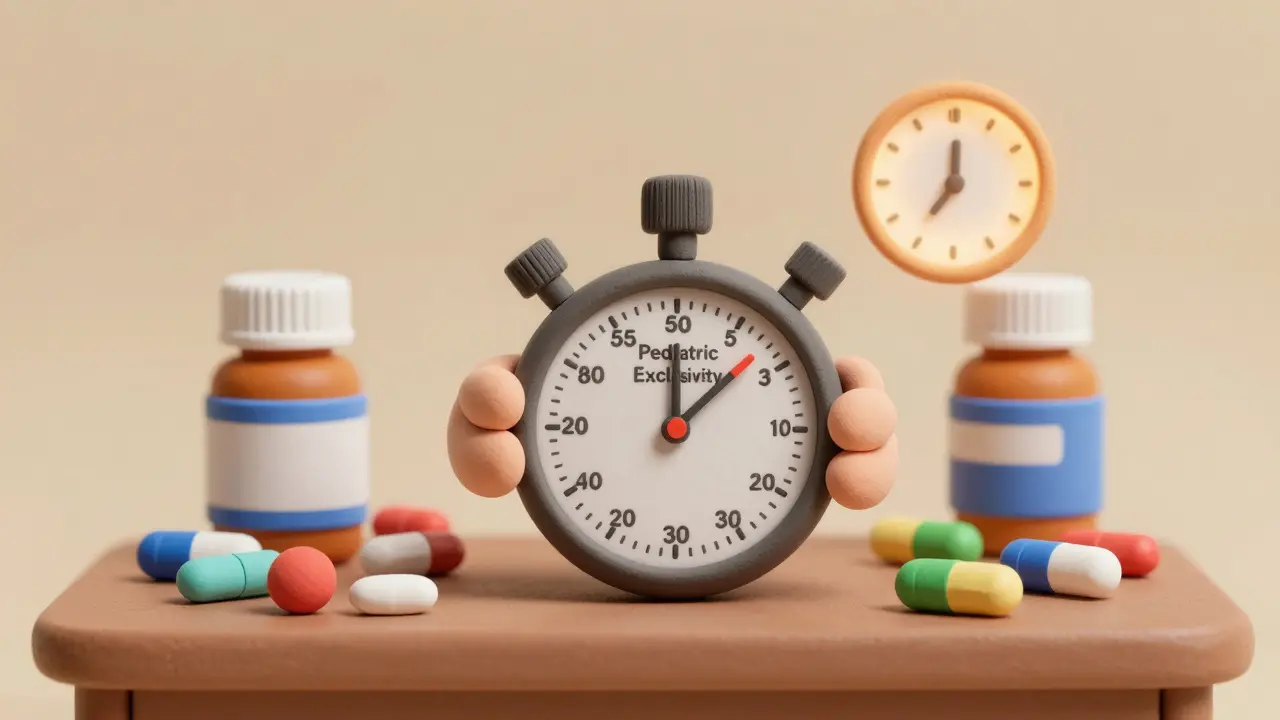
When a drug company gets approval for a new medicine, it doesn’t just get a patent-it gets a clock. But here’s the twist: that clock doesn’t always tick the way you’d expect. The FDA doesn’t extend the actual patent term. Instead, it extends the time no other company can sell a generic version. And one of the most powerful tools for doing this isn’t a court order or a patent filing-it’s something called pediatric exclusivity.
Think of pediatric exclusivity like a pause button on generic drug entry. It doesn’t make your patent last longer. It just stops the FDA from approving any competing drugs for six extra months. And here’s what makes it so valuable: it applies to every version of the drug you make-even if the patent has already expired.
How Pediatric Exclusivity Actually Works
The FDA doesn’t just hand out six-month exclusivity for free. To get it, a drugmaker must study their medicine in children. Not because it’s nice to do, but because it’s required by law. Under Section 505A of the Federal Food, Drug, and Cosmetic Act, the FDA can issue a Written Request asking the company to study the drug in kids. This isn’t optional. If the company does the studies and submits them properly, they get six months of extra market protection.
The catch? The exclusivity doesn’t kick in just because you did the studies. The FDA has 180 days to review your data and confirm the studies meet their standards. Only then does the clock start. And once it does, no generic company can get final approval-unless they win a court case or get permission from the original drugmaker.
It’s Not About Patents-It’s About Regulatory Blocks
This is where most people get confused. Pediatric exclusivity doesn’t change the patent expiration date listed in the FDA’s Orange Book. Instead, it adds a second line next to it: the extended exclusivity date. If a patent expires in 2027, but pediatric exclusivity is granted, the FDA won’t approve any generic until 2027 plus six months-even if the patent is gone.
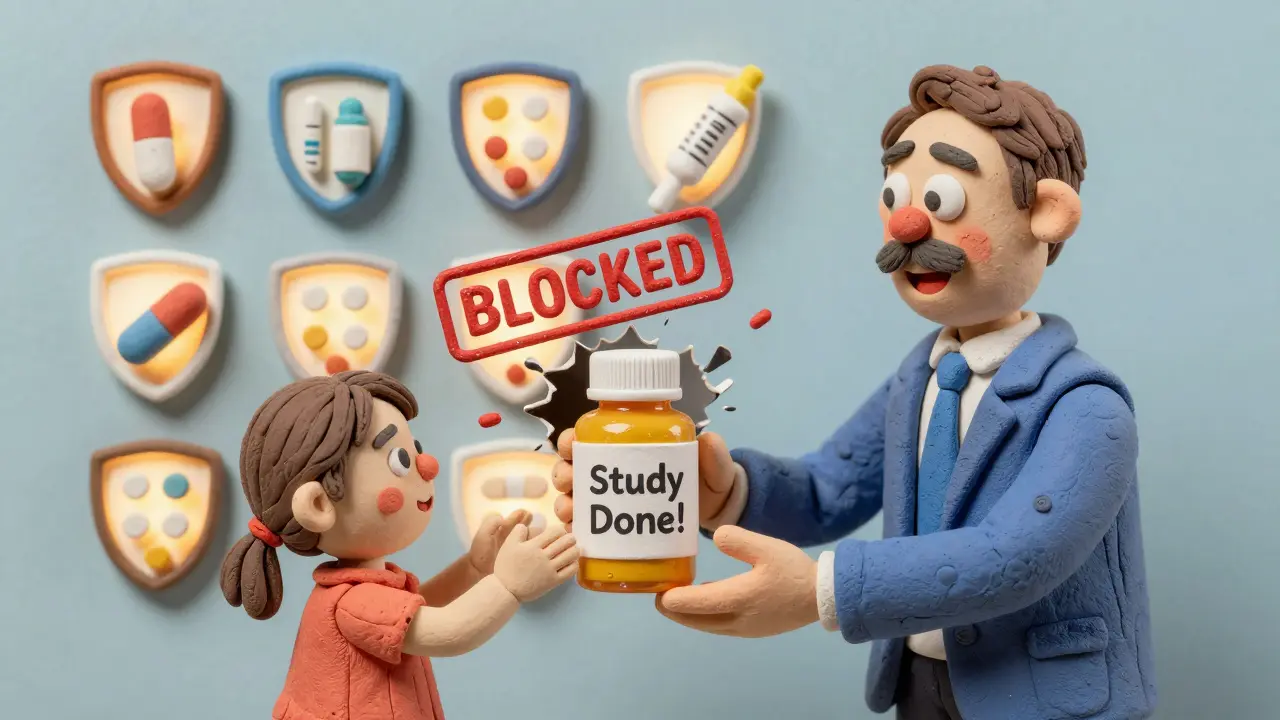
Why does this matter? Because generic companies file applications based on patent status. If they claim the patent has expired (called a Paragraph II certification), they think they’re clear to sell. But pediatric exclusivity blocks them anyway. It’s a regulatory wall, not a legal one. And the FDA enforces it strictly. In fact, the agency can automatically convert a Paragraph II certification into a blocked application if pediatric exclusivity is active. Courts have backed them up on this.
What Happens When the Patent Expires?
This is the real power move. Say a drug’s patent expires in January 2026. A generic company files an application right away. But the original maker got pediatric exclusivity in December 2025. Even though the patent is gone, the FDA still won’t approve the generic until July 2026. The exclusivity becomes the only barrier standing between the brand drug and its competitors.
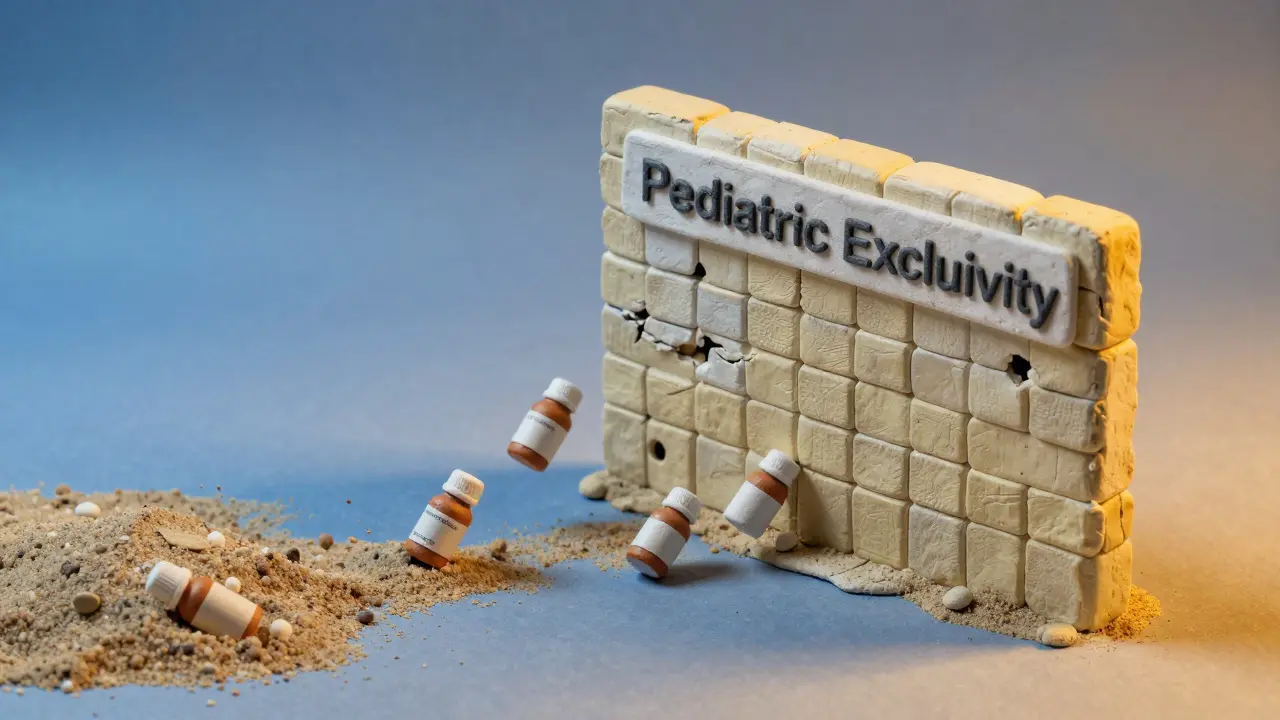
That’s why pediatric exclusivity is called “ironclad.” It doesn’t rely on whether the patent is valid or enforceable. It doesn’t care if the generic company wins a lawsuit. As long as the exclusivity is active, the FDA’s hands are tied. The only way around it? A court ruling that the exclusivity doesn’t apply, or a waiver from the original company.
It Applies to Every Form and Every Use
Here’s another thing that surprises people: pediatric exclusivity doesn’t just protect the pill you studied. It protects every version of the drug with the same active ingredient. So if you make a tablet, a liquid, a cream, and an injection-all with the same chemical-you get six months of protection for all of them.
Let’s say you only studied the tablet in kids. But your cream is still under exclusivity? The pediatric exclusivity extends to the cream too. Same with the injection. The FDA doesn’t care which form you studied. If the active moiety is the same, the clock stops for everything. That’s why big drugmakers often wait until the last moment to do pediatric studies-it multiplies their protection across their entire product line.
What If There’s No Patent Left?
You might think: if the drug has no patent or exclusivity left, then pediatric exclusivity can’t apply. Not true. The FDA can still grant it-if the pediatric study leads to a new approval. For example, if a drug was only approved for adults and the company now gets approval to use it in kids, they can get six months of exclusivity even if the original patent expired years ago.
This is rare, but it happens. The FDA calls it a “supplemental application.” The key is that the pediatric study must be required for approval. If the FDA says, “We need this data to approve the pediatric use,” then the exclusivity kicks in. It’s not about the drug’s age-it’s about whether the study was necessary for a new use.
Why Biologics Are Left Out
Pediatric exclusivity only works for small-molecule drugs. It doesn’t apply to biologics-like insulin, vaccines, or monoclonal antibodies. Why? Because biologics don’t follow the same rules. Under the Biologics Price Competition and Innovation Act (BPCIA), there’s no patent linkage system like there is for traditional drugs. Generic biologics (called biosimilars) don’t have to wait for patent expiration to be approved. So even if a biologic company does pediatric studies, the FDA doesn’t delay biosimilar approval.
This creates a big gap in the system. While a small-molecule drug might get six months of extra protection, a biologic with the same pediatric data gets nothing. It’s a loophole that drugmakers have noticed-and some are pushing to fix.
When Pediatric Exclusivity Doesn’t Block Generics
There are three legal ways a generic company can get around pediatric exclusivity:
- Win a patent lawsuit: If the generic company sues and proves the patent is invalid or not infringed, the FDA can approve their product-even during exclusivity.
- Get a waiver: The original company can voluntarily give up their exclusivity. This rarely happens unless there’s a deal or public pressure.
- Don’t get sued: If a generic company files an application and the brand company doesn’t sue within 45 days, the exclusivity doesn’t block approval. But this only works if there’s no active patent.
Here’s the catch: even if the patent is expired, the FDA still won’t approve the generic unless one of these three conditions is met. The exclusivity is a standalone barrier. It doesn’t care about patents. It only cares about its own rules.
How Much Is Six Months Worth?
For blockbuster drugs, six months of exclusivity can mean hundreds of millions in extra revenue. Take a drug that brings in $1 billion a year. Six months of monopoly sales? That’s $500 million-before taxes. And since generic prices typically drop by 80% or more after entry, that six months is pure profit.
That’s why drug companies fight hard to get pediatric exclusivity. Some even delay their pediatric studies until just before patent expiry, so the six-month clock starts right when competition is about to hit. It’s not about helping kids-it’s about extending profits. And the FDA’s rules make it legal.
Why This Matters for Parents and Doctors
On the surface, pediatric exclusivity sounds like a win for children. More studies mean better dosing, safer labels, and fewer off-label prescriptions. And that’s true. Since 2002, over 300 drugs have been studied in kids because of this rule.
But here’s the trade-off: it delays access to cheaper generics. Families waiting for a generic version of a $200-a-month drug might have to pay full price for six more months. That’s real money for people without good insurance.
So while the system improves pediatric care, it also gives drugmakers a powerful tool to protect revenue. The FDA walks a tightrope-encouraging child-safe research while letting companies lock in profits longer than the law intended.
Does pediatric exclusivity extend the actual patent term?
No. Pediatric exclusivity does not change the legal expiration date of a patent. Instead, it delays the FDA’s ability to approve generic versions of the drug for six months, regardless of whether the patent is still active. It’s a regulatory delay, not a patent extension.
Can a generic drug be approved during pediatric exclusivity?
Only under three conditions: if a court rules the patent is invalid or not infringed, if the original drugmaker grants a waiver, or if the generic company was not sued within 45 days of filing. Otherwise, the FDA is legally blocked from approving the generic until the exclusivity period ends.
Does pediatric exclusivity apply to biologics?
No. Pediatric exclusivity only applies to small-molecule drugs regulated under the Hatch-Waxman Act. Biologics, such as vaccines and monoclonal antibodies, are governed by different rules under the BPCIA and do not qualify for this six-month exclusivity, even if pediatric studies are completed.
What happens if a drug has no patent left?
Pediatric exclusivity can still be granted if the pediatric study leads to a new FDA approval-for example, expanding an adult-only drug to pediatric use. Even with no patent, the exclusivity creates a six-month window where no generic can enter the market.
Does pediatric exclusivity apply to all dosage forms of a drug?
Yes. If a company studies a drug in children and qualifies for pediatric exclusivity, the six-month protection applies to all dosage forms (tablet, liquid, cream, injection) and all indications that contain the same active ingredient-even if they weren’t studied.
Natasha Bhala
February 7, 2026 AT 10:30Jesse Lord
February 8, 2026 AT 17:39AMIT JINDAL
February 9, 2026 AT 08:43Catherine Wybourne
February 11, 2026 AT 01:19Ashley Hutchins
February 11, 2026 AT 04:15Lakisha Sarbah
February 12, 2026 AT 01:50Marcus Jackson
February 12, 2026 AT 19:45Eric Knobelspiesse
February 12, 2026 AT 22:16Heather Burrows
February 14, 2026 AT 01:11Ritu Singh
February 14, 2026 AT 18:35Mark Harris
February 16, 2026 AT 02:41Savannah Edwards
February 16, 2026 AT 04:23Mayank Dobhal
February 18, 2026 AT 04:14Natasha Bhala
February 19, 2026 AT 11:08