

Polycystic Ovary Syndrome (PCOS) affects about 1 in 10 women of childbearing age. For many, it means irregular periods, trouble getting pregnant, acne, excess hair growth, and constant fatigue. But behind these symptoms is a deeper issue: insulin resistance. And that’s where metformin comes in.
What Metformin Actually Does in PCOS
Metformin isn’t a fertility drug. It’s not a hormone. It’s a medicine that fixes how your body handles sugar. Originally developed in the 1950s for type 2 diabetes, it’s now one of the most common off-label treatments for PCOS. How? By making your cells more responsive to insulin.
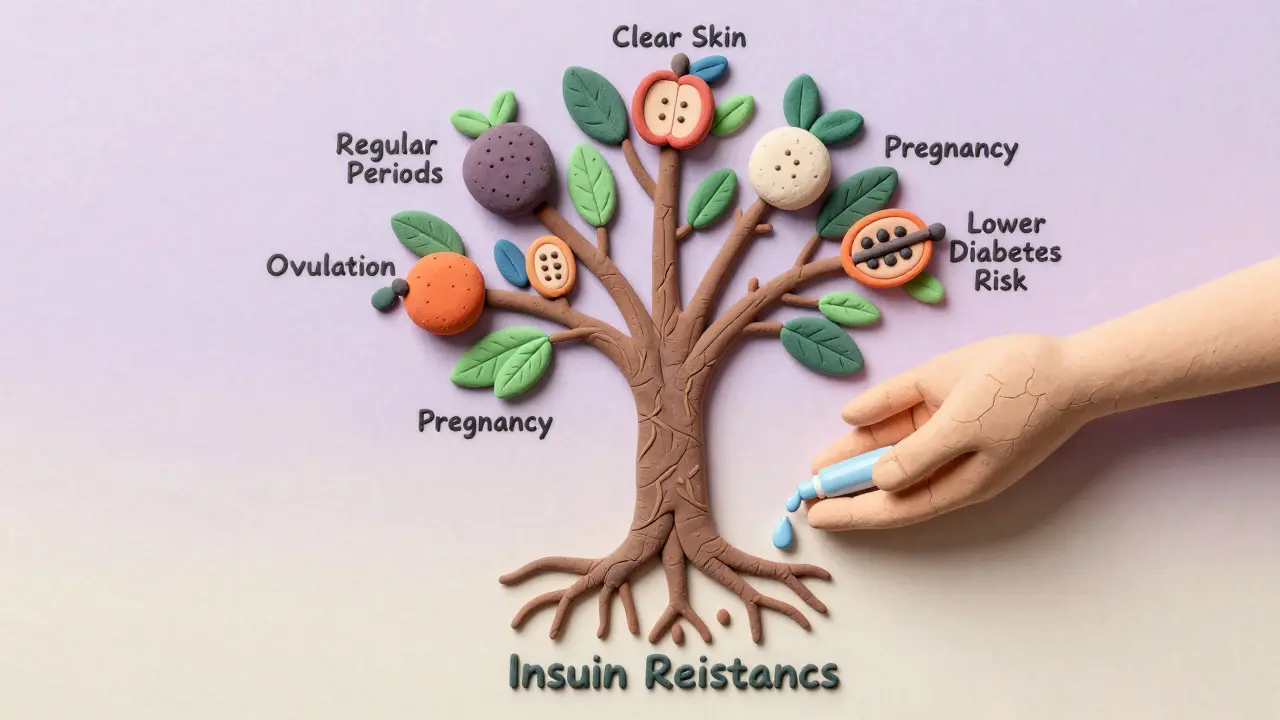
When you have PCOS, your body makes too much insulin - not because you eat too much sugar, but because your cells don’t respond well to it. Your pancreas pumps out more and more insulin to compensate. That excess insulin tells your ovaries to make more testosterone. More testosterone means no ovulation. No ovulation means no period. And no period means no baby.
Metformin breaks that cycle. It reduces sugar production in your liver, slows sugar absorption in your gut, and helps your muscles use insulin better. The result? Lower insulin levels. Lower testosterone. And a better chance your ovaries will release an egg.
Does Metformin Really Help You Ovulate?
Yes - but not always on its own.
A 2023 Cochrane review looked at 44 studies involving over 3,000 women with PCOS. The findings? Metformin doubled the odds of ovulation compared to no treatment. Women taking metformin had ovulation rates of about 50-60%, while those on placebo were around 20-30%. That’s a big jump.
But here’s the catch: if you’re trying to get pregnant, metformin alone isn’t the fastest route. In a 2023 study of 72 women with PCOS and infertility, letrozole plus metformin led to ovulation in 88.9% of cases. Metformin alone? Only 69.4%. Clomiphene citrate (the old standard) worked in 75% of cases. So if you want results fast, combination therapy wins.
Still, metformin has unique advantages. It doesn’t cause multiple pregnancies like clomiphene. It doesn’t thin the uterine lining. And it cuts your risk of ovarian hyperstimulation syndrome (OHSS) during IVF by over 70%. For women who’ve had OHSS before, or who are at high risk, that alone makes metformin worth considering.
Who Benefits Most From Metformin?
Not all women with PCOS respond the same. The biggest predictor of success? Insulin resistance.
Women with higher fasting insulin levels, higher HOMA-IR scores, or those with dark patches on their neck (acanthosis nigricans) tend to see the clearest results. Surprisingly, body weight doesn’t always matter. Non-obese women with PCOS and insulin resistance often respond just as well - sometimes better - than overweight women.
A 2023 analysis in Annals of Translational Medicine challenged the old belief that clomiphene should always come first. The author argued that for non-obese women with clear insulin resistance, metformin should be the first choice. Why? Because it treats the root cause, not just the symptom. It also helps with acne, excess hair, and mood swings - things clomiphene doesn’t touch.

Dosing and How Long It Takes
Most doctors start with 500 mg once a day, taken with food. After a week or two, they bump it up to 500 mg twice daily. Over the next few weeks, the dose usually climbs to 1,500-2,000 mg per day. The extended-release version (Metformin XR) causes fewer stomach issues and is often preferred.
Side effects? Nausea, diarrhea, bloating. About 1 in 3 women feel them at first. But most fade within 2-4 weeks. Taking it with meals, starting low, or switching to XR helps a lot.
It takes time. You won’t ovulate in a week. Most women see regular periods within 3 months. Ovulation tracking (via progesterone blood tests or ovulation kits) is recommended after 2-3 months. If you’re trying to conceive, have sex every 2-3 days starting around day 10 of your cycle.
Metformin and Pregnancy: Safe? Should You Keep Taking It?
Metformin is classified as Category B - meaning no proven risk in animal studies, and no clear danger in humans. Many women continue taking it through pregnancy, especially if they have a history of gestational diabetes or miscarriage.
A 2023 meta-analysis of 12 trials found that women who kept taking metformin into the first trimester had higher pregnancy rates than those who stopped after a positive test. Some doctors believe it helps reduce early miscarriage risk in women with PCOS, though more research is needed.
It crosses the placenta, but no major birth defects have been linked to it. Still, many providers will switch you to insulin or stop it after confirmation of pregnancy. It’s a personal decision - talk to your doctor.
Why Metformin Beats the Alternatives (Sometimes)
Let’s compare the top three drugs for PCOS infertility:
| Drug | Ovulation Rate | Live Birth Rate | Multiple Pregnancy Risk | Side Effects | Cost (Monthly) |
|---|---|---|---|---|---|
| Metformin (alone) | 50-60% | 19-37% | Very low | GI upset (common) | $4-$10 |
| Clomiphene Citrate | 70-75% | 20-30% | High (5-10%) | Hot flashes, mood swings, thin lining | $30-$50 |
| Letrozole | 80-85% | 25-35% | Low (<5%) | Mild fatigue, headaches | $50-$100 |
| Letrozole + Metformin | 88-90% | 30-40% | Low | GI upset + mild fatigue | $55-$120 |
Metformin doesn’t win on speed. But it wins on safety, cost, and long-term health. It lowers your risk of diabetes, heart disease, and endometrial cancer. Clomiphene and letrozole only help you ovulate. Metformin helps you heal.
What About Long-Term Use?
Many women stop metformin after they get pregnant. But for others, it’s a lifelong tool.
The REPOSE trial (2017) followed women with PCOS for 10 years. Those on metformin had a 30% lower chance of developing type 2 diabetes. Another study showed reduced belly fat, lower cholesterol, and better blood pressure over time.
Even if you’re not trying to get pregnant, metformin can help with:
- Reducing facial and body hair
- Clearing acne
- Improving mood and energy
- Stabilizing periods
It’s not a magic pill. But for women with insulin-resistant PCOS, it’s one of the few treatments that targets the core problem - not just the symptoms.
Real-World Experiences
On Reddit’s r/PCOS, women report:
- "I started metformin in January. My period came back in April. I got pregnant in June. No clomiphene needed."
- "The diarrhea was brutal for 3 weeks. Switched to XR. Zero issues after that. My skin cleared up in 2 months."
- "My doctor said I was "too skinny" for metformin. I insisted. My insulin levels dropped 40%. I’m now pregnant at 34."
These aren’t outliers. They’re evidence of what science is slowly catching up to: metformin works best when you have insulin resistance - no matter your weight.
The Bottom Line
Metformin isn’t the fastest path to pregnancy. But for women with PCOS and insulin resistance, it’s the most sustainable one. It doesn’t just help you ovulate - it helps your whole body recover.
If you’re trying to conceive and have irregular cycles, high insulin, or dark skin patches, ask your doctor for a fasting insulin test. If it’s high, metformin might be your best first step - not a backup.
And if you’re not trying to get pregnant? Metformin can still help you feel better - longer, healthier, and more in control of your body.
Can metformin help me get pregnant if I have PCOS?
Yes - especially if you have insulin resistance. Metformin improves ovulation rates by about 2.5 times compared to no treatment. However, it works better when combined with other medications like letrozole or clomiphene. For some women, especially those who are not overweight, metformin alone is enough to restore regular ovulation.
How long does it take for metformin to work for PCOS?
It takes time. Most women notice more regular periods after 2-3 months. Ovulation typically resumes between 3 and 6 months. For pregnancy, doctors usually recommend at least 3 months of consistent use before trying to conceive. Some women need 6 months or more, especially if insulin resistance is severe.
Is metformin safe during pregnancy?
Metformin is classified as Category B, meaning no proven risk in pregnancy. Many women continue taking it through the first trimester, especially if they have a history of miscarriage or gestational diabetes. Studies show no increase in birth defects. Some doctors prefer to switch to insulin after pregnancy confirmation, but continuing metformin is generally considered safe and may reduce early pregnancy loss risk.
Why do some doctors say metformin doesn’t work for PCOS?
Some studies show metformin alone doesn’t always improve live birth rates compared to placebo. But that’s misleading. The real benefit isn’t just pregnancy - it’s metabolic health. Women who take metformin have lower insulin, better hormone balance, and reduced diabetes risk. It’s not a fertility drug - it’s a metabolic reset. Doctors who only look at pregnancy rates miss the bigger picture.
Should I take metformin if I’m not overweight?
Yes - if you have insulin resistance. Many women with PCOS who are lean still have high insulin levels. Weight isn’t the issue - insulin sensitivity is. A fasting insulin test or HOMA-IR score can tell you if you’d benefit. In fact, non-obese women with insulin resistance often respond better to metformin than overweight women.
Can metformin help with acne and hair growth in PCOS?
Yes. By lowering insulin, metformin reduces testosterone production in the ovaries. This leads to less facial and body hair and clearer skin. Many women notice improvement in acne and hirsutism within 3-6 months - often better than birth control pills, without the side effects of synthetic hormones.
What’s the best dose of metformin for PCOS?
Most doctors start with 500 mg once daily with dinner, then increase to 500 mg twice daily after a week. The target dose is usually 1,500-2,000 mg per day. Extended-release (XR) versions are better tolerated and can be taken once daily. Always take it with food to reduce stomach upset.
Is metformin cheaper than clomiphene or letrozole?
Yes. Generic metformin costs $4-$10 per month in the U.S. Clomiphene runs $30-$50, and letrozole $50-$100. Metformin is also available as a generic in most countries. Its low cost makes it accessible - and one of the few PCOS treatments that doesn’t require insurance approval.
Sam Pearlman
February 18, 2026 AT 18:40Brenda K. Wolfgram Moore
February 19, 2026 AT 18:26Carrie Schluckbier
February 20, 2026 AT 03:27Liam Earney
February 21, 2026 AT 14:29guy greenfeld
February 23, 2026 AT 09:39Adam Short
February 23, 2026 AT 23:55Jonathan Ruth
February 24, 2026 AT 11:44Oliver Calvert
February 24, 2026 AT 23:13Kancharla Pavan
February 26, 2026 AT 00:16PRITAM BIJAPUR
February 27, 2026 AT 12:17