
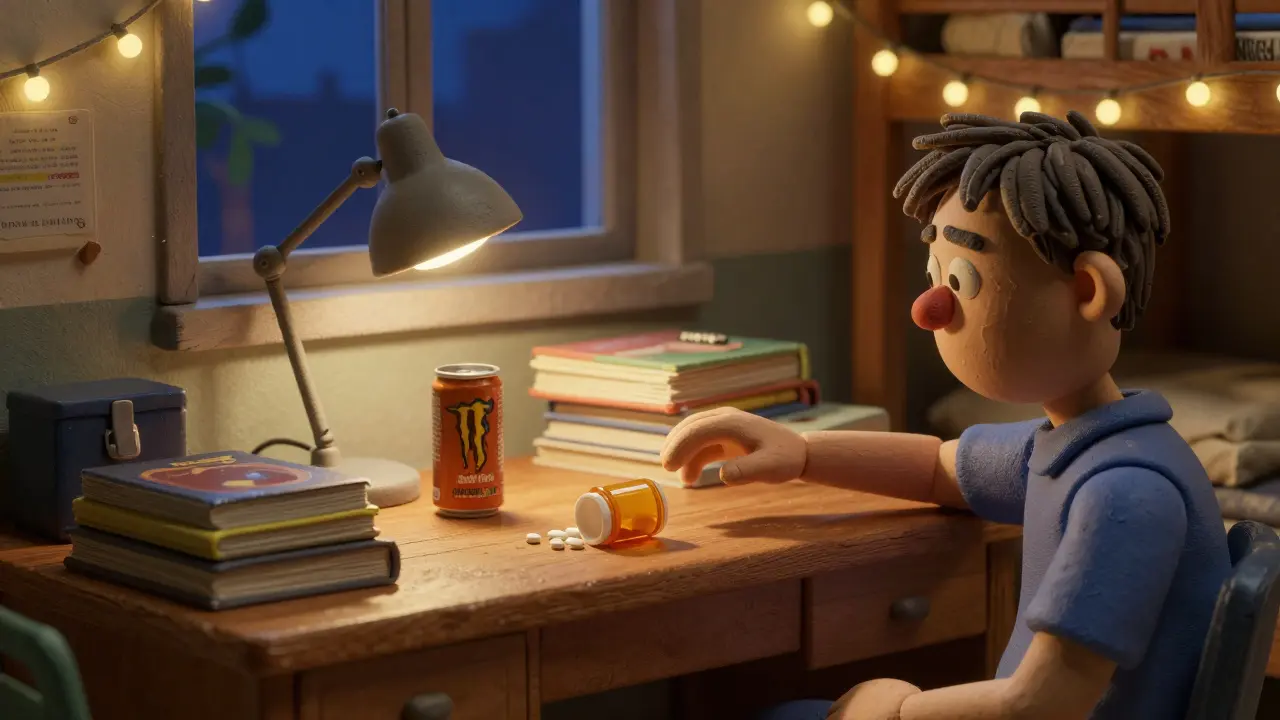
Every year, millions of college students and young adults start juggling classes, part-time jobs, social life, and sleepless nights. Amid all that chaos, something dangerous is quietly spreading: medication safety is being ignored. Prescription drugs meant to treat ADHD, anxiety, or chronic pain are being passed around like snacks before finals. And too many students don’t realize how risky it really is.
Why This Isn’t Just a "Harmless Boost"
You’ve probably heard someone say, "I just took Adderall to get through finals." It sounds harmless. But here’s the truth: stimulants like Adderall and Ritalin are classified as Schedule II controlled substances for a reason. They’re powerful. And when someone without ADHD takes them, the body doesn’t know how to handle the overload.
According to the National Survey on Drug Use and Health, 7.2% of college students misused prescription stimulants in 2023 - that’s over 1 in 14. Among those who do, 75% say they use them to stay awake longer, study harder, or boost focus. But the science says otherwise. Studies from Johns Hopkins show stimulant misuse can spike heart rate, raise blood pressure, and trigger anxiety, panic attacks, or even heart rhythm problems. Emergency room visits linked to nonmedical stimulant use tripled between 2005 and 2010. And it’s not just physical - long-term misuse can rewire the brain’s reward system, making it harder to feel motivated without the drug.
Where These Drugs Come From
Most students don’t buy these pills online or from dealers. They get them from friends.
A 2021 study of 312 college students found that 60% of misused prescriptions came from peers - roommates, teammates, classmates. One student on Reddit wrote: "I’ve seen Adderall passed around like candy before exams - people don’t think it’s a big deal because it’s prescription." That’s the dangerous myth. Just because a drug has a doctor’s label doesn’t mean it’s safe for someone else’s body.
And it’s not just stimulants. Painkillers like Vicodin and OxyContin, and sedatives like Xanax and Valium, are also shared. Students with legitimate prescriptions often don’t realize how dangerous sharing is. A 2020 survey from the University of California found that 42% of students knew where to get prescription drugs without a prescription on campus. That’s not convenience - that’s a public health blind spot.
Who’s Most at Risk - And Why
It’s not just "the party crowd." The biggest drivers are academic pressure, sleep deprivation, and a culture that glorifies "hustle."
Full-time college students have the highest rates of stimulant misuse - even higher than non-college peers. Why? Because they’re under constant pressure to perform. A 2019 study from the University of Texas found that students who reported high stress levels were 3 times more likely to misuse stimulants. Sleep schedules are wrecked. Exams pile up. Mental health support is hard to access. So, they turn to what’s easy: a pill they think will fix everything.
Gender plays a role too. Male students are more than twice as likely to misuse stimulants compared to their non-college peers. And part-time students? They’re even more likely to use illicit drugs overall - 22.5% in the past month, according to SAMHSA. That’s not because they’re "worse" - it’s because they often juggle work, family, and school with fewer campus resources.
What’s Being Done - And What’s Working
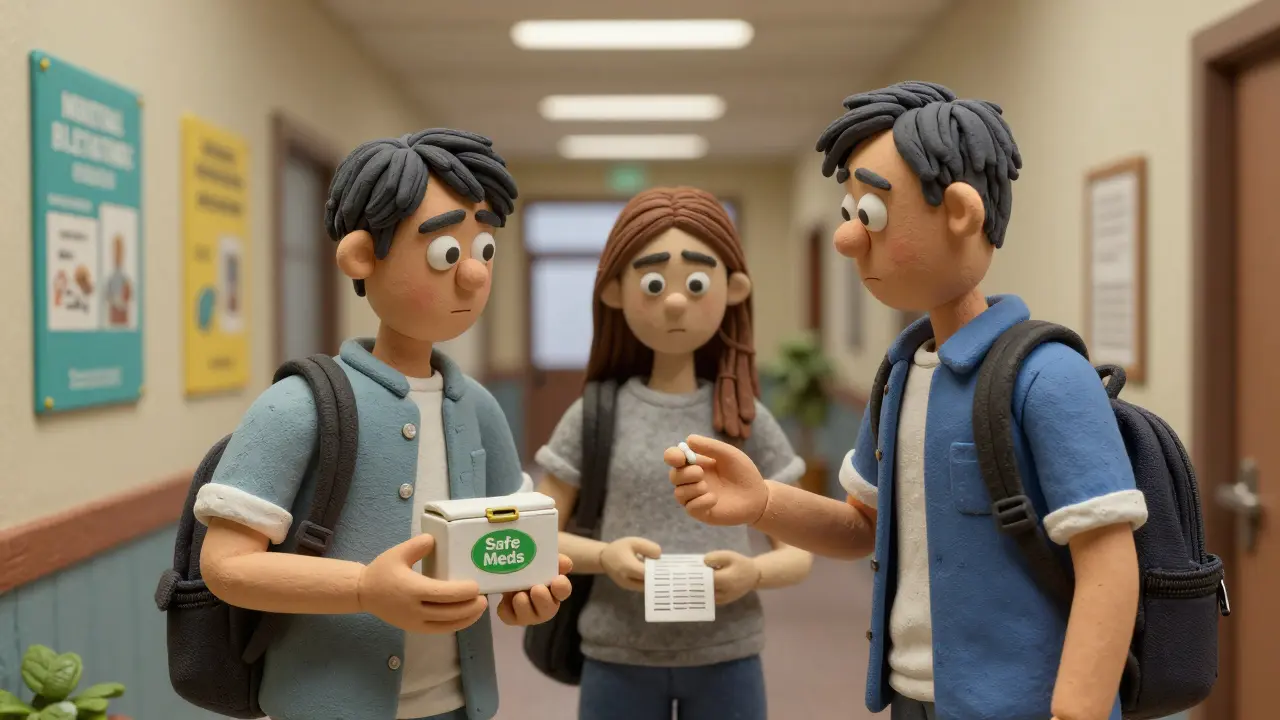
Some schools are finally stepping up. The University of Florida launched "Safe Meds" in 2019: lockboxes for storing meds, and disposal kiosks around campus. Within two years, stimulant misuse dropped 18%. Why? Because they made it easier to do the right thing.
The University of Michigan’s "Wolverine Wellness" program went further. They paired medication safety workshops with free academic coaching. Result? Stimulant misuse dropped 22%, and more students used tutoring - 47% more. That’s the key: you can’t fix drug misuse by just saying "don’t do it." You have to fix the reasons behind it.
Pharmaceutical companies are pitching in too. Shire, the maker of Adderall, gave $4.2 million to college health programs in 2022. But real change isn’t coming from ads or posters. It’s coming from:
- On-campus disposal bins for unused pills
- Required training for student pharmacists on spotting misuse
- Electronic prescriptions (DEA’s 2019 rule cut forgery by 31%)
- Health plans now covering buprenorphine for opioid use disorder - up from 32% in 2015 to 68% today
And it’s working. In 2015, only 215 colleges had full medication safety programs. By 2023, that number jumped to 1,472. The Biden administration added $25 million in federal grants in 2023 just for this. That’s progress.
What You Can Do - Right Now
You don’t need a policy change to protect yourself. Start here:
- Store your meds safely. Keep them locked up - not in your dorm room drawer. A small lockbox costs $15. Use it.
- Never share. Even if you think you’re helping. Your prescription is yours. No one else’s body reacts the same way.
- Dispose of leftovers. Don’t flush them. Don’t throw them in the trash. Use a campus disposal kiosk or a DEA-authorized drop-off site. Most campuses have them now.
- Know the signs of misuse. If you’re having trouble sleeping, feeling anxious without reason, or noticing your heart racing after taking a pill - stop. Talk to a counselor. It’s not weakness. It’s smart.
- Use real tools for focus. Sleep. Nutrition. Study groups. Time management apps. These work better than any pill. A 2022 CDC survey found students who stuck to regular sleep schedules were 40% less likely to turn to stimulants.
The Bigger Picture
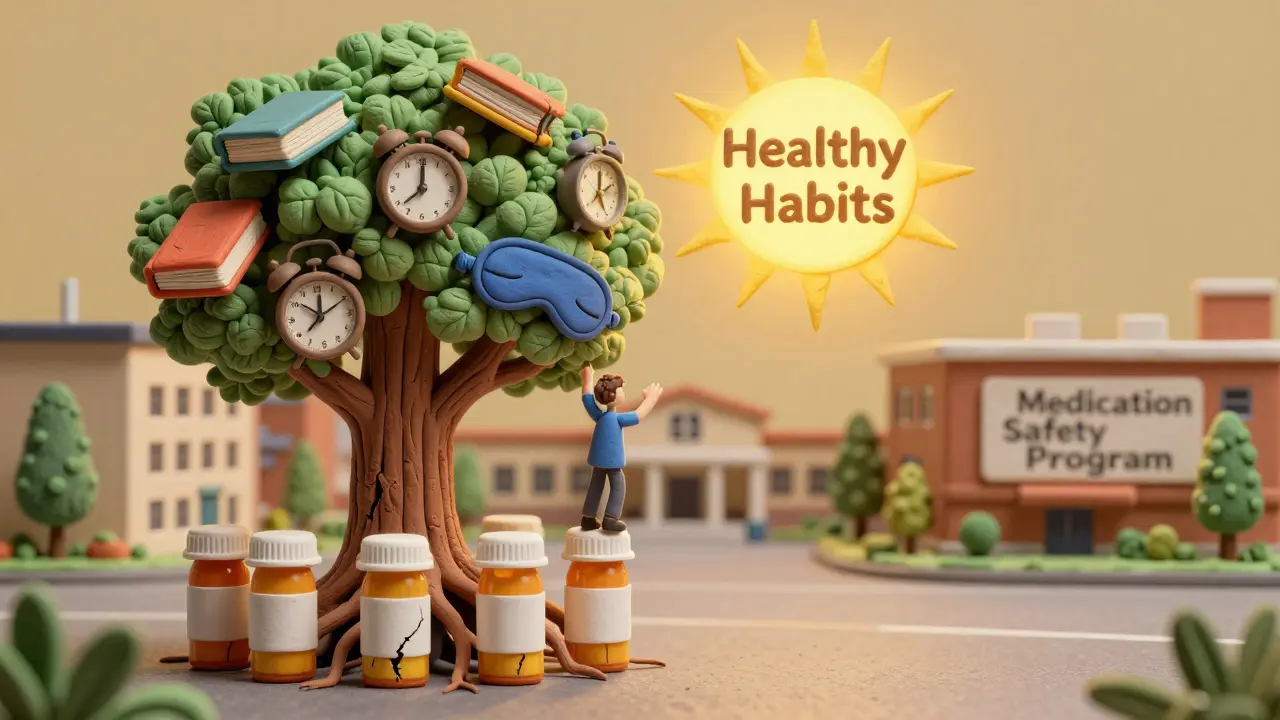
This isn’t just about pills. It’s about how we treat young adults in high-pressure environments. Colleges expect peak performance but rarely provide the support to get there. The $1.8 billion annual cost to campuses isn’t just about healthcare - it’s about lost grades, dropped classes, and broken trust.
But the data shows hope. Programs that combine mental health, academic support, and medication safety don’t just reduce misuse - they build resilience. Students who use tutoring, counseling, and safe storage are more likely to graduate, stay healthy, and avoid addiction later.
If you’re on campus, ask: Where’s the nearest pill disposal bin? Who’s the medication safety coordinator? Is there a workshop on safe use this semester? Don’t wait for someone else to fix it. Start with one small step.
Is it illegal to share my prescription medication?
Yes. Sharing prescription drugs is a federal offense under the Controlled Substances Act. Even if you give them to a friend "for free," you can be charged with drug distribution. Colleges also have strict disciplinary policies - sharing can lead to suspension or expulsion.
Can I get addicted to Adderall if I only use it for studying?
Yes. Adderall increases dopamine in the brain, which creates a feeling of focus and reward. When you use it without a medical need, your brain starts to rely on it to feel normal. Studies show that 1 in 5 students who misuse stimulants develop dependence within a year. It doesn’t take long.
What should I do if I find out a friend is misusing medication?
Talk to them privately, without judgment. Say something like, "I’ve noticed you’ve been taking pills before exams. I care about you - have you talked to a counselor?" Offer to go with them. Most campuses have confidential student health services. Don’t report them unless they’re in immediate danger - your support matters more than punishment.
Are abuse-deterrent pills really safer?
Yes, but they’re not foolproof. New formulations make it harder to crush or dissolve pills for snorting or injecting. Early data from Purdue University shows a 15% drop in misuse of these versions. But students can still swallow them in higher doses. They help - but they’re not a replacement for education and support.
Where can I safely dispose of unused medication on campus?
Most colleges now have secure disposal kiosks in student health centers, pharmacies, or residence halls. Look for a box labeled "Drug Disposal" - it’s usually in a locked, clearly marked bin. If you can’t find one, ask your campus pharmacy or student health office. Some schools also host annual take-back events. Never flush pills or throw them in the trash - it pollutes water and can be accessed by others.
Next Steps: What to Do Today
Check your campus website. Search for "medication safety" or "drug disposal." Find out where the nearest drop-off bin is. If there isn’t one, email your student health center and ask if they can install one. Talk to one friend - not to judge, but to share this info. And if you’re using medication without a prescription - stop. There’s help available. You don’t have to do this alone.
Levi Viloria
March 3, 2026 AT 21:47It’s wild how we normalize this stuff. I had a roommate in sophomore year who swore Adderall was his ‘study fuel.’ He didn’t even have a prescription. One night, he passed out after three pills and a Red Bull. Campus health called it a ‘benign incident.’ Benign? He was in a hospital bed for 12 hours. We act like it’s just caffeine with a label.
It’s not about the drug. It’s about the system that pushes kids to burn out to prove they’re worthy.
tatiana verdesoto
March 4, 2026 AT 07:10I work in student wellness, and this post hits hard. The real issue isn’t the pills-it’s the silence. Students don’t talk about this because they’re scared of being labeled ‘weak’ or ‘lazy.’
We started a peer-led ‘No Shame Study Group’ last semester. No pills. Just snacks, quiet space, and someone to say, ‘You’re not failing. You’re overwhelmed.’ Enrollment doubled in two weeks. Sometimes, all you need is to feel seen.
Callum Duffy
March 6, 2026 AT 00:22It is, indeed, a matter of considerable concern that prescription pharmaceuticals are being utilised in such a casual manner within academic environments. The pharmacological profile of stimulants such as Adderall is not benign, particularly when administered without medical supervision. One must consider the neurochemical disruption and the potential for long-term dysregulation of dopaminergic pathways.
Moreover, the institutional response remains inadequate. The provision of disposal kiosks is a commendable first step, yet it does not address the root causes of academic distress. A more holistic approach is required-one that integrates psychological support, structural reform of workload expectations, and destigmatisation of help-seeking behaviour.
John Cyrus
March 7, 2026 AT 15:15Everyone’s acting like this is some new crisis. It’s not. I graduated in 2018 and everyone was doing it. The difference now is that the media turned it into a moral panic. You want to take a pill to get through finals? Fine. But don’t act like you’re doing something illegal and evil.
Meanwhile, real drug problems are ignored-meth, fentanyl, alcohol binges. But hey, let’s panic about a student who took a pill to study. Pathetic.
Tobias Mösl
March 8, 2026 AT 17:01You think this is about pills? No. This is about control. The system doesn’t want you to be smart on your own terms. It wants you dependent. On pills. On therapy. On institutional approval. They’re not trying to save you-they’re trying to manage you.
Look at the funding. Shire gave $4.2 million? Who owns Shire? Who profits when students become lifelong patients? This isn’t public health. It’s pharmaceutical marketing dressed up as concern.
They want you to believe you’re broken. So you’ll keep buying their solutions. Don’t fall for it. The real fix isn’t a lockbox. It’s a revolution.
Helen Brown
March 9, 2026 AT 11:46I know someone who got expelled for sharing Adderall. But guess what? The guy who sold it to her? He’s now a pharmaceutical rep. Same pills. Different label. Same company. Same profit. This whole thing is rigged. They make the problem, then sell you the solution. Don’t trust any of it.
Ethan Zeeb
March 11, 2026 AT 08:22My sister’s a pharmacy student. She said they’re trained to spot misuse now. But here’s the thing-most students don’t even know they’re at risk. They think if it’s legal for someone else, it’s safe for them.
That’s not ignorance. That’s negligence from the system. We teach kids how to do calculus but not how their own bodies work. We’re setting them up to fail.
I’m not saying ban pills. I’m saying teach biology. Teach neurochemistry. Teach consequences. Not just ‘don’t share.’
Tildi Fletes
March 13, 2026 AT 07:49As a clinical pharmacist, I’ve reviewed over 200 cases of non-medical stimulant use in the last three years. The most common misconception is that ‘it’s just for studying.’ In reality, 87% of users report increased anxiety, insomnia, or palpitations within two weeks.
What’s rarely discussed is the withdrawal effect: after stopping, many students experience severe cognitive fog, depression, and apathy-sometimes for months. It’s not a boost. It’s a crash waiting to happen.
And yes, disposal bins work. But they’re useless if students don’t know they exist. Education needs to be mandatory, not optional.
Dean Jones
March 14, 2026 AT 06:19Let’s be honest. The entire college experience is designed to produce stressed, sleep-deprived, overworked individuals who are one bad decision away from dependency. We don’t have a medication safety problem. We have a capitalism problem.
Students aren’t taking Adderall because they’re lazy. They’re taking it because the system demands impossible output with impossible resources. Sleep? Nutrition? Mental health? Those are luxuries for people with trust funds.
And now we’re supposed to be grateful for a lockbox? That’s like giving a drowning man a life jacket made of tissue paper and calling it a solution. The real fix isn’t disposal bins-it’s dismantling the academic pressure cooker. Until then, we’re just rearranging deck chairs on the Titanic.
Also, the fact that 60% of these drugs come from friends? That’s not a loophole. That’s a community response to institutional failure. People are looking out for each other, even if it’s in the wrong way. Maybe we should stop demonizing them and start asking why they feel they need to.
Divya Mallick
March 15, 2026 AT 12:10Look, I’m from India. Here, students take modafinil like candy. No one cares. No one reports it. No one calls it a crisis. But in the U.S.? You take one pill and suddenly you’re a villain. Why? Because your system is broken. You criminalize coping mechanisms while ignoring the root cause: you have no social safety net. No healthcare. No mental health support. No living wage for students. So you turn to pills. And then you blame the pills.
It’s not about safety. It’s about control. And you’re all just complicit.
Lebogang kekana
March 16, 2026 AT 10:55I’m from South Africa. We don’t have Adderall here. But we have something worse-students skipping meals to afford textbooks. They study 18 hours a day with no food, no sleep, no help. No one’s talking about that.
Maybe instead of lockboxes, we need food programs. Maybe instead of pills, we need tutors. Maybe the real crisis isn’t the drug-it’s that we care more about controlling behavior than changing conditions.
Let’s stop treating symptoms and start treating the disease.
Raman Kapri
March 18, 2026 AT 08:08It is a fallacy to suggest that the misuse of prescription stimulants is uniquely prevalent among college students. Empirical data from non-academic populations reveal comparable or higher rates of non-medical use among shift workers, military personnel, and gig economy laborers. The conflation of academic pressure with moral failure is both misleading and counterproductive.
Furthermore, the assertion that pharmaceutical companies are exploiting this phenomenon lacks substantiation. The $4.2 million grant is a minuscule fraction of their R&D budget. To attribute systemic issues to corporate malice is to engage in ideological oversimplification.
The solution lies not in behavioral policing, but in structural reform: improved access to cognitive-behavioral therapy, expanded academic advising, and equitable funding for public education. These are not fringe ideas-they are evidence-based interventions.
Levi Viloria
March 19, 2026 AT 09:47^This. My friend took a job as a warehouse night shift worker. He’s on Adderall too. Same pill. Different reason. Same consequences. Nobody’s writing articles about him. Why? Because he’s not a ‘student.’ He’s just ‘one of those guys.’
It’s not about the drug. It’s about who we decide is worth saving.