
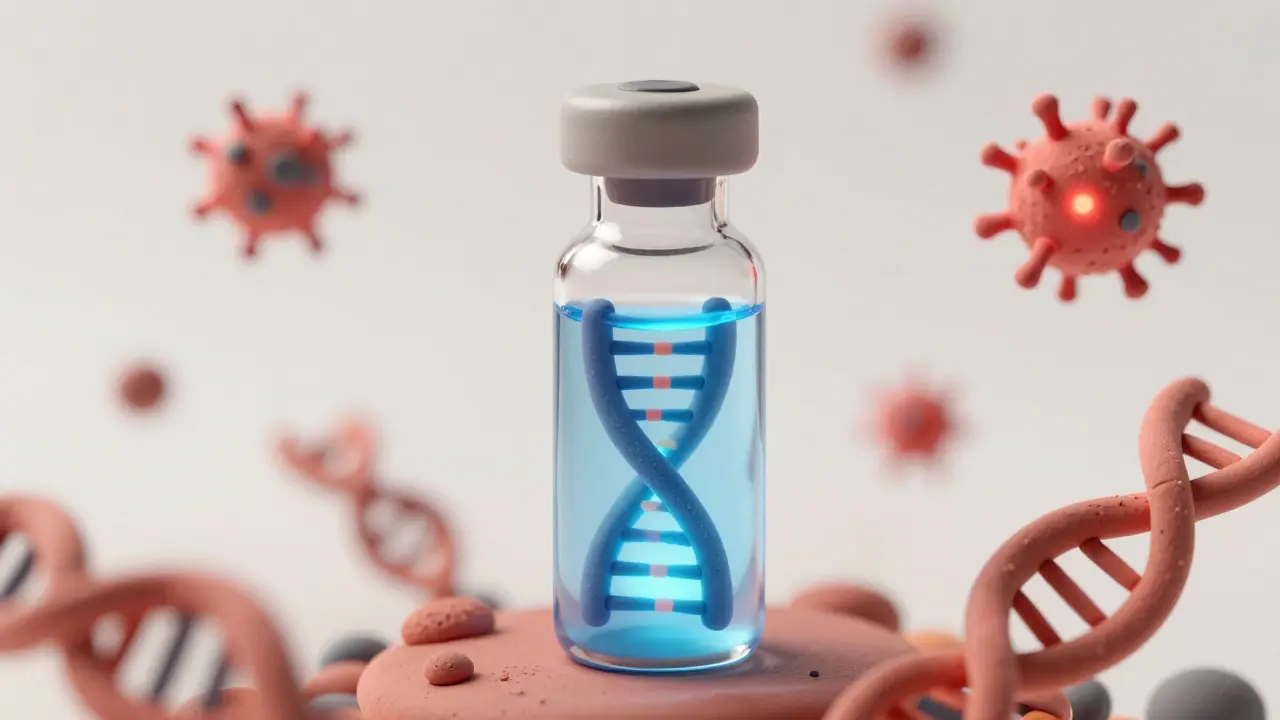
For years, diagnosing and tracking cancer meant cutting into the body - drilling through ribs, slicing through skin, pulling out tissue samples. It was painful, risky, and often too late. But now, a simple blood draw is changing everything. ctDNA, or circulating tumor DNA, is turning liquid biopsy from a lab curiosity into a routine tool in cancer care. No needles in the lung. No surgery for a second look. Just a vial of blood, and doctors can see what’s happening inside tumors - in real time.
What Is ctDNA, and Why Does It Matter?
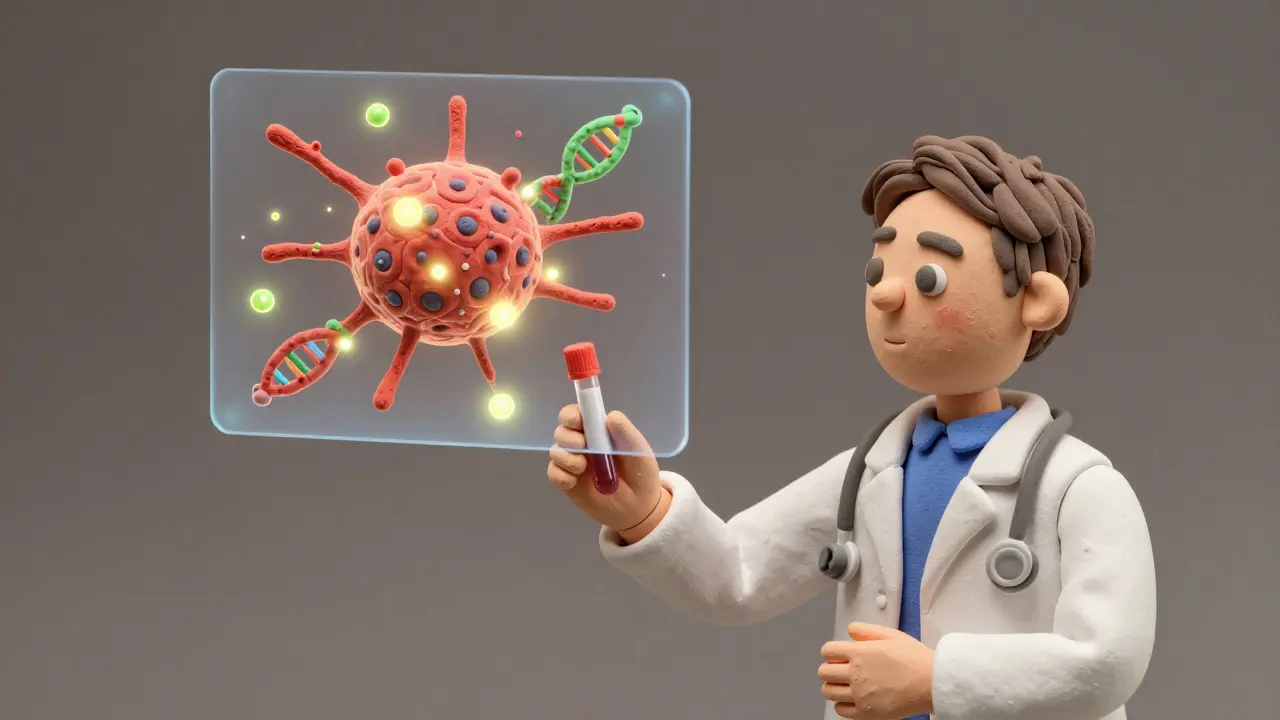
Every time a tumor cell dies, it spills bits of its DNA into the bloodstream. That’s ctDNA - fragments of genetic material from cancer cells floating in your blood. It’s not just random debris. These fragments carry the exact mutations driving the cancer. That means, by analyzing them, doctors can tell not just if cancer is present, but what kind it is, how it’s changing, and whether treatments are working.
Before ctDNA, oncologists relied on tissue biopsies. But those are snapshots - one spot, one moment. Tumors aren’t uniform. A biopsy from the lung might miss mutations hiding in the liver. ctDNA gives you the full picture. It pulls DNA from every part of the tumor, no matter where it’s spread. That’s why it’s so powerful for metastatic cancers. In one study, tissue biopsies missed up to 30% of key mutations simply because they sampled the wrong area. ctDNA caught them all.
How Is ctDNA Detected?
It sounds like science fiction, but the tech is real. Labs use highly sensitive tools to fish out these tiny DNA fragments from millions of normal DNA pieces. The most common methods are digital droplet PCR (ddPCR) and next-generation sequencing (NGS).
ddPCR can find one cancer mutation in every 10,000 healthy DNA molecules. That’s like spotting one red marble in a bathtub full of white ones. NGS goes further - it reads hundreds of genes at once, looking for patterns across the whole genome. Newer techniques like nanopore sequencing even analyze the shape and length of DNA fragments. Tumor DNA tends to be shorter than normal DNA. That’s a clue. And methylation patterns - chemical tags on the DNA - can reveal where the cancer started, even before a tumor shows up on a scan.
There are two main approaches: tumor-informed and tumor-agnostic. Tumor-informed means they first test your original tumor tissue, then build a custom test to track those exact mutations in your blood. It’s precise, with sensitivity above 90%. Tumor-agnostic tests look for common cancer mutations without needing prior tissue. They’re faster and cheaper, but less sensitive - especially in early stages.
When Is Liquid Biopsy Most Useful?
It’s not magic. It doesn’t replace all biopsies. But it shines in specific scenarios:
- Monitoring treatment response: If a drug is working, ctDNA levels drop. If they rise, the cancer is fighting back - often months before a scan shows growth. One lung cancer patient saw ctDNA spike 11 weeks before her tumor grew on a CT scan. Her team switched therapies early. She’s still in remission.
- Detecting recurrence: After surgery, ctDNA can find leftover cancer cells with 85-90% accuracy. It spots recurrence 6 to 11 months before imaging does. That’s huge. It means treatment can start before the cancer spreads again.
- When tissue isn’t available: About 20-30% of patients don’t have enough tissue for testing. Maybe the tumor is too deep. Maybe they’re too weak for another biopsy. ctDNA fills the gap. In non-small cell lung cancer, it found targetable EGFR mutations in 92% of cases where tissue failed.
- Tracking resistance: Chemotherapy or targeted drugs often stop working because the cancer mutates. ctDNA can catch those new mutations before they take over. It’s found resistance to drugs like osimertinib 3-6 months earlier than scans.
What Are the Limits?
It’s not perfect. And it’s not for everyone.
Early-stage cancers? ctDNA levels are often too low. Detection rates for stage I tumors hover around 50-70%. That’s not good enough for screening yet. Some cancers - like brain tumors or slow-growing blood cancers - barely shed DNA. For them, liquid biopsy is still unreliable.
False positives happen too. Not all mutations in blood come from cancer. Aging blood cells can develop harmless mutations called clonal hematopoiesis. They show up in 10-15% of people over 65. If a test doesn’t filter them out, you might get a scary result for nothing. Labs are getting better at this, but it’s still a challenge.
And then there’s the noise. Variants of unknown significance (VUS) appear in 15-20% of reports. These are genetic changes we don’t fully understand. Are they dangerous? Harmless? No one knows. That creates anxiety - and sometimes unnecessary treatment.
Standardization is another issue. Different labs use different machines, different blood tubes, different processing times. One study found up to 25% of results varied between centers. That’s why guidelines now stress using only FDA-approved tests like Guardant360 CDx or FoundationOne Liquid CDx.
Who’s Using It Today?
Major cancer centers like MD Anderson have integrated liquid biopsy into routine care. About 35-40% of phase I clinical trials now use ctDNA as a biomarker. NCCN guidelines recommend it for EGFR testing in lung cancer when tissue is insufficient. ASCO updated its 2023 guidelines to include liquid biopsy as a valid first step for advanced non-small cell lung cancer.
But adoption is uneven. Around 60-70% of academic oncology departments offer it. Community clinics? Only 25-30%. Cost and complexity hold them back. A single test can run $1,000-$2,500. Insurance coverage is patchy. And interpreting results needs trained molecular pathologists - not everyone has them.
Still, the trend is clear. The global liquid biopsy market is expected to hit $19.5 billion by 2030. That’s not hype - it’s demand. Patients want less invasive options. Doctors want faster answers. And the data shows it works.
The Future: Methylation, Fragmentomics, and AI
The next wave isn’t just about DNA sequence. It’s about how the DNA is packaged.
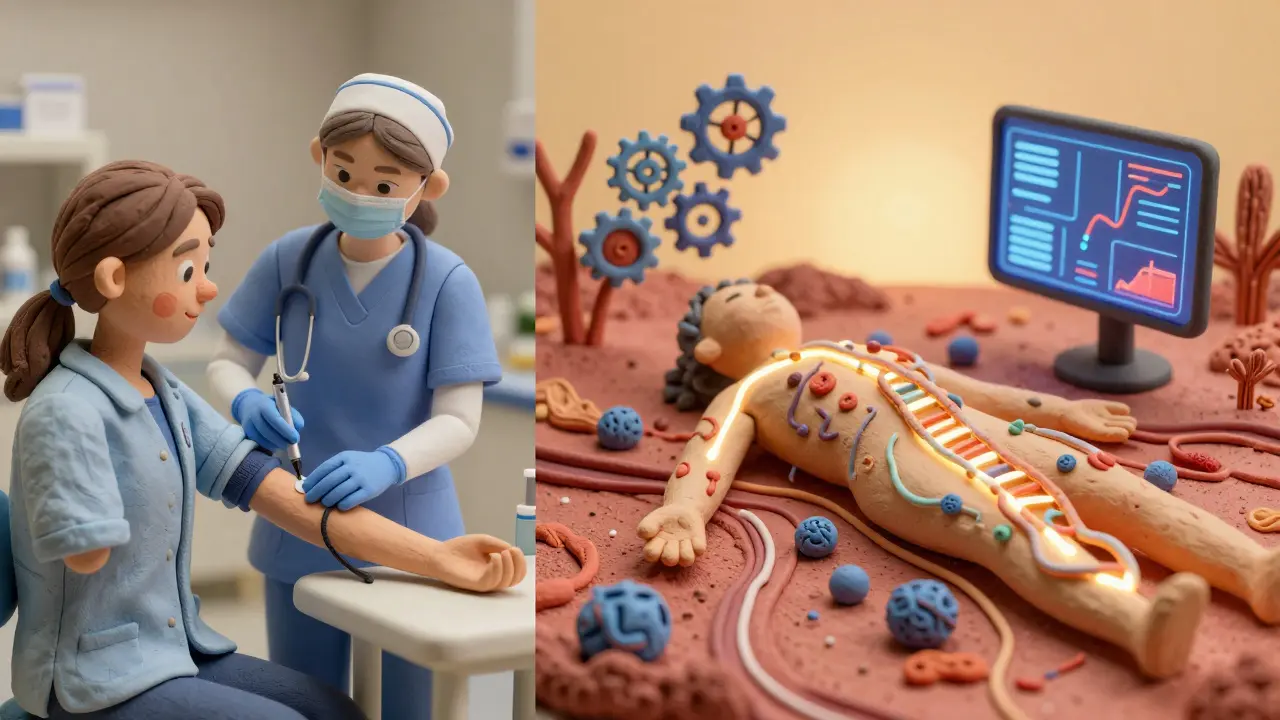
DNA methylation - chemical switches that turn genes on and off - is one of the most promising frontiers. Cancer cells have abnormal methylation patterns. These changes often appear before mutations. Early studies show methylation-based tests can detect cancers like liver, pancreatic, and colorectal with over 90% accuracy - even in stage I.
Fragmentomics - studying the size and shape of DNA fragments - is another breakthrough. Tumor DNA breaks differently than normal DNA. AI models are learning these patterns. At MD Anderson, AI analyzing fragment shapes improved detection accuracy by 15-20%. Imagine a system that doesn’t just read DNA, but reads its fingerprint.
Multi-analyte tests - combining ctDNA, methylation, fragment patterns, and even RNA - are coming. They’re aiming for 95% sensitivity in early detection. That could turn liquid biopsy from a monitoring tool into a screening test for high-risk populations.
What Should You Do?
If you or a loved one has advanced cancer - especially lung, colorectal, or breast cancer - ask your oncologist about liquid biopsy. It’s not just an option anymore. In many cases, it’s the best way to track your disease.
Ask these questions:
- Is there an FDA-approved ctDNA test for my cancer type?
- Can we use it to monitor my treatment response?
- Will it replace the need for repeat tissue biopsies?
- How often should we test? Every 4-8 weeks during treatment? Every 3-6 months after?
Don’t assume it’s right for every stage. For early-stage cancer, it’s still evolving. For monitoring? It’s already here.
Can liquid biopsy replace a tissue biopsy entirely?
No - not yet. Tissue biopsies are still needed for initial diagnosis, especially to confirm cancer type and get a full genomic profile. Liquid biopsy is best used alongside tissue, not instead of it. It excels at monitoring changes over time, not making the first diagnosis.
Is liquid biopsy covered by insurance?
Coverage varies. Most major insurers cover FDA-approved ctDNA tests like Guardant360 or FoundationOne Liquid CDx when used for advanced cancers and when tissue is insufficient. For early-stage cancer or screening, coverage is rare. Always check with your provider before testing.
How often should ctDNA be tested during treatment?
It depends on the cancer and treatment. During active therapy (like chemo or targeted drugs), testing every 4-8 weeks is common. After treatment ends, testing every 3-6 months helps catch recurrence early. For some cancers, like colorectal, more frequent testing (every 3 weeks) may be used to guide dose changes.
Can liquid biopsy detect cancer before symptoms appear?
Not reliably yet. Current tests work best in people already diagnosed with cancer. For screening healthy people, sensitivity is too low - especially for stage I tumors. Methylation-based tests are getting closer, but they’re still in trials. Don’t use commercial ctDNA tests for screening without medical supervision.
What if the test shows a mutation I can’t treat?
That’s common. Many mutations found in ctDNA don’t have approved drugs yet. But that doesn’t mean it’s useless. It helps your team understand how the cancer is evolving. It might point to clinical trials. Or it might explain why a treatment stopped working. Even untargetable mutations guide decisions - like when to switch therapies or avoid ineffective ones.
Final Thoughts
Liquid biopsy isn’t a cure. But it’s turning cancer from a mystery into a measurable process. We can now watch tumors respond - or resist - in real time. No more guessing. No more waiting for scans. Just data, in blood, on a screen.
It’s not perfect. It’s not cheap. It’s not for everyone. But for those with advanced cancer, it’s already changing outcomes. And in five years? It might be the new standard.