
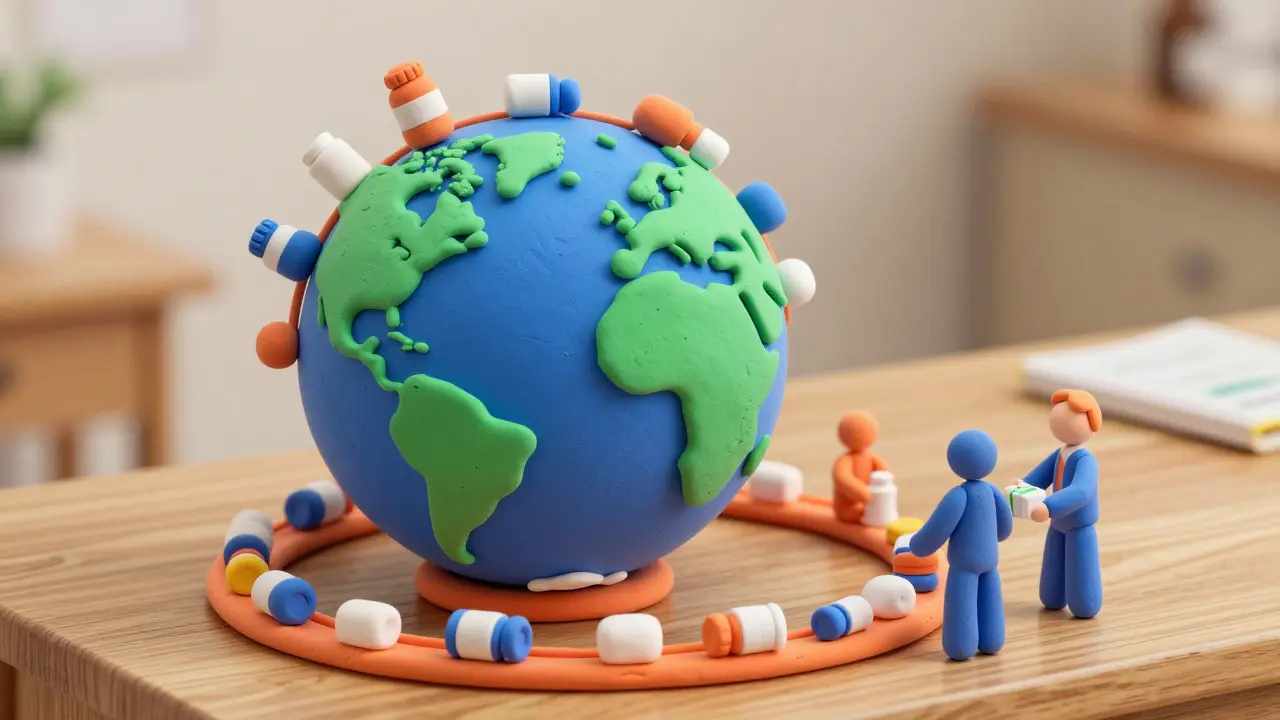
Imagine walking into a pharmacy almost anywhere in the world-from a clinic in rural Nigeria to a drugstore in suburban Ohio-and grabbing a bottle of essential medicine made in India. This isn't just a possibility; it is the daily reality for billions of people. Indian Generic Manufacturers are often described as the "Pharmacy of the World", and that reputation isn't just marketing fluff. These companies produce roughly 20% of the global supply of generic medicines by volume. For patients facing high prescription costs, these affordable treatments mean the difference between health and hardship.
The story doesn't start today, though. To understand why this happens, you have to look back at how the system was built. Decades ago, Indian policymakers made a choice to prioritize public health over patent monopolies. This strategic shift allowed local factories to reverse-engineer patented drugs once the patents expired elsewhere. The result was a massive ecosystem of manufacturing that could produce life-saving pills at a fraction of Western prices. Today, that same infrastructure supports complex therapies and injectables, proving the sector is evolving beyond basic pills.
The Backbone of Global Medicine Access
The core value of this industry lies in accessibility. Branded versions of common drugs can cost thousands of dollars, while the generic equivalent from India might cost pennies. This price gap allows health systems with tight budgets to stretch every dollar further. In the United States alone, Indian firms supply about 40% of the generic drug market. That means nearly one out of every two generic prescriptions filled in America contains ingredients manufactured in India.
It's not just the US or Europe relying on these exports. In many parts of Sub-Saharan Africa, Indian medicines account for around half of all pharmaceutical imports. Organizations treating HIV/AIDS and malaria depend heavily on this supply chain because local production simply cannot meet demand at competitive prices. This reliance has turned India into a critical pillar of global health security, especially when the world faces pandemics or disease outbreaks.
Beyond simple pills, the scope includes vaccines. India currently produces more than 60% of the vaccines used globally. During recent health crises, this capacity allowed the country to ramp up doses quickly, shipping millions of units to countries that lacked production capabilities of their own. The ability to manufacture at such speed and scale creates a safety net for international health preparedness that few other nations can match.
How Quality Standards Are Maintained
A major question always comes up: if the prices are so low, is the quality compromised? Historically, concerns existed, but the landscape has changed dramatically. Today, Indian manufacturers operate under rigorous scrutiny to keep access to Western markets. There are now 650 pharmaceutical plants in India that are fully compliant with the U.S. Food and Drug Administration (FDA). That represents the largest number of FDA-approved facilities outside of the United States itself.
| Metric | Data Point | Significance |
|---|---|---|
| FDA-Approved Plants | 650 Facilities | Largest hub outside the US, ensuring export eligibility |
| WHO-GMP Approved | Over 2,000 Sites | Validates standards for developing nation exports |
| Global Volume Share | 20% of Total Supply | Highest among single-country origins |
| Cost Savings | 30-80% Lower Prices | Major driver for adoption in public health systems |
This compliance isn't accidental. It takes years and significant capital to get an inspection passed. A typical facility requires between 18 to 24 months just for regulatory approval and setup. Companies invest heavily in Good Manufacturing Practices (GMP) to avoid costly warning letters or shutdowns. With improved electronic documentation systems, about 92% of exporters now maintain digital records that align with international technical documents. This transparency helps regulators track ingredients from raw material to the final pill.
However, challenges remain. Regulatory agencies like the FDA conduct regular inspections, and failure rates during initial checks can still hover around 35-40%. Issues like inconsistent dissolution rates or documentation errors sometimes slip through. Yet, compliance rates have risen significantly from previous decades, with current standing matching global averages of 85-90%. This continuous improvement cycle keeps the trust of buyers in hospitals and pharmacies intact.

Dependency Risks and Raw Materials
While finished drugs are exported widely, there is a catch regarding where the ingredients come from. To make a tablet, you need Active Pharmaceutical Ingredients (APIs). Surprisingly, India relies on China for approximately 70% of these active ingredients. This creates a vulnerability in the supply chain; if trade relations strain or logistics fail, production lines in India could slow down.
Recognizing this weakness, the government launched initiatives to boost domestic production. Schemes involving financial incentives encourage setting up new chemical synthesis plants within India. The goal is to reach higher self-sufficiency by reducing dependence on foreign suppliers. Experts suggest that achieving API independence is crucial for long-term stability. If India can source its own raw materials, it becomes truly resilient against geopolitical shocks.
Leading Companies Driving Growth
Several major corporations define this sector, operating as giants in both the domestic and export markets. Sun Pharma stands out as one of the largest players, investing heavily in research and development to stay ahead. Another key player is Cipla, known historically for making life-saving drugs accessible during health crises. Alongside them, companies like Dr. Reddy's Laboratories push boundaries by developing complex generics that require specialized manufacturing techniques.
These companies aren't just churning out old drugs. They are increasingly moving into high-value segments like biosimilars-biologic copies of patented medicines. This shift matters because biologics represent the future of drug innovation. By mastering these complex therapies, Indian firms move up the value chain, competing directly with Western pharma giants rather than just supplying cheap alternatives.

The Future of Indian Pharma Exports
Looking ahead, the roadmap involves ambitious targets. Government plans aim to increase exports significantly by 2047, targeting a total valuation well over $100 billion annually. To get there, the focus must shift from selling volume to selling value. Simply producing basic pills won't sustain growth forever as regulations tighten elsewhere. Instead, companies are focusing on niche molecules and hard-to-manufacture dosage forms like injectables and extended-release formulations.
Innovation remains a differentiator. While generic drugs copy existing formulas, some Indian manufacturers are now developing novel therapies. This transition turns the country from a factory floor into an innovation hub. Investments in biotechnology parks and research centers are accelerating. As the sector matures, the narrative shifts from being a cheap alternative to being a reliable partner in global health.
Consumer Perspectives on Generic Reliability
What does this mean for a patient buying medicine? Generally, satisfaction scores are high, driven largely by affordability. Patients in the US and UK report saving hundreds of dollars yearly by switching to trusted Indian brands. Online reviews often highlight the cost savings as the biggest plus. However, user feedback also notes occasional differences in taste or texture compared to branded drugs, which is common due to inactive ingredients.
In regions like Africa, the impact goes beyond wallet savings. Healthcare workers report that lower costs allow clinics to stock broader inventories. When money isn't tied up in expensive medications, it can be spent on better diagnostics or nursing staff. Despite isolated reports of shipment delays or packaging inconsistencies, the consensus among international health bodies is that the benefits of availability outweigh logistical friction.
Are Indian generic drugs safe?
Yes, most are highly regulated. India has over 650 FDA-compliant plants, and quality checks align with global standards like WHO-GMP. However, it is important to buy from verified sources to avoid unregulated imports.
Why are Indian medicines cheaper?
Economies of scale and lower operational costs drive prices down. Additionally, the lack of heavy patent restrictions on older drugs allows mass production without royalty fees, passing savings to consumers.
Does India supply the US pharmaceutical market?
Absolutely. About 40% of generic drugs dispensed in the United States contain ingredients manufactured in India. It is one of the largest single-country suppliers of meds to American pharmacies.
What is the challenge with API dependence?
India imports about 70% of its Active Pharmaceutical Ingredients from China. This creates supply chain risks. New government schemes aim to build domestic capacity to reduce this reliance.
How do biosimilars differ from standard generics?
Biosimilars are biological products similar to original brand-name biologic drugs. They are more complex to manufacture than chemical generics and involve living cells, offering higher value and treatment options.
Cara Duncan
March 31, 2026 AT 20:25I love reading about how accessible healthcare becomes when these companies step up! 💊 It really changes lives for people who can't afford brand names 😢 Seeing India do this is amazing 🇮🇳 We need more focus on global health equity 👏
Christopher Beeson
March 31, 2026 AT 23:52The world has become a fragile tapestry woven entirely by the threads of dependency and trust.
We look at the medicine bottles and see salvation when we are truly witnessing an economic gamble of monumental proportions.
History shows us that supply chains are the first things to snap under geopolitical pressure.
India stands as a giant holding up the roof of modern health infrastructure yet it remains precarious beneath the surface.
If trade wars ignite the next decade our pharmacy shelves could empty faster than anyone anticipates.
We praise the cost efficiency while ignoring the single point of failure risk lurking behind the scenes.
The illusion of stability is perhaps the most dangerous drug manufactured in any laboratory.
True independence requires self-sufficiency which is currently absent in the raw material sector.
Reliance on foreign inputs undermines the very sovereignty these nations claim to champion politically.
It is fascinating how markets reward volume while punishing resilience during critical moments of crisis.
This dynamic creates a false sense of security among policymakers globally.
We celebrate the price per pill instead of analyzing the strategic vulnerability inherent in centralized manufacturing hubs.
Society thrives on the hope of perpetual peace while commerce dictates a preparation for conflict.
The pharmaceutical industry reflects our collective denial regarding potential systemic collapse scenarios.
Until we diversify production sources away from singular national dependencies we remain vulnerable.
Jenny Gardner
April 2, 2026 AT 10:29Actually your fear is misplaced because the facts show otherwise!!!
Regulatory bodies are stricter now than ever before!!!!
Quality checks are digital and transparent!
Molly O'Donnell
April 2, 2026 AT 18:25650 FDA-approved plants alone makes this the largest hub outside America.
Arun Kumar
April 3, 2026 AT 02:18We are proud of what the industry has achieved despite challenges.
It brings honor to our country to help the sick worldwide.
Yes APIs come from China but our gov is fixing that fast!
We focus on high value biosimilars now too.
The future looks bright for our engineers and scientists.
Rocky Pabillore
April 4, 2026 AT 07:26Honor is nice but safety metrics matter more unfortunately.
We shouldn't rely on pride when patients depend on sterility.
Expectations must match reality rather than aspirations.
Russel Sarong
April 5, 2026 AT 07:49Oh my goodness!! This situation deserves so much attention!!
Poor patients really get stuck in between corporate interests!!
It is wonderful to see life being saved everywhere!!!
The cost savings mean families eat better meals too!!
Healthcare access is a basic right for everyone!!!
We must support these factories that work so hard!!!
No one wants to see people suffer from lack of pills!!!
Global cooperation is the only way forward!!!
Please keep fighting for these workers rights!!!
Their labor powers entire hospital systems daily!!!
Thank you for sharing this important news here!!!
Let us all learn more about supply chains!!!
Supply chain transparency matters for safety too!!!
Governments need to invest more in regulation!!!
Every citizen deserves access to affordable care!!!
Eleanor Black
April 6, 2026 AT 23:30Your heartfelt sentiment resonates deeply with the broader community discussions surrounding this topic.
Indeed the humanitarian impact extends far beyond mere financial transactions.
One must consider the intricate web of logistics that enables such delivery.
The dedication of individuals involved in manufacturing cannot be overstated.
We share your concern regarding patient welfare priorities above profit margins.
Empathy drives the best outcomes in public policy decisions today.
Therefore continued vigilance ensures sustainability of these vital services.
Thank you for bringing this vital aspect to light with such passion.
Callie Bartley
April 8, 2026 AT 14:28Just wish we relied less on overseas manufacturing honestly.
America used to make everything ourselves back in the day.
Now we wait for shipments from halfway around the globe.
Risky strategy in case something goes wrong obviously.
Julian Soro
April 9, 2026 AT 21:57There is actually a lot of domestic production still happening though!
Diversity in sourcing protects against single points of failure.
Globally distributed supply chains are standard practice now.
Collaboration helps everyone stabilize costs significantly.
Keep an eye on the new US incentive bills passing soon.
James DeZego
April 10, 2026 AT 10:37International partnerships really drive innovation forward though! 🙂
Sharing technology benefits developing regions immensely.
Standardization prevents counterfeit products entering the market too.
Everyone wins when safety protocols align perfectly across borders.