
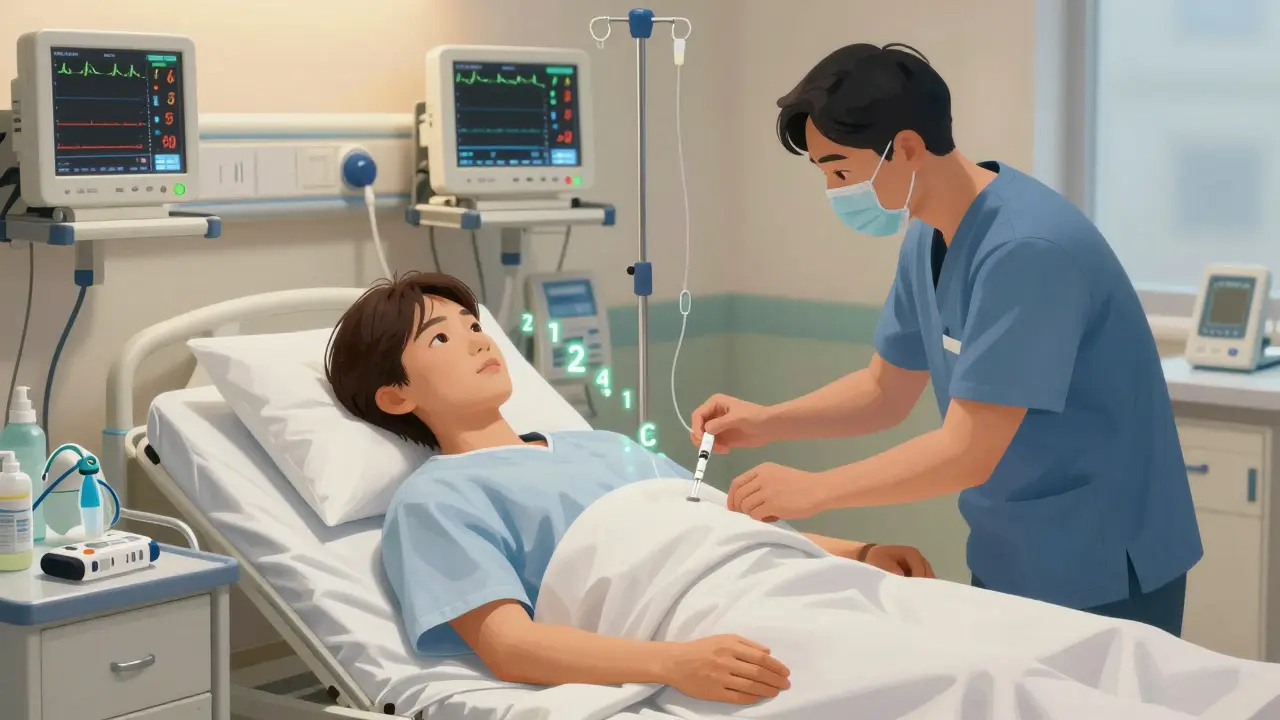
When you’ve had a serious allergic reaction to a medication-like hives, swelling, trouble breathing, or even anaphylaxis-it’s natural to want to avoid that drug forever. But what if that drug is the only one that can save your life? What if it’s the only chemotherapy that works for your cancer, the only antibiotic that clears your chronic lung infection, or the only biologic that controls your autoimmune disease? That’s where drug desensitization comes in. It’s not a cure. It’s not a workaround. It’s a carefully controlled medical process that lets you safely take the drug you’re allergic to, one tiny dose at a time, under close watch.
What Drug Desensitization Actually Does
Drug desensitization doesn’t change your immune system. It doesn’t make you less allergic. It doesn’t erase your history of reacting. What it does is temporarily fool your body into tolerating the drug long enough to complete a critical treatment. Think of it like slowly walking into a room where the lights are blinding-you don’t turn them all on at once. You turn them up a little, wait, let your eyes adjust, then turn them up again. That’s what desensitization does with your immune system.
The process works because allergic reactions-especially those triggered by IgE antibodies-tend to happen when you get a big dose all at once. By starting with a dose so small it doesn’t trigger a reaction, and then slowly doubling it every 20 to 30 minutes, your immune cells don’t get the signal to go into full alarm mode. They get used to the presence of the drug. It’s temporary. As soon as you stop taking the drug for more than a few hours, your sensitivity can come back. That’s why you have to finish the full course without breaks.
When Is It Used?
This isn’t something done for every drug allergy. It’s reserved for situations where there are no safe alternatives. That’s most common in three areas:
- Cancer treatment: Many chemotherapy drugs, monoclonal antibodies like rituximab or cetuximab, and immune checkpoint inhibitors can cause severe reactions. If you’re allergic to the only effective option, desensitization lets you keep fighting the cancer.
- Chronic infections: People with cystic fibrosis or recurrent pneumonia often need specific antibiotics like vancomycin or carbapenems. If you’re allergic, and no other drug works, desensitization is the only path forward.
- Autoimmune diseases: Biologics like infliximab or tocilizumab are life-changing for people with rheumatoid arthritis or Crohn’s disease. If you react to them, and switching to another class isn’t an option, desensitization can restore your treatment.
It’s also used for aspirin and NSAIDs in people with severe asthma or nasal polyps who react to these common painkillers. The process for these can take days, not hours, because the reactions are different-less IgE-driven, more related to how the body processes the drug.
How It Works: The Protocol
There’s no one-size-fits-all method. Protocols vary by drug, reaction history, and patient health. But most follow a similar pattern.
For intravenous drugs-like antibiotics or chemo-the most common approach is a 12-step protocol. You start with a dose that’s 1/10,000th of the full therapeutic amount. Each step doubles the dose. The time between steps is usually 20 to 30 minutes. After about five to six hours, you’ve reached the full dose. For oral drugs like aspirin, the steps are slower: doses are given every hour, and the whole process can take days.
Each step isn’t just a number on a chart. It’s a safety checkpoint. Before each dose, your blood pressure, heart rate, oxygen levels, and breathing are checked. If you have asthma, you’ll get a spirometry test to measure lung function. Nurses and doctors watch you like a hawk. If you show even a small sign of reaction-itching, flushing, coughing, or a drop in blood pressure-the team stops, drops back to the last safe dose, and waits longer before trying again. Sometimes they’ll give you antihistamines or steroids to calm things down before continuing.
The key is control. You’re never alone. You’re in a hospital or allergy clinic with emergency meds ready-epinephrine, steroids, IV fluids, oxygen. If things go wrong, they can stop the process and treat you immediately. That’s why you can’t do this at home. It’s not a DIY project. It’s a high-stakes medical procedure.
Who Shouldn’t Do It?
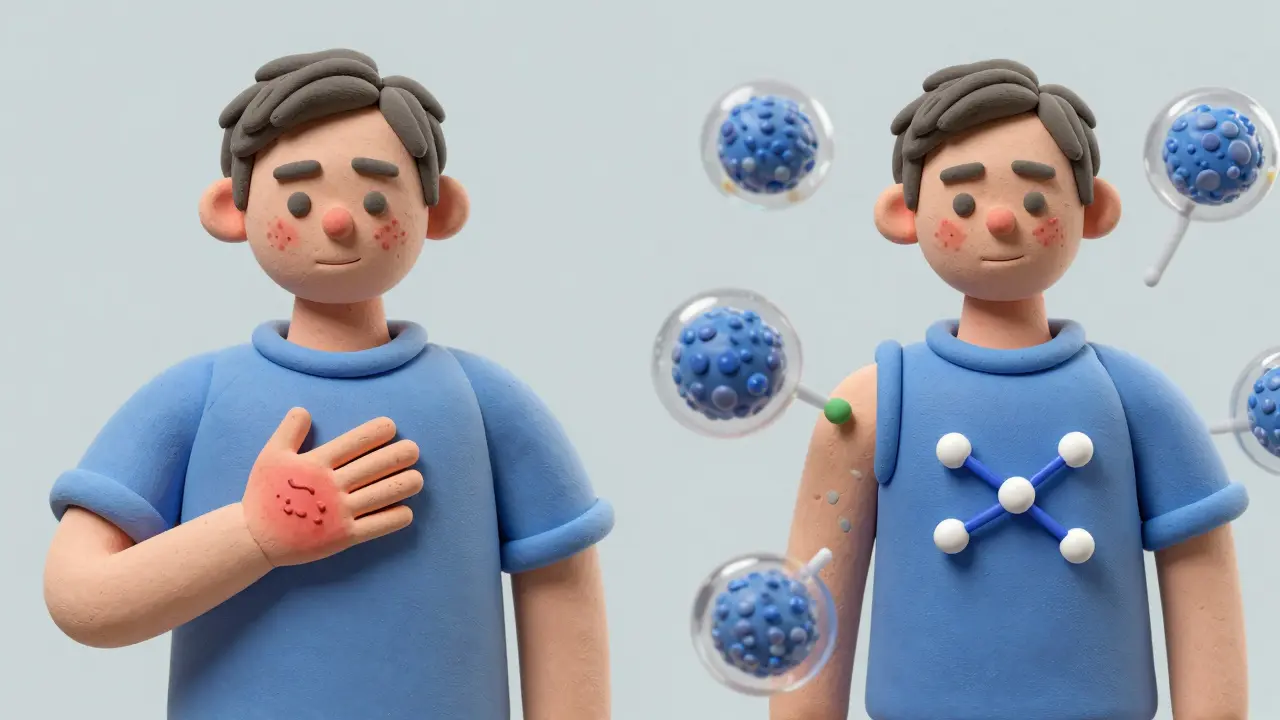
Not everyone qualifies. Some reactions are too dangerous to risk. If you’ve ever had:
- Stevens-Johnson syndrome
- Toxic epidermal necrolysis
- Erythema multiforme with blistering skin
- Severe liver damage (hepatitis) from the drug
- Kidney inflammation (nephritis) or serum sickness
Then desensitization is not an option. These aren’t allergic reactions in the usual sense-they’re immune system attacks on your own tissues. Trying to re-expose you to the drug could be fatal.
Also, if you’ve had a reaction that required intensive care or caused cardiac arrest, your risk is higher. Doctors will weigh the benefits against the danger very carefully. Sometimes, they’ll choose to avoid the drug entirely, even if it means a less effective treatment.
Success Rates and Real Outcomes
When done right, desensitization works in over 90% of cases. At Brigham and Women’s Hospital, teams have successfully desensitized hundreds of patients with cancer, autoimmune disease, and chronic infections. One patient with ovarian cancer was allergic to paclitaxel. Without treatment, her survival chances were low. After a six-hour desensitization, she completed all her chemotherapy cycles. She’s now in remission.
Another case: a teenager with cystic fibrosis kept getting lung infections. The only antibiotic that worked was a specific carbapenem-but she broke out in hives every time. After desensitization, she started her treatments, avoided hospitalizations, and went back to school full-time.
These aren’t rare stories. They’re standard outcomes in specialized centers. The American Academy of Allergy, Asthma & Immunology (AAAAI) updated its guidelines in 2022 to confirm that desensitization is now a standard of care for many of these situations.
What Happens After?
Once you finish the full dose, you’re not “cured.” You’re just temporarily tolerant. If you stop taking the drug for more than 48 hours, your sensitivity can return. That means if you need another round of treatment weeks later, you’ll need to go through the whole process again.
Some patients need to stay on the drug daily to keep the tolerance active. For example, people with aspirin-exacerbated respiratory disease often take a daily low dose of aspirin after desensitization to stay protected. This isn’t ideal, but it’s better than not breathing.
There’s no long-term immunity. No magic switch. Just careful, ongoing management. That’s why it’s so important to work with a team that knows this inside and out. Not every hospital can do this. You need allergists and immunologists trained in the protocols, nurses who know how to monitor for subtle signs of reaction, and emergency equipment ready at all times.
What If It Doesn’t Work?
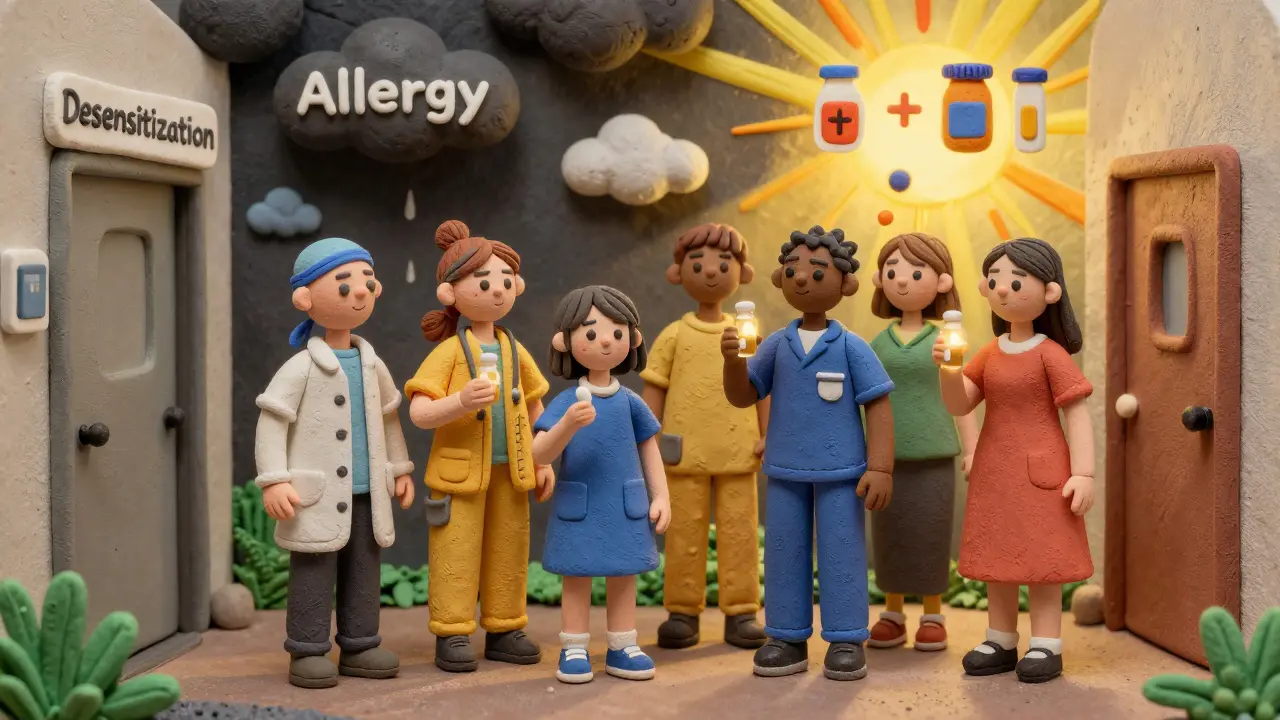
Even with the best team, sometimes the reaction happens too fast. If your blood pressure crashes or your airway swells, they’ll stop the process and treat you with epinephrine and steroids. The protocol is designed to be stopped safely at any point. If you can’t tolerate the drug even at the lowest dose, your team will look for alternatives-maybe a different class of drug, or a different route of delivery. Sometimes, they’ll try a different desensitization protocol with even smaller steps. It’s not a failure. It’s a pivot.
The goal isn’t to force you through pain. It’s to find a way to get you the treatment you need without risking your life. That’s the balance.
Where to Go for Help
This isn’t something your local GP can do. You need a specialized allergy or immunology center with experience in drug desensitization. Major academic hospitals in cities like Boston, New York, Chicago, and Sydney have dedicated programs. In Australia, centers in Melbourne, Sydney, and Adelaide offer these services, often through university-affiliated hospitals.
If you’re being told you can’t take a life-saving drug because of an allergy, ask for a referral to an allergist who specializes in drug hypersensitivity. Don’t accept “there’s nothing we can do” as an answer. There is. It’s just not simple. It’s not quick. But it’s possible.
Final Thought: It’s Not About Overcoming Allergy-It’s About Saving Life
Drug desensitization isn’t about beating your allergy. It’s about not letting your allergy beat you. It’s about choosing between a life interrupted and a life continued. It’s about knowing that sometimes, the thing that scares you the most-the very drug that made you sick-is also the one that can save you. And with the right team, the right plan, and the right timing, you can walk through that fear, one tiny dose at a time.
caroline hernandez
February 3, 2026 AT 19:46Let me break this down for those who aren’t familiar with immunoglobulin E-mediated hypersensitivity: desensitization exploits the transient downregulation of FcεRI receptors on mast cells and basophils via gradual antigen exposure. It’s not tolerance-it’s pharmacological hijacking of the degranulation cascade. The 12-step protocol? That’s empirically derived from dose-response curves in IgE-sensitized models. You’re not curing the allergy; you’re inducing a reversible anergic state. If you miss a dose beyond 48 hours, you reset the clock. That’s why compliance is non-negotiable. This isn’t magic. It’s molecular biology with a clinical protocol.
Sherman Lee
February 5, 2026 AT 12:34Okay but… who’s really behind this? 🤔 I’ve seen this before-Big Pharma pushes desensitization so you keep buying the drug instead of finding a ‘natural’ alternative. And don’t get me started on the ‘no home version’ thing. They say it’s dangerous… but what if they just don’t want you doing it without their profit margin? 🏥💸 I know someone who did it at home with a graduated dilution and a pulse oximeter. She’s fine. The system doesn’t want you to know this is possible outside the hospital-industrial complex.
Coy Huffman
February 6, 2026 AT 17:24honestly… this kinda makes me think about how much of medicine is just… playing god with our bodies? 😅 like we’re so scared of allergies we invent ways to trick our own immune systems into ignoring danger. but what if the body’s reaction was trying to tell us something? maybe we’re just too addicted to the drug to listen. still… if it saves your life? i guess we do what we gotta do. 🤷♂️
Demetria Morris
February 8, 2026 AT 16:51People should just be more careful with medications in the first place. If you can’t tolerate something, don’t take it. Why are we so eager to force our bodies to accept toxins? This is just another example of medical overreach. You don’t need chemo if your body can’t handle it. Let nature take its course. It’s not ‘saving a life’-it’s prolonging suffering.
Geri Rogers
February 9, 2026 AT 11:40Y’all need to stop being scared of this. 🤗 I’ve seen this work-my cousin did it for rituximab after anaphylaxis on her first try. She’s been in remission for 3 years now. This isn’t some risky experiment-it’s standard care at top hospitals. If your doc says ‘no’ and doesn’t refer you to an immunology center, find a new doctor. You deserve to live. And yes, it’s scary. But so is giving up. You got this. 💪❤️
Samuel Bradway
February 11, 2026 AT 06:38Man, I read this whole thing and just felt so… seen. My mom went through this with vancomycin after 3 years of recurrent pneumonia. She cried after the first step because she was so scared. But she made it. Now she’s back gardening and baking pies. It’s not glamorous. It’s not quick. But it’s real. And the nurses? They treated her like family. I’m just glad there’s a way.
Jamillah Rodriguez
February 12, 2026 AT 05:10Okay but imagine if this was a Netflix docu-series. ‘Desensitized: One Dose at a Time.’ 🎬 I’d binge it. Like… imagine the drama. The monitors beeping. The nurse whispering ‘just one more drop.’ The family holding hands. The slow zoom on the IV bag. 😭 I’d cry. I’d share it. I’d make a TikTok with #DesensitizationJourney. Someone get this made.
Susheel Sharma
February 13, 2026 AT 21:29While the clinical efficacy of IgE-mediated desensitization is statistically significant (p < 0.01 in multiple cohort studies), the underlying assumption-that immune reactivity can be manipulated through incremental exposure-rests on a reductionist model of immunological homeostasis. In cultures where traditional medicine prioritizes systemic detoxification, this approach appears not merely invasive, but ontologically absurd. One must ask: Are we healing, or merely delaying the inevitable reassertion of biological truth?
Janice Williams
February 14, 2026 AT 03:44This is a textbook example of medical hubris. You’re telling people to deliberately re-expose themselves to a substance that nearly killed them? And you call it ‘standard of care’? That’s not medicine-that’s psychological coercion disguised as science. Where’s the informed consent? Where’s the ethical review? You’re normalizing trauma under the banner of ‘hope.’ This is dangerous. And you’re all complicit.
Shelby Price
February 15, 2026 AT 08:53So… if you do this and it works, do you still have to carry an EpiPen? 😅