

When you fill a prescription for a generic drug, you’re not just getting a cheaper version of a brand-name medicine-you’re benefiting from a powerful economic force that’s been quietly reshaping how drugs are priced across the U.S. and beyond. The real story isn’t about the generic itself. It’s about how buyers-government programs, insurers, pharmacy benefit managers-use the generic drug competition as a weapon to force down prices, even for brand-name drugs that don’t have generics yet.
Why Generic Drugs Are the Hidden Lever in Drug Pricing
Generic drugs make up 90% of all prescriptions filled in the U.S., but they account for only about 22% of total drug spending. That’s not an accident. It’s the result of a deliberate, market-driven system designed to drive prices down the moment a patent expires. When a brand-name drug loses exclusivity, generic manufacturers rush in. The first one might cut the price by 30%. The second? Another 40%. By the time six companies are selling the same pill, the price drops an average of 90%. With nine competitors, it can fall by 97%. This isn’t theoretical. The FDA tracked over 2,400 new generic approvals between 2018 and 2020. Their data showed clear, predictable price drops with each new entrant. The more competitors, the lower the price. And it’s not just about the generics. Buyers use that threat-or the reality-of competition to pressure brand-name drugmakers into lowering their prices before generics even arrive.How Medicare Uses Generic Competition to Set Brand-Name Drug Prices
The 2022 Inflation Reduction Act gave Medicare the power to negotiate prices for some of the most expensive drugs. But here’s the twist: Medicare can’t directly negotiate with a brand-name drug if generics are already on the market. So how do they get lower prices? They use generics as a benchmark. Medicare doesn’t just look at the brand-name drug’s price. They look at what similar drugs-therapeutic alternatives-are selling for. If five other drugs in the same class are priced at $150 for a 30-day supply, Medicare uses that as the starting point. Then they adjust based on clinical evidence: Is the drug being negotiated better? Worse? About the same? This approach, outlined in CMS’s June 2023 guidance, means even if a drug has no generic yet, its price is being shaped by what’s happening in the generic market. A brand-name drug that costs $500 might be forced down to $200 because five cheaper, equally effective alternatives already exist-and those alternatives are mostly generics.Canada’s Tiered Pricing: A System Built on Competition
Canada doesn’t wait for generics to appear before acting. Their system, updated in April 2014, uses a tiered pricing model that adjusts the maximum allowable price based on how many competitors are in the market. If a drug has only one other version (brand or generic), the price cap is higher. Add a second generic? The cap drops. Add a third? It drops again. This isn’t just reactive-it’s predictive. Generic manufacturers know exactly what price they can expect if they enter the market. It gives them a clear path to profitability. It also prevents brand-name companies from holding out for high prices, knowing that every new generic will chip away at their revenue. The result? A market that moves faster, with more generics entering sooner. It’s a system that rewards competition instead of punishing it.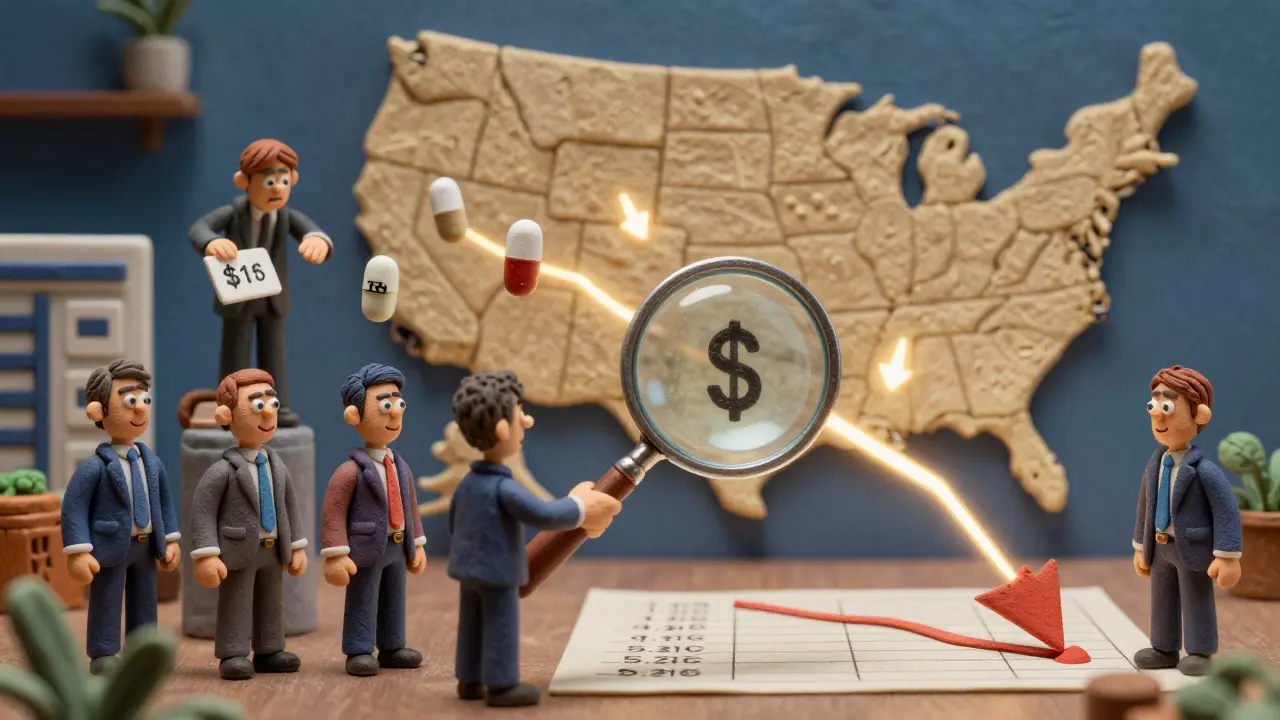
What Happens When Government Pricing Gets in the Way
There’s a dangerous flip side. If the government sets a price for a brand-name drug before any generics have entered the market, it can kill competition before it starts. Matrix Global Advisors’ 2025 analysis found that when Medicare negotiates a low price for a brand drug too early, generic manufacturers lose incentive to challenge patents. Why spend millions on legal battles and manufacturing setup if the government has already capped the price at a level that doesn’t leave room for profit? This is called the “chilling effect.” It’s not theoretical. Avalere Health’s 2023 analysis of the EPIC Act showed that early government pricing could reduce generic entry by up to 40% for some drugs. That means fewer options, slower price drops, and ultimately, higher costs for patients in the long run. The real goal isn’t just low prices today. It’s sustainable, ongoing competition that keeps prices falling for years.How Big Pharma Fights Back-And How It Hurts
Brand-name drugmakers know generic competition is their biggest threat. So they’ve built entire strategies around delaying it. One common tactic? “Product hopping.” Between 2015 and 2020, companies made minor changes to a drug-switching from a pill to a capsule, changing the dosage form-and then patented the new version. This reset the clock on generic competition, keeping patients locked into the more expensive brand. Another? “Reverse payments.” In over 100 cases between 2010 and 2020, brand companies paid generic manufacturers to delay launching their cheaper version. The FTC called these “pay-for-delay” deals. They’re illegal now-but enforcement is weak, and they still happen. These tactics don’t just delay savings. They cost patients billions. The Congressional Budget Office estimates that eliminating pay-for-delay deals alone could save Medicare $1.7 billion over a decade.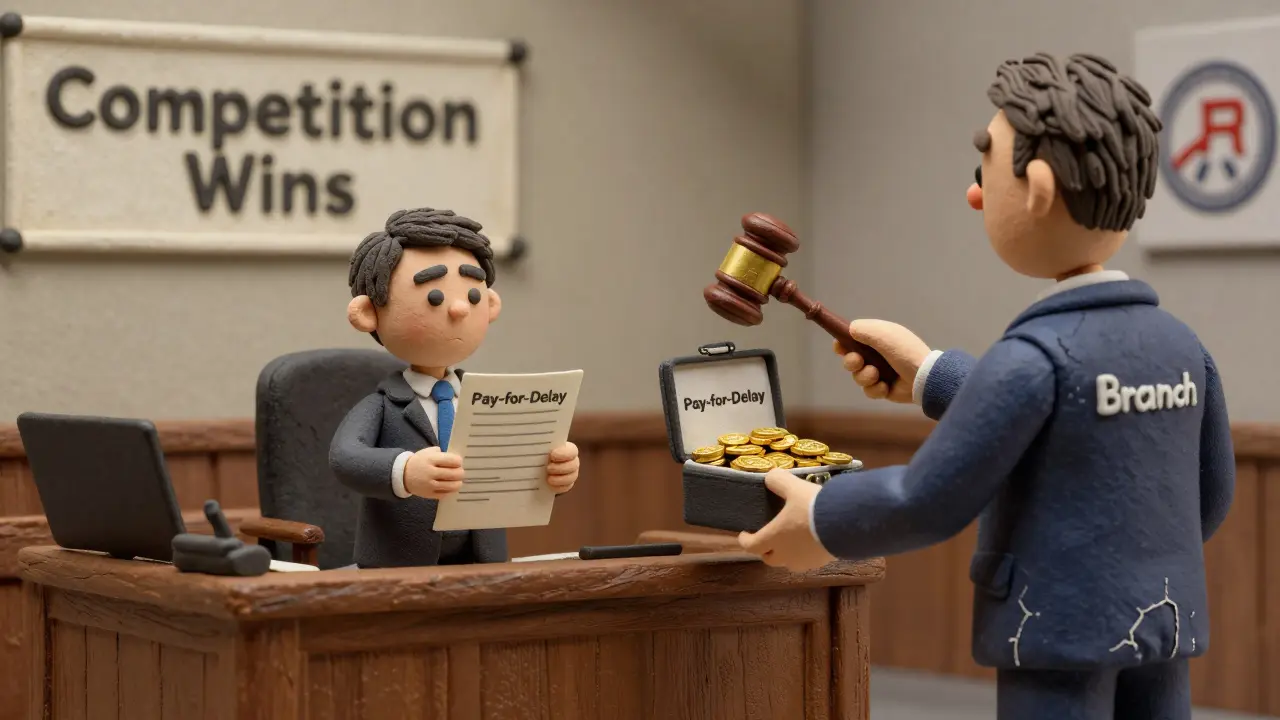
Who Wins? Who Loses?
The winners are clear: patients, taxpayers, and insurers. The Association for Affordable Medicines estimates that generic drugs saved U.S. healthcare systems over $350 billion in 2023. Medicare beneficiaries alone could save $6.8 billion annually from the first 10 negotiated drugs. But the losers are less obvious. Small generic manufacturers are caught in the middle. If CMS sets a low price for a brand drug, it becomes nearly impossible for a new generic company to enter the market-even if they’ve spent years developing the drug and winning patent challenges. One manufacturer told Avalere Health: “We’re not just competing with a brand. We’re competing with a government-set price. There’s no room to cover our costs.” Meanwhile, complex generics and biosimilars-drugs that are harder to copy, like insulin or biologics-face even bigger hurdles. Their development costs are higher, and competition is slower. Only 45% of biosimilars gain significant market share, compared to 90% for traditional generics.What’s Next? The Fight for Sustainable Competition
The future of drug pricing hinges on one question: Can we have low prices without killing competition? The proposed EPIC Act offers one answer: Delay Medicare price negotiations until after generics have had a chance to enter the market. That way, the market sets the floor, and government negotiation just pushes it lower. Other countries are moving in similar directions. The UK updated its pricing system in April 2023 to use real-time prices from European markets as a reference. Germany and Japan are experimenting with dynamic pricing based on real-world usage data. The common thread? Transparency. Data. And letting competition do its job. Right now, the U.S. is at a crossroads. We have the tools to make drugs affordable. But if we use them in a way that discourages new entrants, we’re just trading short-term savings for long-term stagnation. The best way to keep prices low? More competitors. Not fewer. More transparency. Not secret formulas. And a system that rewards companies for bringing cheaper drugs to market-not for waiting for the government to set the price for them.What You Can Do
As a patient, you don’t need to understand the intricacies of CMS’s pricing models. But you can ask your pharmacist: “Is there a generic version?” If there is, take it. If not, ask why. If your insurance denies coverage for a generic, appeal it. Demand transparency. Support policies that encourage generic competition. And remember: Every time you choose a generic, you’re not just saving money-you’re helping to keep prices low for everyone else.How do generic drugs lower the price of brand-name drugs?
Generic drugs lower brand-name prices by creating real competition. When a generic enters the market, it forces the brand to lower its price to stay competitive. Even before a generic is available, buyers like Medicare use the expected price of generics as a benchmark to set lower initial prices for the brand. This pressure can reduce brand-name drug prices by 30% to 70% even before generics launch.
Why doesn’t Medicare negotiate prices for drugs with existing generics?
The Inflation Reduction Act prohibits Medicare from directly negotiating prices for drugs that already have generic versions on the market. The reasoning is that generic competition is already driving prices down effectively. Instead, Medicare uses the prices of those generics as a benchmark to set lower prices for similar brand-name drugs that don’t yet have generics.
What’s the difference between a generic drug and a biosimilar?
A generic drug is an exact copy of a small-molecule brand-name drug, made using the same chemical formula. A biosimilar is a highly similar-but not identical-version of a complex biological drug, like insulin or cancer treatments. Biosimilars are harder and more expensive to produce, which is why they make up only 45% of the market, compared to 90% for traditional generics.
Do generic drug manufacturers ever delay entry to protect brand-name prices?
Yes, but rarely on their own. Sometimes, brand-name companies pay generic manufacturers to delay launching their version-a practice called “pay-for-delay.” These deals are illegal under U.S. antitrust law, but enforcement is inconsistent. Between 2010 and 2020, over 100 such deals delayed generic entry, costing consumers billions.
How does Canada’s pricing system encourage generic competition?
Canada uses a tiered pricing model that lowers the maximum allowable price as more generic competitors enter the market. If only one version of a drug exists, the price cap is higher. With two or more generics, the cap drops significantly. This gives generic manufacturers a clear, predictable path to profit, encouraging faster entry and more competition.
Why are some generic drugs still expensive?
Some generic drugs remain expensive because there’s little or no competition-often due to low profit margins, complex manufacturing, or patent litigation that blocks new entrants. For example, older drugs with small markets or difficult production processes may have only one or two manufacturers. Without competition, prices stay high. This is why increasing the number of manufacturers is critical to lowering prices.
Can I ask my doctor to prescribe a generic drug?
Absolutely. In most cases, generics are just as safe and effective as brand-name drugs. Ask your doctor if a generic is available and appropriate for your condition. Many insurance plans require you to try a generic first. If your doctor believes the brand is necessary, they can write a note explaining why.
jeremy carroll
December 15, 2025 AT 17:26generic drugs are literally the reason my insulin isnt costing me a kidney. i used to pay 500 a month for the brand, now i pay 30. no joke, my bank account thanks you.
Thomas Anderson
December 16, 2025 AT 17:04if you got a generic, take it. same stuff, way cheaper. no magic pills here, just science and competition doing its job.
Sarthak Jain
December 16, 2025 AT 20:32in india we see this too - when 3 local makers start producing metformin, the price crashes from $20 to $1.50 per bottle. it’s wild how fast competition works when no one’s blocking it. why can’t the US just copy this?
Rulich Pretorius
December 17, 2025 AT 12:16the real tragedy isn’t that prices drop - it’s that we’ve built a system where innovation is punished unless it’s profitable for the few. competition isn’t the enemy; the fear of it is. when government steps in too early, it doesn’t lower prices - it kills the engine that makes them fall in the first place.
we treat drug pricing like a fixed pie, but it’s a living system. starve the competitors, and the whole table starves with it.
the EPIC Act isn’t just policy - it’s a recognition that markets work better than bureaucrats when given space to breathe.
let generics enter. let prices fall. then negotiate from a position of strength, not fear.
the alternative? paying more for less, forever.
Sinéad Griffin
December 18, 2025 AT 02:07AMERICA IS THE ONLY COUNTRY THAT LETS PHARMA ROB US BLIND 😤💸
Canada? Smart. UK? Smart. Germany? Smart.
US? We pay $1000 for a drug that costs $5 to make and then cry when our insurance denies it. 🤡
Stop being suckers. Demand generics. Fight for transparency. Or keep getting fleeced.
Dwayne hiers
December 19, 2025 AT 14:07the economic logic here is sound: marginal cost of production for generics approaches zero after initial R&D and regulatory approval. with multiple manufacturers, the Nash equilibrium drives price toward marginal cost - which is why 97% drops occur at 9+ entrants. this is textbook contestable markets theory.
the chilling effect from early price negotiation is a well-documented phenomenon in industrial organization literature. when the government sets a ceiling below the expected profit margin for generic entrants, it reduces expected returns below the hurdle rate for capital allocation - hence, fewer firms enter.
the 40% reduction in generic entry under early negotiation isn't anecdotal - it's modeled in Avalere’s supply-side simulation framework using patent litigation risk and manufacturing fixed costs.
we need dynamic pricing floors, not static caps. let the market set the baseline. then, use negotiation to compress the outlier premiums.
Natalie Koeber
December 20, 2025 AT 20:27you think this is about competition? nah. it’s all a psyop. the FDA, big pharma, and the government are in cahoots. generics are secretly made in the same factories as the brand names - just repackaged. the whole ‘competition’ thing is fake. they just want you to think you’re saving money while they control everything. check the patent filings - same owners, different labels. they’re laughing at you.
and don’t get me started on ‘biosimilars’ - those are just cloned biologics with a fancy name. the real cure? get off the grid. grow your own medicine. or move to Canada. they know what’s up.
Jonny Moran
December 21, 2025 AT 20:41as someone who’s worked in rural clinics across 7 states, i’ve seen patients skip doses because the brand cost $400. then generics hit - $12. suddenly, they’re taking meds regularly. their blood pressure drops. their diabetes stabilizes.
this isn’t economics. it’s life or death.
the system’s broken when we need a PhD to understand why a pill costs $100 - when it should cost $5. we don’t need more reports. we need more manufacturers. more transparency. more guts.
if your doctor says ‘brand only,’ ask why. if they can’t answer, get a second opinion.
you’re not just buying medicine. you’re voting with your wallet.
Edward Stevens
December 23, 2025 AT 06:04so let me get this straight - the government can’t negotiate prices if generics exist, but can use generics to force brand prices down anyway? brilliant. it’s like saying you can’t buy a car from the dealership… but you can threaten to buy one from the junkyard to make them lower their price.
the system is a Rube Goldberg machine built by lawyers and lobbyists. someone’s making bank. it’s not us.
Tim Bartik
December 25, 2025 AT 00:25the real villains? the patent trolls who buy up old drugs just to sue generics into oblivion. one guy owns 300 patents on aspirin. literally. he doesn’t make it. he just waits for someone to try - then sues ‘em for $20M. that’s not capitalism. that’s organized crime with a law degree.
and don’t even get me started on ‘product hopping’ - changing the damn capsule color and calling it a ‘new drug.’ that’s like selling the same soda in a red can instead of blue and charging $10 more. it’s fraud with a FDA stamp.
we need to burn this whole system down and start over. no more patents on pills. no more pay-for-delay. no more excuses.
Wade Mercer
December 25, 2025 AT 06:43you people don’t understand. this isn’t about ‘competition.’ it’s about moral decay. we used to respect medicine as a sacred science - now it’s just another Walmart aisle. generics? they’re the cheap knockoffs people take because they’re too lazy to care about quality. you want lower prices? then stop being so entitled. if you can’t afford your meds, maybe you shouldn’t be sick.
Daniel Thompson
December 25, 2025 AT 16:12the analysis presented here is fundamentally flawed. it assumes rational actors in a perfectly competitive market - but pharmaceutical markets are characterized by asymmetric information, high sunk costs, and entrenched regulatory capture. the notion that ‘more competitors = lower prices’ ignores the reality that many generic manufacturers are subsidiaries of the same conglomerates that own the brand-name firms. the competition is performative. the pricing power remains centralized. this is not market-driven - it’s institutional.