

Ever picked up a prescription for a generic drug like lisinopril or metformin and been shocked by how cheap it was? Maybe you paid $4 at Walmart. Now imagine paying €15 for the same pill in Germany. It’s not a mistake. In the United States, you’re paying less for generic drugs than most Europeans - even though Americans pay way more for brand-name drugs. This isn’t a glitch. It’s the result of two completely different systems working in opposite directions.
How the US Keeps Generic Prices Low
The U.S. generic drug market is a high-volume, low-margin race to the bottom. When a brand-name drug loses its patent, dozens of manufacturers jump in. Companies like Teva, Mylan, and Sandoz don’t just compete - they undercut each other until prices drop below manufacturing costs. That’s right. Some generic pills are sold for less than it costs to make them. Why? Because volume makes up the difference. With 90% of U.S. prescriptions filled with generics, even a penny-per-pill profit adds up when you’re selling hundreds of millions of doses a year. Pharmacy Benefit Managers (PBMs) drive this further. These middlemen negotiate rebates with drugmakers, but they also pressure pharmacies to stock the cheapest generics. Walmart, CVS, and Costco use their buying power to lock in rock-bottom prices. A 2022 U.S. Department of Health and Human Services report found that Americans paid, on average, 67% of what other OECD countries paid for the same generic drugs. That means you’re paying roughly one-third less than someone in France or the UK for the exact same medication. And it’s not just about who’s selling. It’s about how the system works. In 49 states, pharmacists can automatically switch your brand-name drug to a generic unless your doctor says no. That’s called substitution. It’s built into the system. In Europe? Often not. In France, you need your doctor’s permission to switch. In Germany, pharmacists can substitute, but the process is slower and less automatic. Less substitution means less pressure to drive prices down.Why Europe Pays More for Generics
Europe doesn’t have the same kind of generic market. Only about 41% of prescriptions in the EU are for unbranded generics - less than half of what’s seen in the U.S. Why? Because European governments don’t encourage competition the same way. Instead of letting the market fight it out, they set prices directly. Countries like Germany, France, and the UK use centralized negotiation. Government agencies sit down with drugmakers and say, “Here’s what we’ll pay.” They don’t care how much it cost to develop the drug. They care about budget impact. If a generic costs too much, they just don’t reimburse it - or they force the maker to lower the price. That sounds fair, but it kills competition. If you’re a small generic company trying to enter the German market, you can’t just undercut the big players. You have to go through a bureaucratic maze just to get your price approved. And there’s another twist: reference pricing. Some countries set a drug’s price based on what other countries pay. If Germany sees that France pays €10 for a pill, they won’t let their own price go above that. But here’s the catch - if the U.S. is paying $3 for that same pill, Germany doesn’t use the U.S. price as a reference. They look at other European prices. So the U.S. low price doesn’t pull down European prices. It stays out of the equation. The result? Higher prices for generics. A 2025 JAMA Health Forum study showed that when you strip out rebates and discounts, the average price of a generic in the U.S. was still 3 times lower than in Germany. But even that number hides the full story. The U.S. system works because it’s messy. PBMs, insurers, pharmacies, and manufacturers all negotiate separately. In Europe, one agency sets one price. Simpler? Maybe. Cheaper? Not for the patient at the counter.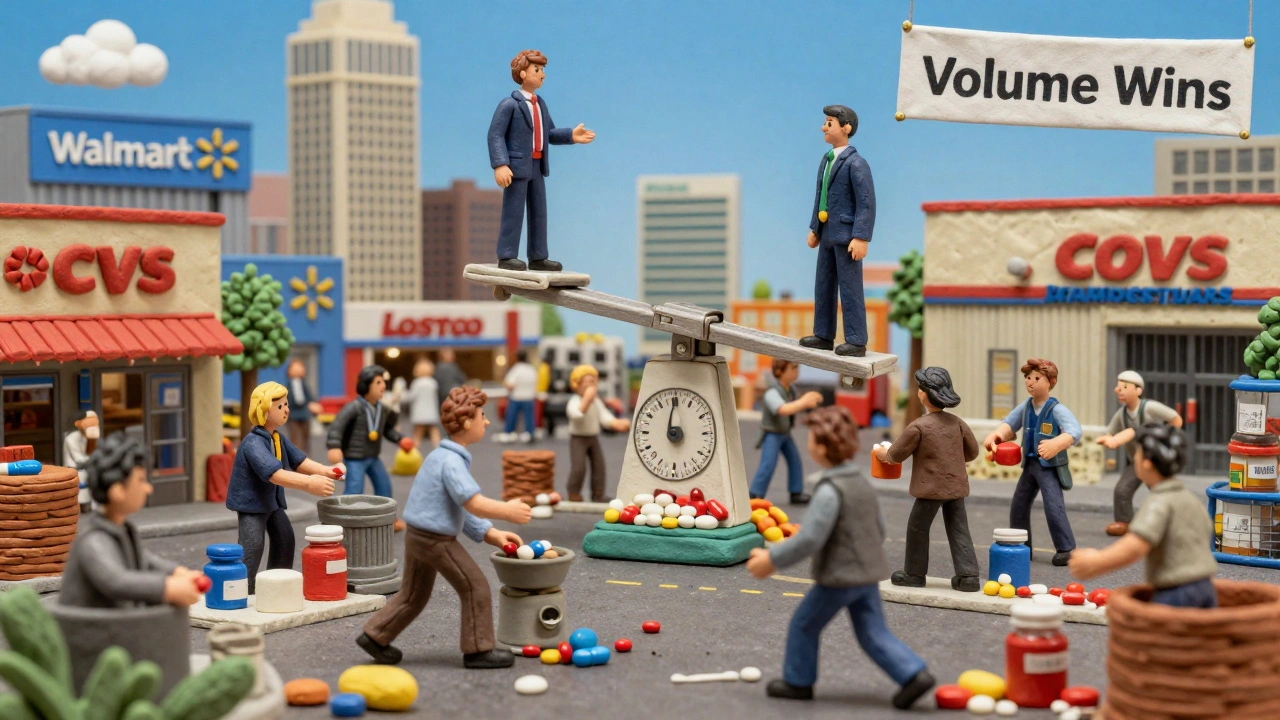
The Brand-Name Paradox
Here’s where things get strange. While Americans pay less for generics, they pay far more for brand-name drugs. The same 2022 HHS report found that U.S. prices for brand-name drugs were 422% higher than in other OECD countries. Adjusted for hidden rebates, it’s still 322% higher. That’s not a typo. A single month’s supply of Jardiance costs $204 in the U.S. and $52 in other countries. Stelara? $4,490 here versus $2,822 abroad. Why? Because the U.S. is the world’s biggest drug market. Pharmaceutical companies know they can charge more here and still make a profit. Other countries use price controls. The U.S. doesn’t - not for brand-name drugs, anyway. That means drugmakers rely on American consumers to fund global research and development. A 2024 Milbank Quarterly analysis showed that about two-thirds of all new drug R&D is paid for by U.S. sales. When you pay $500 for a brand-name drug, you’re not just covering your own pill. You’re helping fund the next breakthrough. Europeans pay less for brand-name drugs, but they benefit from the innovation that comes from the U.S. system. Dana Goldman, a public policy expert at USC, calls it “free riding.” Not in a moral sense - in an economic one. Europe keeps its prices low by refusing to pay the high prices that make innovation possible. The U.S. pays the bill. The rest of the world gets the drugs.What’s Changing Now?
That balance is starting to shift. The Inflation Reduction Act gave Medicare the power to negotiate prices for 10 high-cost brand-name drugs. In 2024, Medicare negotiated Jardiance down to $204 - still nearly four times what other countries pay. But it’s a start. By 2027, those negotiations could cut U.S. brand-name prices by 25-30% for selected drugs. Meanwhile, political pressure is mounting. Former President Trump’s proposed “most favored nation” policy would have forced the U.S. to pay the same price as the lowest-paying OECD country. That would have slashed U.S. brand-name drug revenues by an estimated $100 billion a year. Drugmakers warned they’d raise prices in Europe to make up the difference. The European Confederation of Pharmaceutical Entrepreneurs called it a “global threat.” And it’s not just politics. The U.S. generic market is showing cracks. When prices drop too low, manufacturers leave. That’s what happened with generic albuterol and some antibiotics. Supply shortages followed. Then, one company bought up the remaining competitors and raised prices. It’s a cycle: too low → no supply → monopoly → price spike. Experts say the system is too fragile. It works because it’s ruthless. But it’s not sustainable if it keeps killing its own suppliers.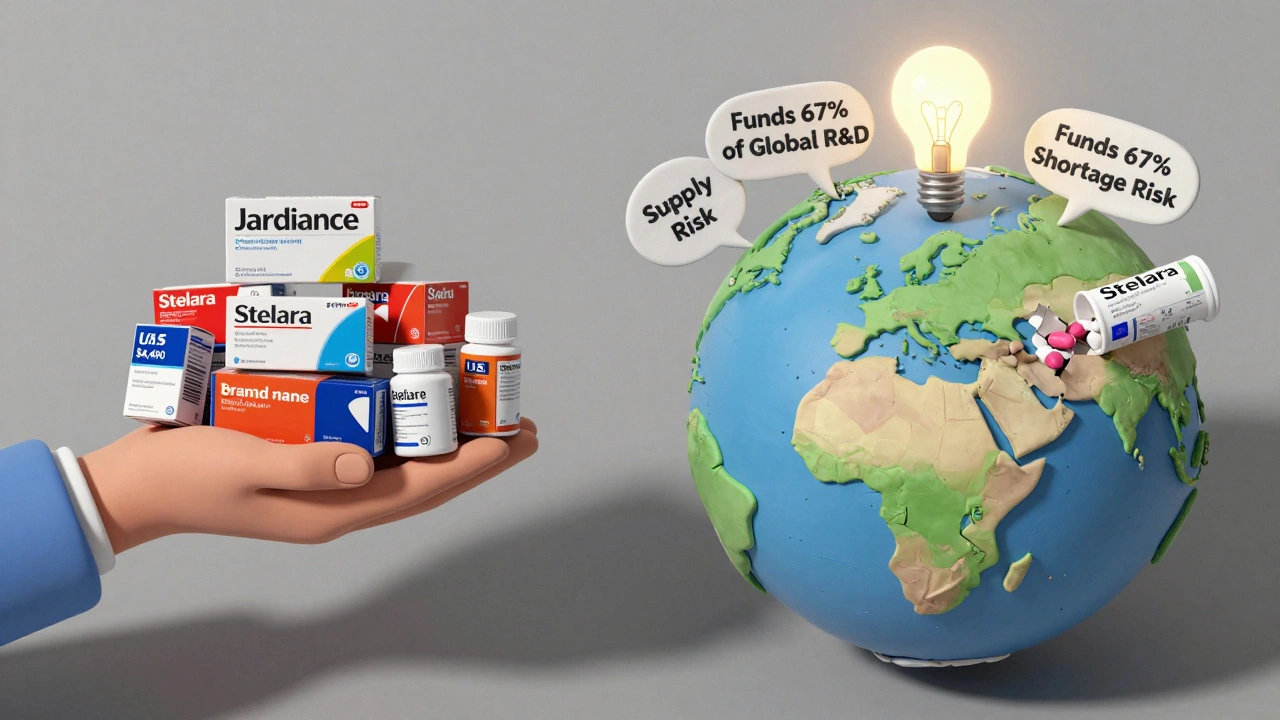
What This Means for You
If you’re in the U.S., you’re getting a deal on generics. For many, monthly costs for prescriptions like metformin, atorvastatin, or levothyroxine are $0-$10 with insurance. That’s not luck. It’s the result of a broken, competitive, and sometimes chaotic system that somehow works. If you’re in Europe, you’re paying more for the same pills - but you’re paying less for the expensive ones. Your system protects you from sticker shock on new drugs. But you’re also relying on the U.S. to keep innovation alive. For travelers, it’s confusing. Americans are stunned when they pay €15 for a generic in Berlin. Europeans are horrified when they see a $1,200 price tag for a cancer drug in New York. Both are right. Both systems are working exactly as designed - just for different goals.Will This Last?
The U.S. generic market is under pressure. More regulation, more scrutiny, more demands for transparency. The PBM model is being questioned. If Congress forces PBMs to pass rebates to patients, it could change how discounts work. If Medicare negotiation expands beyond 10 drugs, it could pull down brand-name prices - and reduce the funding that keeps global innovation alive. Europe may eventually have to loosen its price controls to keep access to new drugs. If U.S. prices fall too far, drugmakers may delay launching new drugs here - or skip the U.S. entirely. That would hurt American patients. For now, the system holds. Americans pay less for generics. Europeans pay less for brand names. The U.S. funds the future. Europe protects its present. Neither side is entirely right. Neither side is entirely wrong. But the tension between them is growing - and it’s going to shape how you get your medicine for years to come.Why are generic drugs cheaper in the U.S. than in Europe?
The U.S. has a highly competitive generic market with dozens of manufacturers competing for volume. Pharmacy Benefit Managers (PBMs) and big retailers like Walmart drive prices down through bulk purchasing and rebates. In contrast, European countries use centralized price controls and reference pricing, which limit competition and keep prices higher. The U.S. system works because it’s messy - low margins, high volume. Europe’s system works because it’s controlled - stable prices, less competition.
Do Americans pay more for brand-name drugs than Europeans?
Yes, significantly. According to the U.S. Department of Health and Human Services, Americans pay about 422% more for brand-name drugs than residents of other OECD countries. Even after accounting for hidden rebates, prices are still over 300% higher. This is because the U.S. doesn’t regulate brand-name drug prices, while most European governments negotiate or cap prices directly.
Why doesn’t Europe just copy the U.S. generic pricing model?
Because the U.S. model relies on a fragmented, profit-driven system that European governments don’t want to replicate. They prioritize affordability and predictability over competition. In Europe, the government sets the price. In the U.S., the market sets it - and sometimes, prices drop so low that manufacturers quit, causing shortages. European policymakers see that risk and choose stability over low prices.
Are U.S. drug prices subsidizing innovation in other countries?
Yes. The U.S. accounts for about 40% of global pharmaceutical sales but only 4% of the world’s population. Drugmakers use profits from U.S. brand-name sales to fund most of the world’s R&D. A 2024 Milbank Quarterly analysis found that roughly two-thirds of new drug development is paid for by American consumers. European countries benefit from these innovations without paying the same prices.
Can Medicare drug negotiations lower U.S. prices enough to fix this imbalance?
They’ll help - but not completely. The Inflation Reduction Act lets Medicare negotiate prices for 10 drugs, with potential cuts of 25-30% by 2027. But these are only a small fraction of all brand-name drugs. Even if prices drop, they’ll still be higher than in Europe. The bigger issue is that lowering U.S. prices too much could reduce global R&D funding, forcing companies to raise prices elsewhere. It’s a delicate balance.
Why do some generic drugs disappear from U.S. shelves?
When generic prices drop below manufacturing costs, companies stop making them. This happened with antibiotics, asthma inhalers, and thyroid meds. Once a few manufacturers exit, the remaining ones gain market power and raise prices. It’s called a “supply shock.” The U.S. system is so competitive that it sometimes destroys itself - low prices lead to no supply, then monopolies, then price spikes.
Deborah Andrich
December 11, 2025 AT 17:10My grandma takes metformin and it costs her $3 at Walmart. In Germany? She’d pay 15 euros for the same thing. I don’t get how people think this is fair. We’re not rich but we get life-saving meds for less than a coffee. Europe’s system sounds nice on paper but it’s not working for the people who need it most.
Rawlson King
December 13, 2025 AT 02:45The entire U.S. system is a disaster masked as efficiency. You think $4 generics are a win? They’re a symptom of a broken supply chain. Manufacturers are going bankrupt. Shortages are rising. And you’re celebrating because you got a discount on your cholesterol med. This isn’t sustainability. It’s a time bomb.
Alvin Montanez
December 14, 2025 AT 23:38Let me break this down for you real simple. The U.S. doesn’t have a drug pricing system. It has a free-for-all bloodbath where every company tries to out-scam the next one. PBMs are the real villains here - they take 30% of the rebate, pharmacies get pennies, and patients get the illusion of low prices. Meanwhile, in Europe, the government says ‘this pill costs €10’ and that’s it. No middlemen. No chaos. No race to the bottom. And guess what? People still get their meds. We’re not better. We’re just louder and more reckless.
And don’t even get me started on how Americans think they’re heroes for ‘funding global innovation.’ That’s not altruism. That’s exploitation. You pay $500 for a cancer drug so someone in Sweden can pay $50. You’re not the world’s pharmacy. You’re the world’s sucker.
And yes, I know the counterargument. Yes, innovation happens here. But innovation doesn’t need $4,000 price tags. It needs stable funding. Not a casino where every patient is a gambler hoping their drug won’t vanish next month because the manufacturer quit.
And before you say ‘but the free market!’ - the free market is dead here. When only one company makes a generic and jacks the price to $200? That’s not competition. That’s a monopoly. And it happens every damn year.
We’re not fixing this. We’re just kicking the can down the road until someone dies because their thyroid med disappeared and the backup cost $1,200. And then we’ll all pretend we didn’t see it coming.
Europe’s system isn’t perfect. But at least it doesn’t pretend to be a market when it’s really a rigged game.
Tommy Watson
December 16, 2025 AT 11:34bro the u.s. is literally paying for everybodys meds like we are the global drug daddy and its so unfair. i pay $5 for lisinopril and some dude in germany is crying because he pays 15 euro? bro he got medicare for all. we got nothing. we just got ripped off for 20 years and now we get to fund the whole world? no. no. no. this is not right. someone needs to stop this. like right now.
Karen Mccullouch
December 16, 2025 AT 11:55Let me tell you something. If you think Europe’s system is better, you’ve never had to wait 3 months for a generic to get approved because some bureaucrat in Brussels thinks it’s ‘too expensive.’ We have the best system in the world. We get our meds the same day. We don’t beg for permission. We don’t wait for a government to say ‘maybe next year.’ We win. We outcompete. We don’t apologize for being the engine of innovation. If you don’t like it, move to Sweden and see how fast your asthma inhaler runs out.
Cole Newman
December 16, 2025 AT 15:08you ever hear of the albuterol shortage? yeah that happened because no one could make it for less than $15 and walmart was paying $2. so they just stopped. now the price is $200. so you’re happy? you saved $12 last year? congrats. now you’re paying $200. that’s the american dream. save now, pay later. and when the system breaks? we all suffer. europe’s system is slow but it doesn’t implode. ours is like a house of cards made of pennies.
Casey Mellish
December 18, 2025 AT 12:51As an Australian, I’ve seen both sides. We’re somewhere in between - price controls but with some competition. The U.S. model is terrifying. It works until it doesn’t. And when it doesn’t, people die. Europe’s model is bureaucratic, yes, but it’s predictable. No one wakes up wondering if their blood pressure pill will be gone next week. That’s not a flaw. That’s dignity.
And let’s be honest - the U.S. doesn’t fund global innovation because it’s noble. It funds it because it’s the only market big enough to make it profitable. That’s capitalism, not charity. And now the world is starting to notice. If the U.S. starts capping brand-name prices, the entire global drug economy shifts. Europe won’t pay more. Canada won’t pay more. So who does? No one. And innovation slows. That’s the real cost.
Tyrone Marshall
December 20, 2025 AT 05:04Here’s the thing no one talks about: we’re not choosing between two systems. We’re choosing between two kinds of suffering. In the U.S., you suffer from unpredictability - today your pill costs $3, tomorrow it’s $200, and next month it’s gone. In Europe, you suffer from bureaucracy - you wait, you plead, you get denied. Neither is good. But one is silent. The other is screaming.
The U.S. system rewards volume and punishes stability. Europe rewards predictability and punishes innovation. Neither is moral. Both are human. Maybe the answer isn’t copying one or the other. Maybe it’s building something new - where generics are cheap enough to be accessible, but not so cheap that they vanish. Where brand-name drugs are affordable without crushing the companies that make them. That’s the hard path. But it’s the only one that doesn’t break people.