
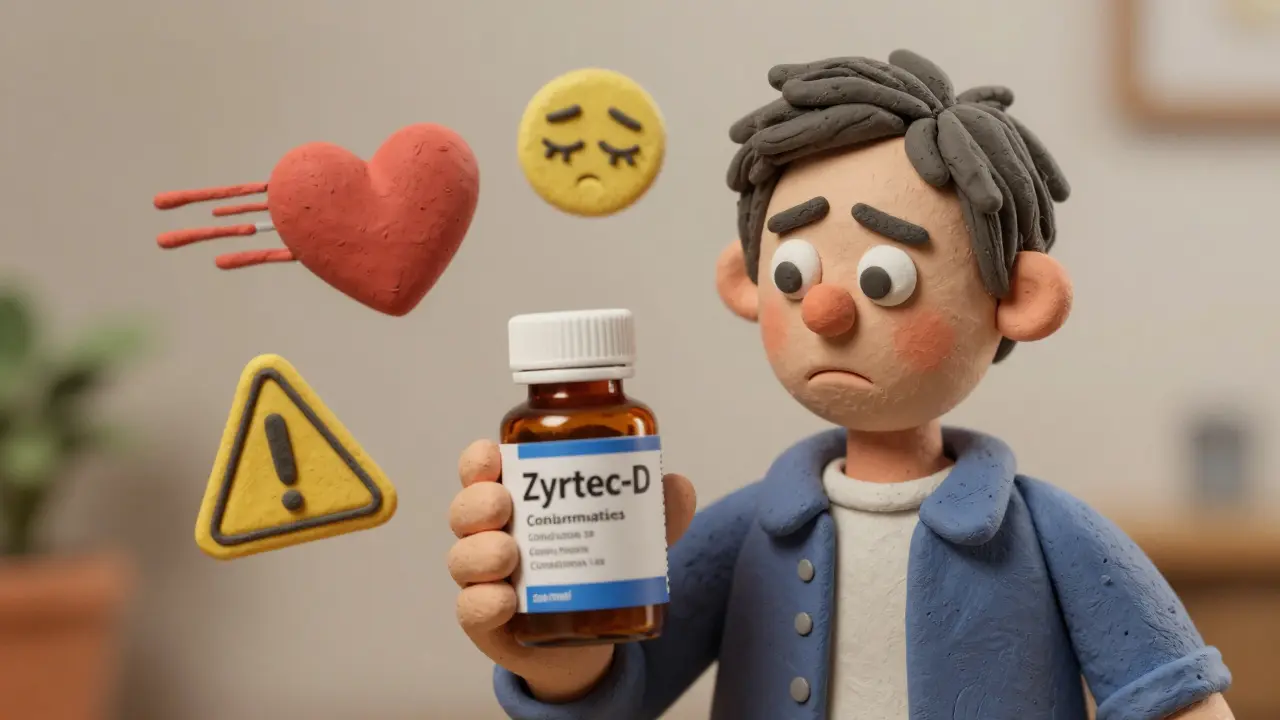
Many people reach for combination cold and allergy meds without thinking twice. Products like Zyrtec-D, Claritin-D, and Allegra-D promise quick relief from runny nose, sneezing, and congestion-all in one pill. But behind that convenience is a hidden risk: mixing decongestants and antihistamines isn’t as safe as it looks. These aren’t harmless snacks. They’re powerful drugs with real side effects, and for some people, they can be dangerous.
How These Combination Drugs Actually Work
These medications pair two types of drugs: an antihistamine to stop sneezing and itching, and a decongestant to shrink swollen nasal passages. The antihistamine part can be either sedating (like diphenhydramine in Benadryl) or non-sedating (like cetirizine in Zyrtec or loratadine in Claritin). The decongestant is usually pseudoephedrine-the same ingredient found in Sudafed. Phenylephrine is also used, but studies show it’s much weaker at relieving congestion.On paper, this makes sense. Allergies and colds hit you with multiple symptoms, so why not treat them all at once? But the body doesn’t process these drugs separately. When you take them together, their effects add up-and sometimes, they clash.
The Hidden Dangers of Drowsiness
If you’ve ever taken Benadryl and felt like you were drugged, you know how strong first-generation antihistamines can be. About half of people who take diphenhydramine feel drowsy, dizzy, or confused. Even the newer antihistamines like cetirizine (Zyrtec) cause drowsiness in about 1 in 7 users. Combine that with a decongestant, and you’re not just sleepy-you’re impaired.That’s not just an inconvenience. It’s a safety issue. Driving, operating machinery, or even walking down stairs becomes risky. The Mayo Clinic explicitly warns: “Make sure you know how you react to this medication before doing anything that requires alertness.” But most people don’t test it first. They pop the pill, head to work, and wonder why they feel off.
Decongestants and Your Heart
Decongestants like pseudoephedrine work by tightening blood vessels. That’s great for your nose-but not so great for your heart. These drugs can raise your blood pressure by 1-2 mmHg on average. For someone with normal blood pressure, that’s minor. For someone with high blood pressure, heart disease, or diabetes? That’s a problem.Studies show people with existing cardiovascular conditions can see systolic blood pressure spikes of 5-10 mmHg after taking decongestants. That’s enough to trigger chest pain, irregular heartbeat, or even a heart attack in vulnerable individuals. Harvard Health and the Cleveland Clinic both list heart-related side effects as serious risks. And yet, these warnings are buried in tiny print on the bottle.
These drugs are also stimulants. They can cause anxiety, trouble sleeping, or a racing heart. If you’ve ever felt your chest pound after taking a cold medicine, that’s why.
Overdose Is Easier Than You Think
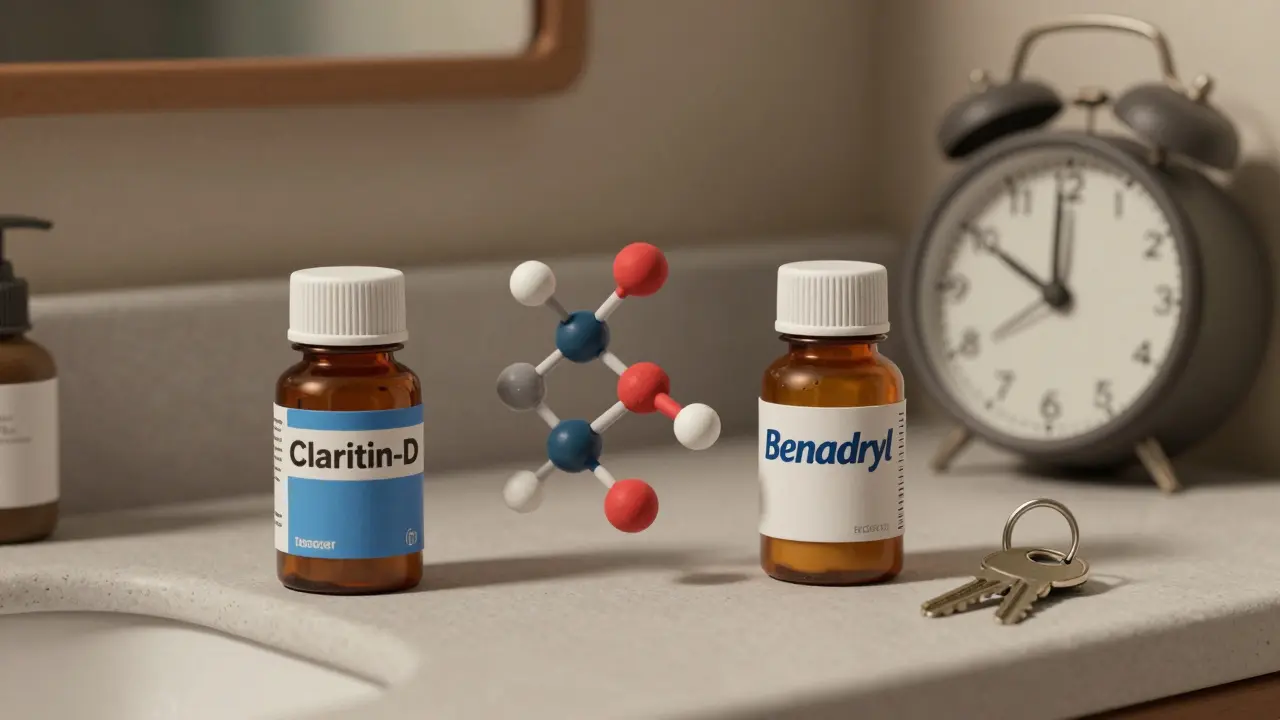
One of the biggest dangers isn’t taking one combination pill-it’s taking more than one.People often don’t realize that multiple OTC products contain the same ingredients. You might take Zyrtec for allergies in the morning, then grab a cold tablet at lunch that also has cetirizine. Or you take Claritin-D, then later take Benadryl for trouble sleeping. That’s doubling up on antihistamines. And if that cold tablet also has pseudoephedrine? Now you’re hitting your body with two decongestants.
Poison Control is clear: “Do NOT take two different antihistamines at the same time.” The same goes for decongestants. Overdose symptoms include dry mouth, agitation, blurred vision, fast heartbeat, poor coordination, and in severe cases, seizures or cardiac arrest. In 2022, the FDA’s MedWatch system recorded over 1,800 adverse event reports linked to these combinations.
Who’s at Highest Risk?
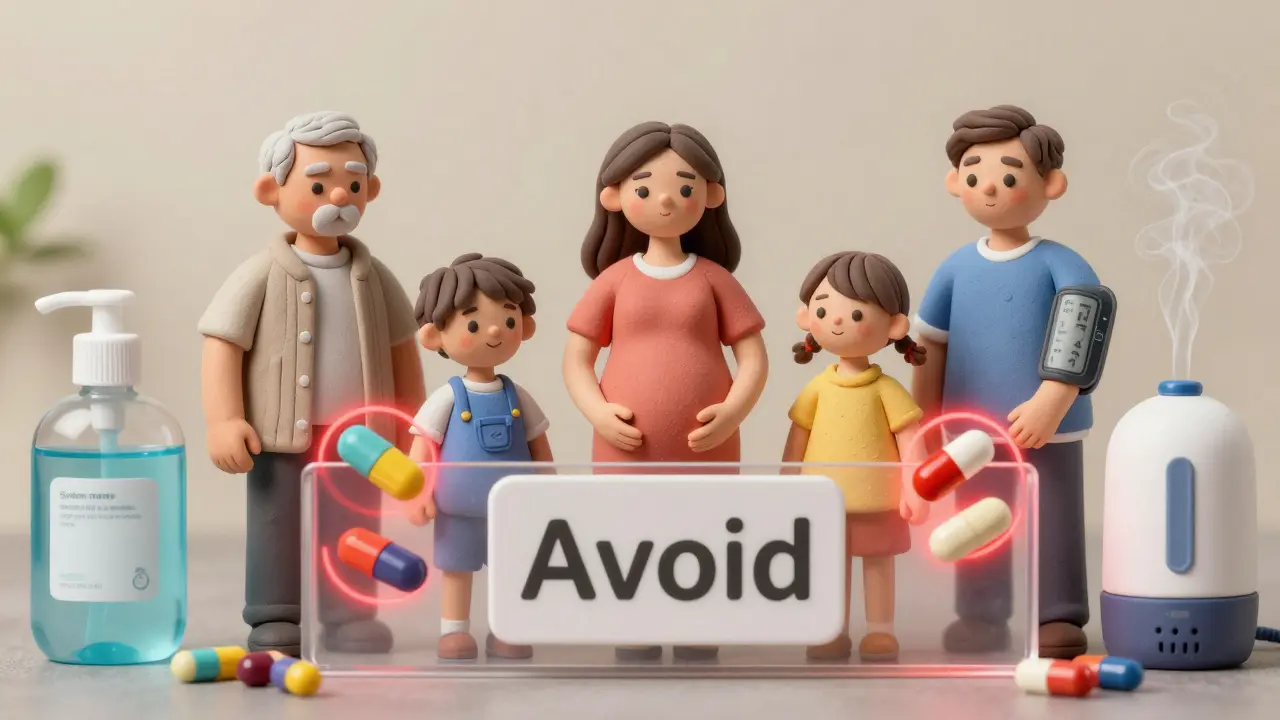
Not everyone reacts the same. Some groups need to avoid these drugs entirely:- Older adults: Their bodies process drugs slower. Even low doses can cause confusion, falls, or urinary retention.
- People with high blood pressure, heart disease, or diabetes: Decongestants can worsen these conditions.
- Pregnant women: Pseudoephedrine is not recommended in early pregnancy due to potential risks.
- Children under 12: The American College of Allergy, Asthma, and Immunology advises against these combinations in kids. There’s little proof they help, and the risks are real.
- People on other medications: These drugs can interact with antidepressants, blood pressure meds, and thyroid pills.
Are These Drugs Even Effective?
Here’s the uncomfortable truth: the benefits are often small.A 2022 Cochrane review found that while these combinations might offer slight relief for adults, the effect on individual symptoms like congestion or runny nose is “probably too small to be clinically relevant.” That means you might feel a little better-but not enough to justify the risks.
And for kids? There’s no good evidence they work at all. Yet, these products still make up 42% of all allergy medication sales in the U.S. Why? Because they’re convenient. And because marketing makes them seem like a one-stop fix.
What Should You Do Instead?
You don’t need a combo pill to feel better. Here’s a safer approach:- Identify your main symptom. Is it congestion? Use a nasal spray like saline or oxymetazoline (but only for 3 days max). Is it sneezing and itchy eyes? Try a single antihistamine like loratadine or fexofenadine.
- Read labels carefully. Look for the active ingredients. If you see “pseudoephedrine,” “phenylephrine,” “diphenhydramine,” “cetirizine,” or “loratadine,” you’re dealing with one of these combinations.
- Don’t mix. Never take two products with the same antihistamine. Don’t take an antihistamine and a cold med that has one.
- Talk to a pharmacist. They’re trained to catch dangerous combinations. Ask: “Is this safe with my other meds?”
- Try non-drug options. Steam inhalation, saline rinses, humidifiers, and staying hydrated can help more than you think.
When to Stop and Seek Help
If you take one of these combinations and experience any of these, stop immediately and get medical help:- Fast, pounding, or irregular heartbeat
- Severe dizziness or fainting
- Difficulty breathing or swelling of face/lips/tongue
- High fever, confusion, or seizures
These aren’t rare. They happen more often than people admit. And they’re preventable.
The Bottom Line
Combination decongestant-antihistamine meds aren’t evil. But they’re not harmless either. They’re powerful tools that can backfire if used carelessly. The convenience of one pill doesn’t outweigh the risk of a heart problem, a fall, or an overdose.Ask yourself: Do I really need both drugs? Can I treat my worst symptom with one targeted medicine? If the answer is yes, you’ll not only be safer-you’ll probably feel better, too.
Can I take Zyrtec and Benadryl together?
No. Both are antihistamines, and taking them together doubles your dose. This increases drowsiness, dizziness, and the risk of overdose. Zyrtec lasts up to 24 hours, while Benadryl wears off in 4-6 hours. Taking both can lead to dangerous buildup in your system.
Is pseudoephedrine safer than phenylephrine?
Pseudoephedrine is more effective at relieving nasal congestion than phenylephrine, which studies show has little to no benefit over a placebo. However, pseudoephedrine carries a higher risk of raising blood pressure and heart rate. Both have risks, but pseudoephedrine works better-if you’re healthy enough to use it.
Can I take these if I have high blood pressure?
Generally, no. Decongestants like pseudoephedrine can raise blood pressure by 5-10 mmHg in people with hypertension. That spike can trigger chest pain, stroke, or heart attack. Even if your blood pressure is controlled, these drugs can interfere with your meds. Always check with your doctor or pharmacist first.
Are there natural alternatives to decongestant-antihistamine combos?
Yes. Saline nasal rinses, steam inhalation, and humidifiers help clear congestion without drugs. For allergies, avoiding triggers and using a HEPA filter can reduce symptoms. Single-ingredient antihistamines like loratadine or fexofenadine are safer than combos. For short-term relief, a nasal spray like fluticasone (Flonase) is effective and doesn’t affect blood pressure.
Why are these drugs still sold if they’re risky?
Because they’re profitable and convenient. Many people feel better after taking them-even if it’s just a placebo effect. The FDA allows them because the risks are considered acceptable for healthy adults when used as directed. But that doesn’t mean they’re safe for everyone. Regulation has tightened since phenylpropanolamine was banned in 2005, but oversight still lags behind consumer use.
Ajay Brahmandam
December 21, 2025 AT 20:45Been using saline rinses for years. Way safer than popping pills that make you feel like a zombie. My sinuses clear up faster too, no side effects. Just water, salt, and a neti pot. Seriously, try it.
Nader Bsyouni
December 22, 2025 AT 19:02So let me get this straight the FDA allows this because it's profitable but we're supposed to trust their judgment on safety when they banned phenylpropanolamine but left pseudoephedrine in because it's too convenient to pull? Classic corporate capture
Charles Barry
December 23, 2025 AT 08:47THEY KNOW. THEY ALL KNOW. Zyrtec-D isn't medicine it's a Trojan horse. Big Pharma wants you drowsy and confused so you don't notice the blood pressure spikes. Look at the patent filings - they're designed to keep you dependent. They don't care if you have a heart attack as long as you keep buying the next pack. This is chemical control disguised as relief.
Rosemary O'Shea
December 25, 2025 AT 04:53How utterly pedestrian. I mean really - treating symptoms like a commoner? The sophistication of modern pharmacology is being reduced to a supermarket aisle. If you can't discern the difference between a first-generation antihistamine and a beta-adrenergic agonist, perhaps you shouldn't be medicating yourself at all. I recommend a basic pharmacology primer. Or better yet - consult a real physician. Not a pharmacist who's paid by the pill.
Kathryn Weymouth
December 26, 2025 AT 16:07I appreciate the thorough breakdown, especially the Cochrane review citation. The fact that these combos offer 'probably too small to be clinically relevant' relief while carrying significant risks is alarming. I've seen patients in my clinic take three different OTC products simultaneously, all containing pseudoephedrine and cetirizine. They're shocked when they get palpitations. Education is the real missing ingredient here.
jenny guachamboza
December 27, 2025 AT 00:44OMG I just realized I took Zyrtec-D AND Benadryl last week 😱 I thought they were different?? Like what if I had a seizure?? I'm so scared now I'm gonna go check my heart rate like right now 🤯
Aliyu Sani
December 27, 2025 AT 06:40Man, this is deep. These combo pills? They ain't just drugs man, they're systemic oppression wrapped in child-friendly packaging. You think you're curing your sneeze but you're actually feeding the machine. The decongestant? It's a capitalist stimulant. The antihistamine? A social sedative. They want you docile, distracted, and buying more. We been programmed to self-medicate into oblivion.
Herman Rousseau
December 28, 2025 AT 20:41Big thanks for laying this out so clearly. I used to grab these combo packs like candy until my dad had a mini-stroke after taking Claritin-D. Now I always check labels and talk to the pharmacist. Even if it takes 5 extra minutes, it's worth it. Your list of alternatives? Gold. Saline rinse + humidifier changed my life. 🙏
Kiranjit Kaur
December 29, 2025 AT 00:46So true! I used to take Allegra-D every day during allergy season. Then I switched to Flonase and loratadine separately. No more jittery heart, no more brain fog. And guess what? I felt better overall. Sometimes less is more. 🌿
Sai Keerthan Reddy Proddatoori
December 29, 2025 AT 01:22This is why America is weak. Kids take these pills like candy. No discipline. No respect for medicine. In India we know: if you need two drugs to fix one problem, you're doing it wrong. Just drink warm water, sleep early, and stop being so lazy. These pills are for weak people who can't handle nature.
Cara Hritz
December 30, 2025 AT 23:57Wait so phenylephrine doesn't work?? But my bottle says it's 10mg?? So why do they even make it?? This is a scam right??
Johnnie R. Bailey
January 1, 2026 AT 06:21There's a cultural layer here too. In the U.S., we equate convenience with wisdom. One pill for everything? That’s efficiency. But medicine isn’t a vending machine. It’s a conversation with your body. And when you ignore the whispers - the dizziness, the racing pulse, the fog - you’re not being smart, you’re being deaf. These combos are the pharmaceutical equivalent of fast food: satisfying in the moment, corrosive over time.
Julie Chavassieux
January 2, 2026 AT 15:30...I just realized I've been taking Zyrtec-D for three years... I thought the drowsiness was just 'aging'... I'm gonna stop today. No more. No more. No more.