
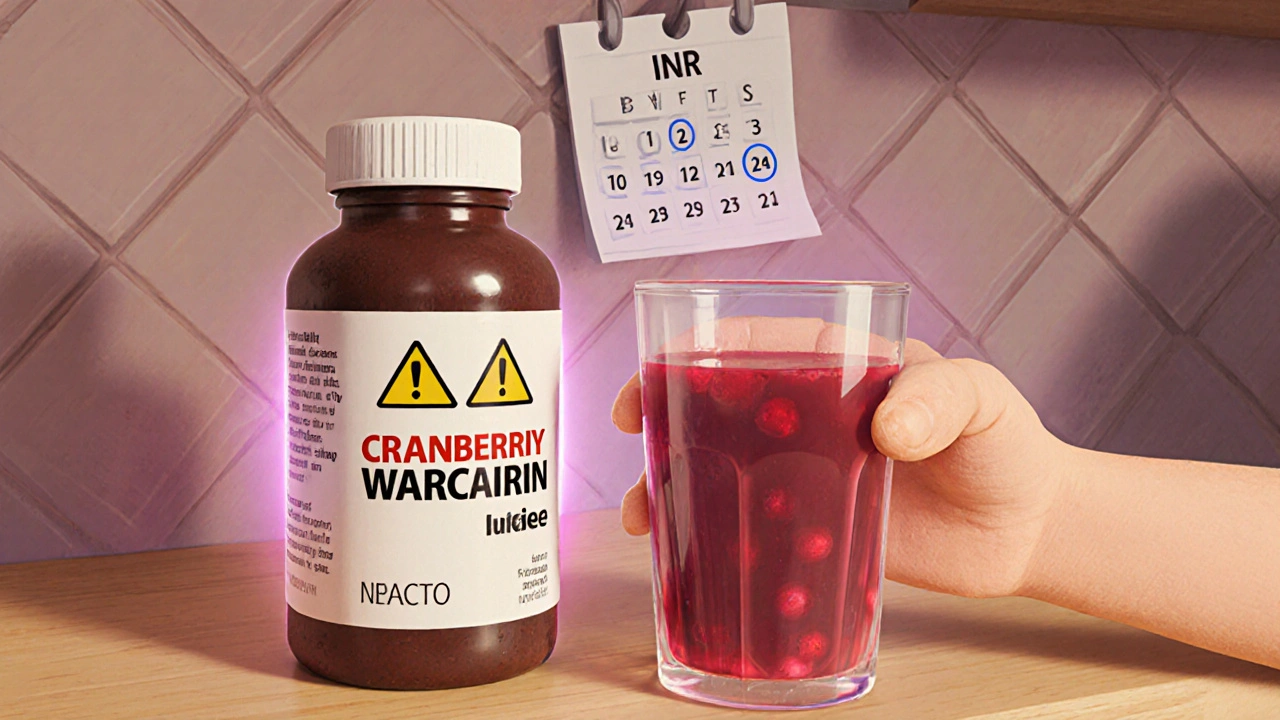
Cranberry Juice & Medication Interaction Checker
Check if your medication has potential interactions with cranberry juice or supplements. Based on current medical evidence from the article.
Interaction Results
Every year, millions of people drink cranberry juice to prevent urinary tract infections. It’s cheap, tasty, and seems harmless. But if you’re on medication-especially blood thinners like warfarin-you’ve probably heard warnings. Cranberry juice might be safe, but it’s not risk-free. And the truth isn’t as simple as "avoid it at all costs."
Why the Confusion Exists
The scare started in 2003, when a single case report suggested cranberry juice might boost the effect of warfarin, a blood thinner. The patient’s INR (a measure of blood clotting time) shot up, and doctors blamed the juice. That one story spread like wildfire. Pharmacies started posting warning signs. Doctors began telling patients to stop drinking it. But here’s the catch: after 20 years of research, controlled studies have failed to consistently prove that cranberry juice changes how warfarin works. A 2010 review looked at 11 case reports and 4 real clinical trials. Eight case reports said there was a problem. But all four controlled studies-where people were given exact doses and monitored closely-found no significant change in INR levels. In one of those studies, 12 healthy adults drank 250ml of cranberry juice three times a day for two weeks. Their INR stayed exactly where it was before. So why do stories still pop up? Because individual reactions happen. Some people metabolize drugs differently. Some cranberry products are way stronger than others. And when your medication has a narrow safety window-like warfarin-even a small change can matter.What Actually Interacts with Cranberry Juice?
Cranberry contains compounds called proanthocyanidins and flavonoids. In a lab, these can block certain liver enzymes (CYP3A4 and CYP2C9) that break down medications. That sounds scary-but what happens in a test tube doesn’t always happen in your body. Here’s the breakdown:- Warfarin: The only drug where there’s even a remote chance of interaction. But it’s not guaranteed. Some patients see INR spikes. Others don’t. The American College of Clinical Pharmacy says to avoid it, but acknowledges no clear mechanism or consistent evidence.
- Alprazolam (Xanax): Theoretically, cranberry could slow its breakdown. But no human study has shown this happens. Zero cases reported in real-world use.
- Antibiotics like amoxicillin and cefaclor: Early theories suggested cranberry might interfere with absorption. A 2009 study gave 18 women amoxicillin with or without cranberry juice. Result? No difference in how much drug entered their bloodstream. Same for cefaclor. Cranberry juice doesn’t make these antibiotics less effective.
- Statins, blood pressure meds, antidepressants: No credible evidence of interaction. Studies show no change in drug levels or side effects.
Not All Cranberry Products Are the Same
This is where people get tripped up. A bottle of Ocean Spray cranberry juice cocktail? That’s only 27% cranberry. The rest is water, sugar, and preservatives. It’s not a concentrated extract. You’d need to drink 3-4 glasses a day to even approach the levels studied in labs. But cranberry supplements? Those are different. Many contain 36mg or more of proanthocyanidins per serving-concentrated enough to potentially affect enzyme activity. A 2023 study from the University of Illinois found that supplements with over 36mg of proanthocyanidins showed measurable enzyme inhibition in some participants. That’s why experts now warn against supplements if you’re on warfarin, but say regular juice is likely fine. And here’s the kicker: grapefruit juice has 17 known dangerous interactions with medications. Cranberry juice? Only one possible one-warfarin-and even that’s shaky.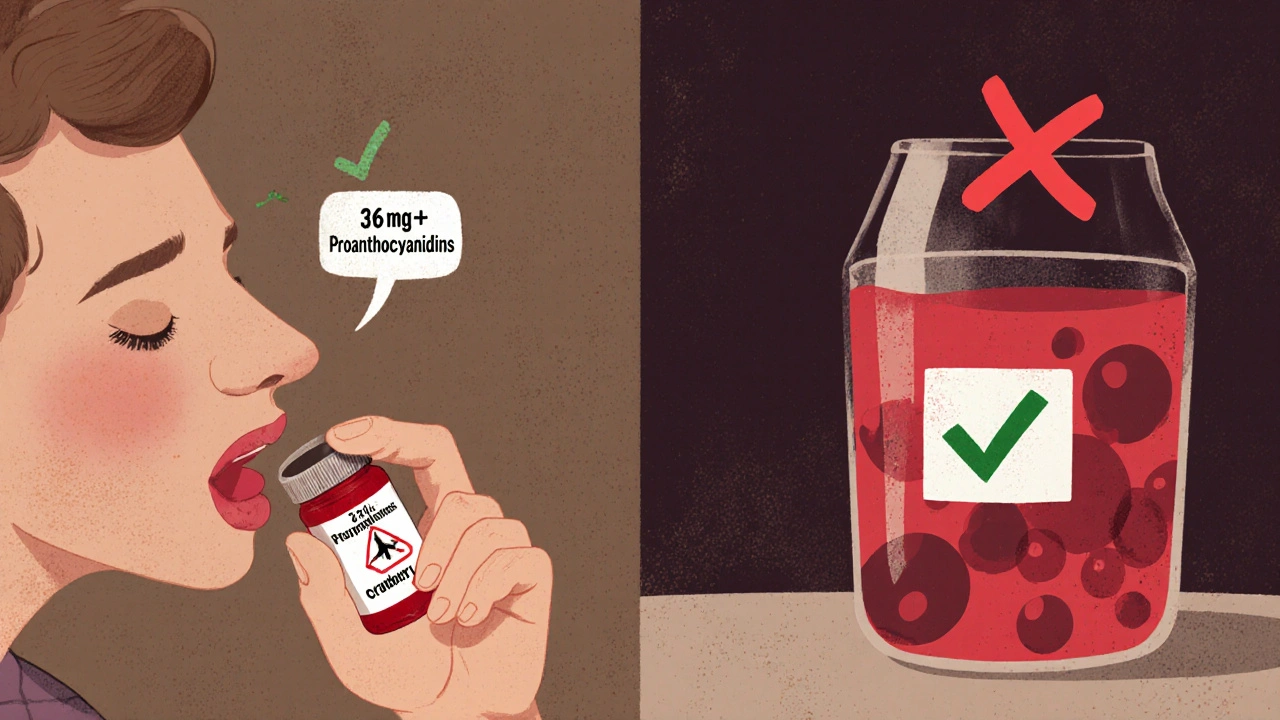
What Should You Do?
If you’re on warfarin:- Avoid cranberry supplements entirely.
- Stick to one 8oz glass of regular cranberry juice per day, if you want it.
- Don’t suddenly start or stop drinking it. Consistency matters more than avoidance.
- Get your INR checked more often if you make any change.
- Drink cranberry juice without worry. No need to stop.
- Antibiotics? Fine. Statins? Fine. Blood pressure pills? Fine.
- Supplements? Still use caution. Talk to your pharmacist.
Why Do Pharmacists Still Warn People?
Because they’ve seen it happen. On Reddit’s r/Pharmacy, 62% of pharmacists say patients ask about cranberry-warfarin interactions every week. And yes-some patients have had INR spikes after starting cranberry juice or supplements. But here’s what’s missing from those stories: Did they switch to a new brand? Did they start taking a supplement instead of juice? Did they also start a new antibiotic or vitamin? The spike might have been caused by something else. Pharmacists err on the side of caution. It’s safer to say "avoid it" than to risk a bleed. But that doesn’t mean the risk is real for most people.
The Bigger Picture: UTIs and Prevention
About 20% of women get recurrent urinary tract infections. For many, cranberry juice is the only thing that helps. Antibiotics are overused. We don’t want to push people toward more pills when a simple drink might reduce their risk. The American Urological Association updated its guidelines in 2021 to say: "Cranberry products may be used for UTI prevention in patients not taking warfarin." That’s a big shift from 2010, when they said to avoid it completely. And here’s the reality: If you’re not on warfarin, there’s no reason to give up cranberry juice. It’s not going to mess up your blood pressure meds, your cholesterol pills, or your antidepressants.What About Supplements?
The cranberry supplement market is worth over $1.2 billion. Most are unregulated. Labels don’t always say how much proanthocyanidin is in each pill. Some contain 36mg. Others contain 12mg. You can’t tell just by looking. If you take supplements:- Check the label for proanthocyanidin content.
- Avoid anything over 36mg per serving if you’re on warfarin.
- Don’t take them with other supplements that affect blood clotting-like garlic, ginkgo, or high-dose vitamin E.
- Talk to your pharmacist before starting any new supplement.
Bottom Line: Don’t Panic, But Stay Smart
Cranberry juice isn’t a drug. It’s a fruit drink. For most people, it’s perfectly safe-even helpful. The only real concern is warfarin. And even then, it’s not a hard rule. It’s a gray area. If you’re on warfarin, avoid supplements. Stick to one glass of juice a day. Don’t change your habits suddenly. And keep your INR checked. For everyone else? Drink it. Enjoy it. It might just help you avoid a UTI-and that’s worth more than a vague warning.There’s no need to fear cranberry juice. But there’s also no need to ignore it. Knowledge is your best tool.
Chris Taylor
November 28, 2025 AT 19:30I used to drink cranberry juice every morning until my dad had a weird INR spike. Turned out he switched to a new brand with 'concentrated cranberry extract'-turned out it was basically a supplement in disguise. Now he sticks to the regular Ocean Spray and gets checked monthly. No issues since. Just be consistent, ya know?
Melissa Michaels
November 30, 2025 AT 15:47While the evidence is largely reassuring for juice consumption, it is critical to distinguish between commercial juice products and concentrated supplements. The pharmacokinetic data clearly shows that proanthocyanidin concentration is the determining factor, not cranberry itself. Patients on warfarin should be counseled specifically about supplement labels, not juice bottles. This distinction is often lost in public messaging.
Nathan Brown
December 2, 2025 AT 09:45It’s funny how we treat food like it’s a drug when it’s not. Cranberry juice is just a fruit drink with sugar and water. We’ve been drinking it for decades and suddenly it’s a villain because of one weird case report? Meanwhile, grapefruit juice is basically a chemical grenade for meds and nobody panics. We’ve turned medicine into superstition. Maybe the real problem isn’t the juice-it’s our fear of uncertainty.
Also, if your INR is that sensitive, maybe you should be on something other than warfarin. There are better options now. But no, we’d rather tell people to give up their juice than fix the system.
Matthew Stanford
December 3, 2025 AT 21:12For most people, cranberry juice is fine. For those on warfarin, just stick to one glass a day and don’t switch brands randomly. No need to fear it. No need to demonize it. Just be mindful. Small changes, big impact. Your pharmacist isn’t being paranoid-they’re just covering bases. And honestly? That’s what good care looks like.
Olivia Currie
December 4, 2025 AT 08:41OMG I JUST REALIZED I’VE BEEN DRINKING CRANBERRY JUICE WITH MY WARFARIN FOR THREE YEARS 😱 I THOUGHT IT WAS JUST A ‘WOMAN THING’ TO PREVENT UTIS BUT NOW I’M SCARED TO BREATHE 😭 I’M GOING TO CALL MY PHARMACIST RIGHT NOW
Curtis Ryan
December 5, 2025 AT 14:22Wait so if i drink cranberry juice and im on blood pressure meds its totally fine? like i thought it was like grapefruit or somthing? man i drink like 2 cans a day and i feel fine. no dizziness no weird stuff. maybe the docs just scare people to sell more tests lol
Rajiv Vyas
December 6, 2025 AT 19:35They say no interaction but what if its a cover up? Big Pharma doesn’t want you to know cranberry works better than warfarin. They make billions off blood thinners. Why else would every pharmacy have a warning sign? The truth is hidden. Cranberry is nature’s anticoagulant. They just don’t want you to find out how cheap and effective it is. You think they’d let you drink juice instead of paying $500 a month for pills? Think again.
farhiya jama
December 8, 2025 AT 07:15Ugh. Another ‘don’t panic’ article. Like my life isn’t already full of things I’m supposed to ‘not panic’ about. I’m on 7 meds, 3 supplements, and a gluten-free diet. Now I have to worry if my cranberry juice is ‘regular’ or ‘concentrated’? I’m just gonna drink water. And cry.
Astro Service
December 9, 2025 AT 00:40Why are we letting foreigners tell us what to drink? In America we drink what we want. Cranberry juice is American. Warfarin is American. If you can’t handle it, don’t take the pill. Stop being weak. This is why our country is falling apart. Drink the juice. Be strong.
Ifeoma Ezeokoli
December 10, 2025 AT 06:31I’m from Nigeria and we don’t even have cranberry juice here. But my cousin in Canada swears by it for her UTIs. She drinks it daily and never gets sick. I asked her about warfarin-she doesn’t take it. So maybe it’s not the juice, it’s the combo? I think we’re overthinking this. If you feel fine, you’re probably fine.
Daniel Rod
December 11, 2025 AT 09:28Just wanna say-this is the kind of balanced, science-backed info we need more of. So many people are scared of normal things because of fear-mongering headlines. 🙏 I’ve been drinking cranberry juice with my statins for years. No issues. No panic. Just chill. Knowledge > fear. And if you’re on warfarin? Talk to your pharmacist. They’re the real MVPs.
Also, if you’re not on warfarin, go ahead and sip that juice like it’s a damn celebration. 🍹
gina rodriguez
December 13, 2025 AT 08:21I love how this post doesn’t just say ‘avoid it’ but gives real, practical steps. So many health articles are either alarmist or dismissive. This is just… reasonable. Thank you. I’m going to tell my mom she can keep her daily glass. She’s been so worried.
Sue Barnes
December 13, 2025 AT 17:28Anyone who drinks cranberry juice on warfarin is asking for trouble. The science is messy? So is your liver. You think you’re being smart by drinking juice? You’re just one INR spike away from the ER. Don’t be a statistic. Stop.
Sachin Agnihotri
December 15, 2025 AT 04:05But wait-what about the 2023 study from Illinois? They said proanthocyanidins above 36mg showed enzyme inhibition… so… does that mean if I drink 2 glasses of Ocean Spray, I’m still safe? Or is there some kind of cumulative effect? And what if I drink it at night? Does timing matter? I need more data. I’m not comfortable yet.