
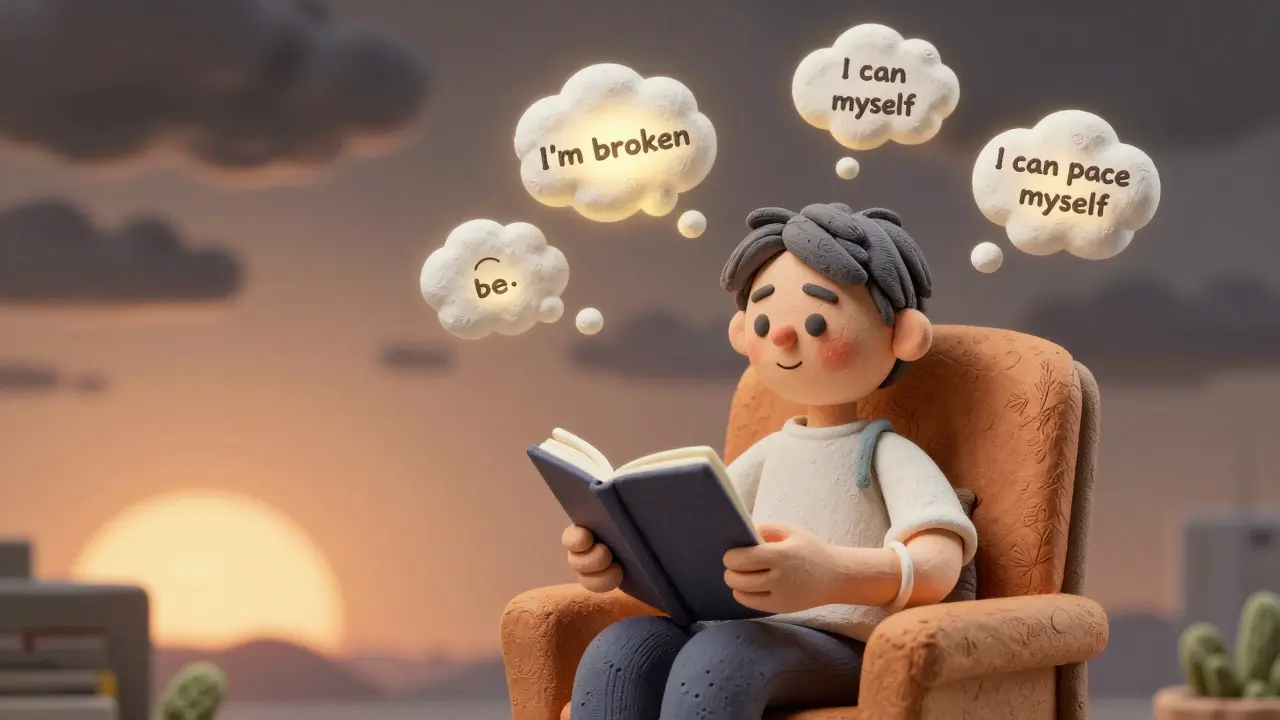
Chronic pain doesn’t just hurt-it rewires how you think, feel, and move. After months or years of discomfort, many people start believing their pain will never improve, that movement will make it worse, or that they’re broken beyond repair. These thoughts aren’t just in your head-they fuel real physical tension, avoidance, and exhaustion. That’s where CBT for chronic pain comes in. Not as a magic fix, but as a practical, evidence-backed way to take back control when medicine alone isn’t enough.
What CBT for Chronic Pain Actually Does
Cognitive Behavioral Therapy for chronic pain (CBT-CP) isn’t about pretending your pain isn’t real. It’s about changing how you respond to it. Developed in the 1970s by pain psychologists like Dennis Turk and Robert Kerns, CBT-CP is built on a simple idea: pain isn’t just a signal from your nerves. It’s shaped by your thoughts, emotions, and behaviors. When you’ve had pain for a long time, your brain starts interpreting even small sensations as threats. That triggers fear, tension, and withdrawal-making pain worse over time. CBT-CP breaks this cycle. It gives you tools to notice unhelpful thoughts like “I can’t do anything without it getting worse” or “This pain means I’m damaged,” and replace them with more accurate, manageable ones. You learn to pace your activity instead of pushing through or quitting entirely. You practice relaxation techniques that calm your nervous system. And you slowly rebuild activities you’ve avoided-not because the pain disappears, but because you no longer let it control your life.How It Works: The Core Tools
Most CBT-CP programs last between 8 and 16 weeks, with weekly 60- to 90-minute sessions. These aren’t just talking sessions-they’re skill-building labs. Here’s what you’ll actually do:- Pain neuroscience education: You learn how chronic pain works in the body and brain-not as damage, but as an overactive alarm system. Understanding this reduces fear.
- Activity pacing: Instead of doing too much on good days and crashing after, you learn to spread tasks evenly. A 2023 VA study found patients who paced activities reported 40% less pain-related disability.
- Cognitive restructuring: You write down automatic thoughts like “I’ll never get better” and challenge them with evidence. “I’ve had flare-ups before and still managed to walk the dog. This is temporary.”
- Relaxation training: Techniques like diaphragmatic breathing or progressive muscle relaxation help lower stress hormones that amplify pain signals.
- Behavioral activation: You create a list of meaningful activities you’ve stopped doing and slowly reintroduce them-even if pain is present.
What the Research Says
A 2023 review of 13 studies with over 1,600 participants found CBT-CP consistently improved mood, sleep, and daily function. But here’s the key: it rarely makes pain vanish. For pain intensity alone, only about 25% of studies showed significant improvement over standard care. That sounds disappointing-until you look at what else changed. Depression and anxiety dropped sharply. People reported feeling more in control. Many reduced or stopped opioids. In the 2024 STAMP trial, 36% of CBT participants cut their daily opioid use compared to just 17% in the control group. That’s not just a number-it’s freedom from side effects, dependency, and the fear of withdrawal. The American Psychological Association gives CBT-CP its highest recommendation (Level A) for chronic low back pain, based on 37 randomized trials. The U.S. Department of Veterans Affairs rolled it out nationwide in 2010 because it works-especially for people with depression, anxiety, or sleep problems tied to pain.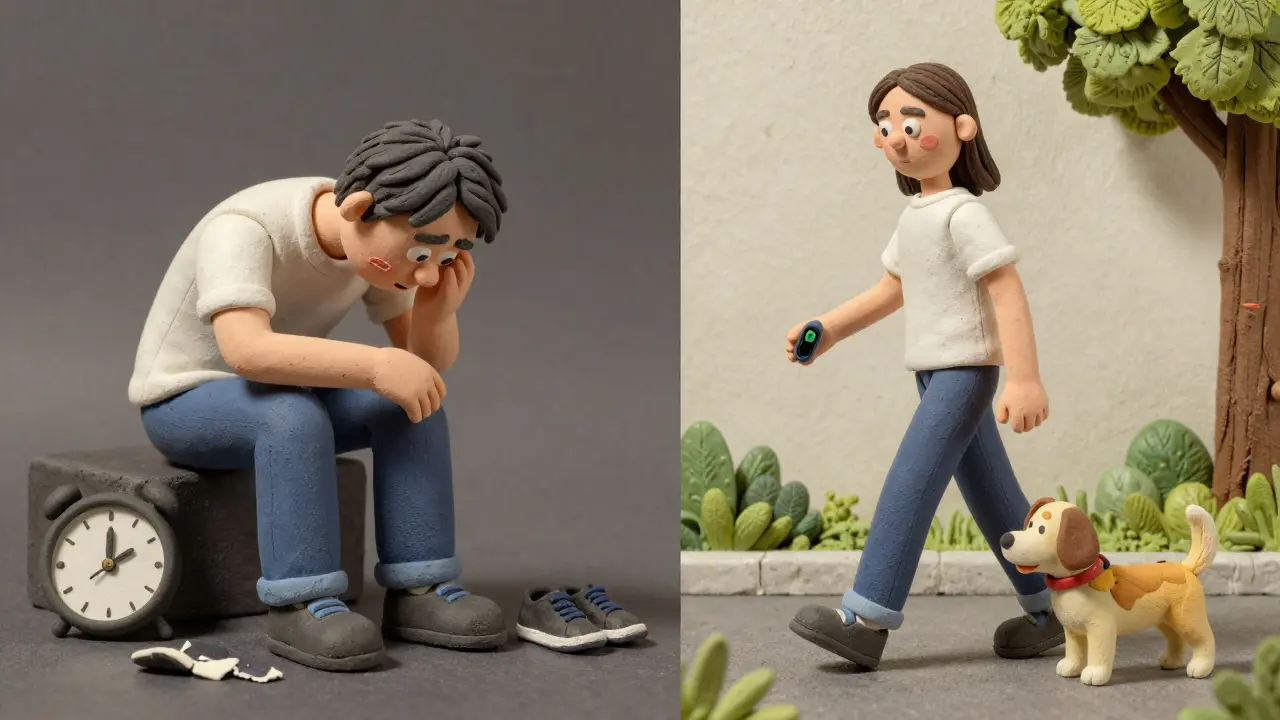
CBT vs. Other Treatments
How does CBT-CP stack up against other options?| Treatment | Effect on Pain Intensity | Effect on Mood/Function | Risk of Side Effects | Long-Term Use |
|---|---|---|---|---|
| CBT for chronic pain | Moderate to low | High | None | Skills last a lifetime |
| Physical therapy | Moderate | Moderate | Low (muscle soreness) | Requires ongoing sessions |
| Medications (NSAIDs, opioids) | Moderate to high (short-term) | Low to none | High (gut, liver, addiction) | Dependence risk |
| Mindfulness therapy | Moderate | High | None | Skills last a lifetime |
| Combined CBT + PT | High | Very high | Low | Best long-term outcome |
CBT-CP doesn’t beat physical therapy at reducing pain-but together, they’re the strongest combo. A 2022 PLOS ONE review found CBT combined with physiotherapy ranked #1 for long-term improvement. Meanwhile, mindfulness therapy works just as well as CBT for pain and mood, but CBT has more structure for people who need clear steps.
Who Benefits Most-and Who Doesn’t
CBT-CP isn’t for everyone. It works best when:- You have pain lasting longer than 3-6 months
- You’re struggling with anxiety, depression, or sleep issues
- You’re open to changing how you think about pain
- You’re willing to do homework and practice skills daily
It’s less effective for:
- Neuropathic pain (nerve damage) without a strong emotional component
- People who believe pain is purely physical and refuse to engage mentally
- Those in acute, severe flare-ups with no stability to build on
One 2023 study in Psychiatry Investigation found no improvement in men or women with chronic pain-contradicting most research. That’s a red flag worth noting. But it’s likely because the study didn’t match therapy to individual needs. CBT-CP isn’t one-size-fits-all. A skilled therapist adjusts techniques based on whether you’re avoidant, overactive, or emotionally overwhelmed.
Real Stories From People Who Tried It
In the STAMP trial, 78% of participants said CBT-CP helped them “regain control.” One woman, 45, with chronic low back pain, said: “Learning to pace stopped my boom-bust cycles. I used to do everything on weekends and crash Monday. Now I walk 10 minutes every day. I’m not pain-free-but I’m living.” Reddit’s r/ChronicPain community has over 1.2 million members. A 2024 analysis of 500 posts showed 62% had positive experiences with CBT. Common praises: “Practical tools I can use daily,” “Helped me cut my opioids,” “I finally feel like I’m not helpless.” But not everyone loved it. 29% of negative comments said: “It felt like they were blaming me for my pain,” or “Too hard to apply during a flare-up.” That’s why therapist quality matters. A good CBT-CP therapist doesn’t say, “Just think positive.” They say, “Let’s figure out what’s making this flare worse-and how to respond differently.”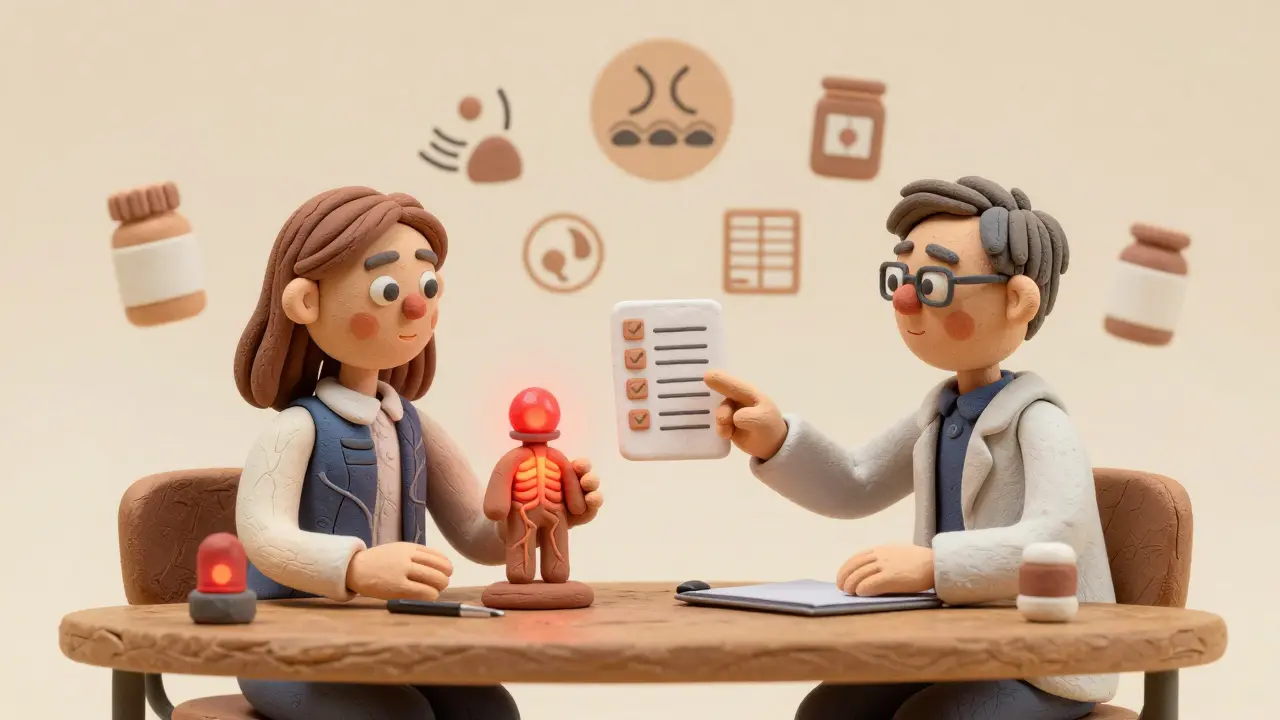
Barriers to Getting CBT-CP
The biggest problem? Access. Only 68% of U.S. commercial insurance plans cover enough CBT sessions. Medicare limits you to 10 sessions a year-but most programs need 12-16. Many primary care doctors still don’t refer patients to CBT-CP. In a 2023 survey, only 44% of doctors routinely recommended it. Therapist shortages are real. The VA has trained hundreds of providers. But in rural areas or small clinics, finding someone certified in CBT-CP can take months. That’s changing. Virtual CBT (vCBT) is now just as effective as in-person, according to a 2021 JMIR study. And FDA-cleared digital CBT apps for pain have grown 47% since 2023. These apps aren’t replacements for therapy-but they’re great for reinforcement, especially if you can’t find a local provider.How to Get Started
If you’re considering CBT-CP, here’s how to begin:- Ask your doctor for a referral to a psychologist or licensed clinical social worker trained in CBT for chronic pain.
- Check if your insurance covers it. Call your provider and ask: “Do you cover CBT-CP? How many sessions? Is a specialist required?”
- Look for therapists certified by the American Board of Professional Psychology in pain psychology.
- Ask potential therapists: “Do you use the VA CBT-CP protocol? Do you assign homework? How do you handle flare-ups?”
- If you can’t find someone locally, try a reputable digital program like the Pain Toolkit or CBT for Chronic Pain by the University of Washington.
Commit to at least 8 sessions. Studies show people who complete 80% or more of sessions are 2.3 times more likely to see improvement. Don’t expect miracles after one session. This is like physical therapy for your brain.
What to Expect in the First Few Weeks
Week 1-2: You’ll talk about your pain history, what triggers it, and what you’ve tried. You’ll get a simple workbook or journal. No pressure to change anything yet. Week 3-4: You’ll start tracking your daily activity and pain levels. You’ll notice patterns: “I feel worse after sitting for more than 20 minutes,” or “I feel more anxious on rainy days.” Week 5-6: You’ll learn to challenge thoughts like “I can’t go out because I might get hurt.” You’ll try a small, scary activity-maybe walking to the mailbox-and record how it went. Week 7-8: You’ll build a relapse plan. What will you do if pain flares? Who will you call? What small activity will you do even on bad days?It’s not about becoming pain-free. It’s about becoming less afraid, less stuck, and more alive-even with pain.
Is CBT for chronic pain just in my head?
No. CBT doesn’t mean your pain isn’t real. It means your brain has learned to amplify pain signals over time, and your body has adapted by tightening muscles, avoiding movement, and staying in stress mode. CBT helps retrain those patterns. The pain is physical-but your response to it can change, and that changes your experience of it.
Will CBT make me stop taking pain meds?
Not necessarily. CBT is often used alongside medications. But many people find they can reduce or stop opioids because CBT helps them manage pain without them. In the STAMP trial, 36% of CBT participants cut their daily opioid use-without increasing pain. That’s a major win for long-term safety.
How long until I see results?
Most people start noticing changes in mood, sleep, or activity levels within 4-6 weeks. Pain intensity often changes more slowly. The real gains-like feeling less helpless or being able to walk the dog again-come after 8-12 weeks. Consistency matters more than speed.
Can I do CBT on my own with an app?
Yes, but with limits. FDA-cleared apps like Pain Toolkit or CBT for Chronic Pain offer structured lessons and tracking tools. They’re great for reinforcement, especially if you can’t find a therapist. But they don’t replace personalized feedback. A therapist can adjust your plan when you’re stuck, which apps can’t do.
Is CBT covered by insurance?
Sometimes. Medicare covers 10 sessions per year. Private insurers vary: UnitedHealthcare covers 12, Aetna covers 8. Some plans require pre-authorization or only cover psychologists, not counselors. Always call your insurer and ask: “Do you cover Cognitive Behavioral Therapy for chronic pain? How many sessions? Is a referral needed?”
CHETAN MANDLECHA
December 23, 2025 AT 07:36Been living with lower back pain for 7 years. Tried everything from acupuncture to steroids. CBT was the first thing that actually made me feel like I wasn't just waiting to die. Not because the pain vanished-but because I stopped letting it dictate my life. I walk my dog every day now. Even on bad days. Small wins, man.
Also, the VA study they cited? Spot on. Pacing saved me from those boom-bust cycles. Used to do 10 hours of chores on Sunday and cry Monday. Now? 15 minutes, three times a day. No crashes. No guilt. Just progress.
And no, it’s not 'in my head.' My spine is busted. But my brain? It learned to panic over a sneeze. CBT taught it to chill.
Paula Villete
December 24, 2025 AT 10:40Oh wow. So now we’re blaming chronic pain on ‘bad thinking’? Let me get this straight-my sciatica isn’t caused by a herniated disc, it’s caused by me thinking ‘I can’t do this’? Brilliant. Next they’ll tell me my broken leg is just a negative mindset.
Look, I get it. Mindset matters. But when your nerve is screaming like a banshee and your doctor says ‘try breathing,’ you don’t need a therapist-you need a surgeon. Or at least a damn MRI that doesn’t say ‘nothing wrong.’
CBT isn’t magic. It’s a bandaid on a severed artery. And don’t get me started on those ‘FDA-cleared apps.’ I’d rather chew glass than trust an algorithm with my pain.
Jeffrey Frye
December 25, 2025 AT 12:15Okay but… let’s be real. The entire CBT-for-pain industry is just Big Pharma’s backup plan now that opioids are getting regulated. They needed a new way to make people feel guilty for needing meds.
And don’t even get me started on the ‘36% reduced opioid use’ stat. That’s not a win-it’s a failure of the system. If CBT is so great, why are people only cutting meds because they were forced to? Not because they wanted to?
Also, the VA rollout? Yeah, because they had a ton of vets with PTSD and chronic pain. So they bundled two problems into one ‘solution’ and called it progress. Convenient.
And the ‘no side effects’ claim? Tell that to the person who spent 6 months in therapy only to realize their therapist was just pushing positive affirmations while ignoring their actual trauma. That’s not CBT. That’s emotional gaslighting.
Andrea Di Candia
December 25, 2025 AT 21:11I just want to say thank you for writing this. As someone who’s been in chronic pain for 12 years, I’ve been told I’m ‘too sensitive,’ ‘just stressed,’ and ‘not trying hard enough.’
CBT didn’t fix my pain. But it fixed my relationship with it. I used to see my body as the enemy. Now I see it as a tired soldier who’s been fighting a war no one else can see.
And yes, it’s hard. Some days I cry during my journaling. Some days I skip my pacing. But I don’t beat myself up anymore. That’s the real win.
If you’re skeptical? Try it for 4 weeks. Not to ‘cure’ anything. Just to notice. What happens if you walk 5 minutes even when you’re scared? What happens if you write down the thought ‘I’m broken’ and then ask: ‘Is that really true?’
You might be surprised.
And if your therapist makes you feel blamed? Find a new one. CBT isn’t about fixing you-it’s about helping you live with what’s already here.
Dan Gaytan
December 27, 2025 AT 07:45❤️❤️❤️ THIS. I’m 32 and had a spinal fusion 3 years ago. Pain didn’t go away. I thought I was broken. Then I found a CBT therapist who didn’t tell me to ‘think positive’-she told me to ‘think true.’
Like, instead of ‘I’ll never walk again,’ I started saying ‘I can’t walk far yet, but I walked to the mailbox today.’ Small. True. Powerful.
And yes, I still take meds. But now I don’t feel ashamed. And I sleep better. And I laugh more. That’s not nothing.
Also-digital apps? I used Pain Toolkit for 3 months while waiting for therapy. It helped. Not perfect. But better than nothing. And way better than Reddit advice.
Usha Sundar
December 28, 2025 AT 08:52My therapist said CBT is for people who ‘can’t handle reality.’
So I quit.
claire davies
December 29, 2025 AT 09:44Oh, I love this so much. As someone from the UK who’s spent years navigating the NHS’s painfully slow pain clinics, I can tell you-CBT-CP was the only thing that didn’t make me feel like a burden.
My therapist didn’t say ‘think happy thoughts.’ She said, ‘Let’s map your pain like a weather system.’ And suddenly, I wasn’t broken-I was a system in flux. Like a storm that doesn’t vanish, but you learn to carry an umbrella, know when to go inside, and when to dance in the rain.
And the pacing? Game-changer. I used to binge-clean my whole house on good days, then spend three days in bed. Now? I do one dish. One stretch. One deep breath. And that’s enough.
Also, the part about therapist quality? So true. I had one who acted like I was wasting her time. Then I found another who asked me about my dog. And my grief. And my fear of being a burden. That’s when the real work began.
And yes-CBT isn’t a cure. But it’s a compass. And sometimes, that’s all you need when you’re lost in the fog.
Joseph Manuel
December 29, 2025 AT 20:03The methodology in the cited studies is deeply flawed. Most CBT-CP trials lack adequate blinding, have high attrition rates, and rely heavily on self-reported outcomes. The 2023 review mentioned includes studies with heterogeneous populations, varying intervention durations, and inconsistent control groups.
Furthermore, the claim that CBT-CP reduces opioid use by 36% is misleading without context. Was the reduction due to CBT, or because patients were enrolled in a structured tapering protocol? The paper does not isolate variables.
Additionally, the assertion that ‘skills last a lifetime’ is unsupported by longitudinal data beyond 24 months. The APA’s Level A recommendation is based on a meta-analysis that includes low-quality RCTs.
In short: promising, but not yet evidence-based enough to replace pharmacological or surgical interventions in clinical guidelines.
Harsh Khandelwal
December 30, 2025 AT 09:12CBT for pain? LOL. Big Pharma and the government are pushing this because they don’t want you to know about the real painkillers they’re hiding. You think they want you to heal? Nah. They want you to stay dependent on therapy apps and therapists who charge $200/hour.
And don’t even get me started on the VA. They’re just trying to cut costs. No more opioids? Fine. Now just sit there and ‘reframe your thoughts’ while your spine rots.
Also, why do all these ‘success stories’ sound like they were written by a corporate wellness blog? ‘I walk to the mailbox!’ Yeah, because you’re too broke to afford real treatment.
Real pain needs real drugs. Not journaling.
And if you’re telling me my pain is ‘in my head’-then maybe your head needs checking.