

Ever picked up a prescription and been shocked by the price-only to see a nearly identical pill in the same box, labeled differently, for half the cost? That’s not a mistake. It’s an authorized generic. And if you’re paying for prescriptions regularly, understanding how these work could save you hundreds a year.
What Exactly Is an Authorized Generic?
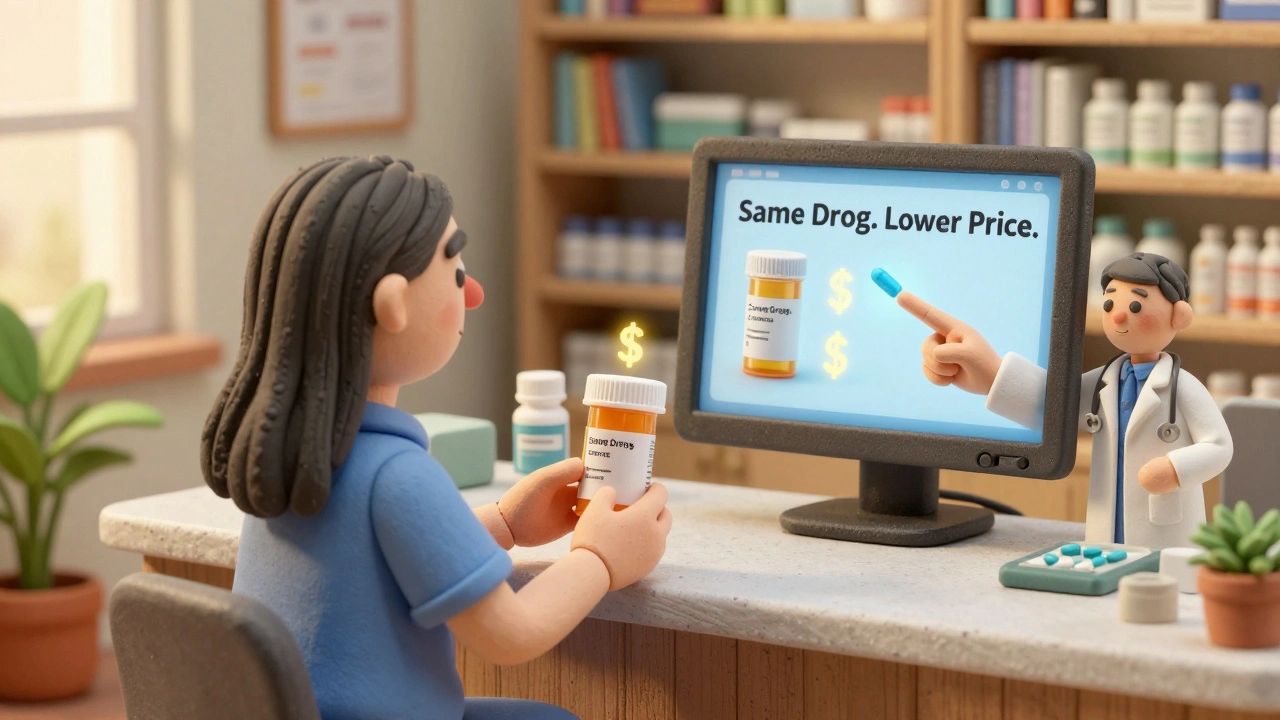
An authorized generic isn’t just another generic. It’s the exact same drug as the brand-name version-same active ingredient, same pill shape, same color, same manufacturer, same factory. The only difference? It’s sold without the brand name on the label.
Here’s how it works: The original drug company (say, Pfizer or Merck) makes a brand-name drug. When the patent is about to expire, they can choose to launch their own generic version-under a different name, often through a subsidiary. This is an authorized generic. The FDA allows this because it’s produced under the original New Drug Application (NDA), not a separate generic application. That means no extra testing, no new approvals. It’s literally the same batch of medicine, just repackaged.
Think of it like a car manufacturer selling the same model under two different badges-one with the flashy logo, one without. The engine, the seats, the wiring-all identical. But one costs $35,000. The other, $28,000.
Why Do Authorized Generics Cost Less?
The answer is simple: no marketing, no brand premium.
Brand-name drugs carry massive costs. There’s the research and development (which can run over $2 billion per drug), the advertising on TV and in magazines, the sales reps visiting doctors, the fancy packaging, the patent litigation, and the profit margin investors expect. All that gets baked into the price.
Authorized generics skip almost all of that. No ad campaigns. No fancy boxes. No expensive sales teams pushing it. The manufacturer already made the drug. They just slap a new label on it and sell it at cost-plus. That’s why they’re typically 4% to 8% cheaper than the brand name-sometimes even more.
But here’s the twist: sometimes, they’re priced even lower than regular generics. Why? Because they’re designed to compete.
The Hatch-Waxman Effect: How Authorized Generics Change the Game
In 1984, Congress passed the Hatch-Waxman Act to speed up generic drug approvals. It gave the first company to file a generic application 180 days of exclusive market access. That meant, for half a year, they had no competition. And what did they do? They raised prices-sometimes to 80% of the brand’s cost.
That’s where authorized generics come in. When a brand company launches its own authorized generic at the same time as the first generic entrant, it breaks that monopoly. Now there are two low-cost versions on the market from day one. And that forces the first generic to drop its price fast-or lose market share.
According to the Federal Trade Commission, when an authorized generic enters the market alongside a traditional generic, pharmacy prices drop by 13% to 18% compared to when no authorized generic is present. That’s not a small difference. For a $500 monthly drug, that’s $65 to $90 saved per month.
And it’s not theoretical. In 2016, Mylan launched an authorized generic of the EpiPen at $300-half the price of the branded version. Before that, the price had jumped from $100 to $600 in under a decade. The authorized generic didn’t just lower the price-it forced a public reckoning.

How Authorized Generics Compare to Regular Generics
Not all generics are created equal. Here’s how authorized generics stack up against traditional ones:
| Feature | Authorized Generic | Traditional Generic |
|---|---|---|
| Manufacturer | Same as brand-name company | Separate company |
| Approval Path | Under original NDA | Abbreviated New Drug Application (ANDA) |
| Active Ingredient | Identical | Identical |
| Inactive Ingredients | Same | May differ slightly |
| Price vs. Brand | 4-8% lower | 80-90% lower after competition |
| Market Entry Timing | Often at same time as first generic | After 180-day exclusivity |
Traditional generics can be cheaper overall-sometimes as low as 10% of the brand price-once multiple manufacturers enter the market. But that takes time. Authorized generics hit the market instantly. So if you need a drug right after patent expiry, the authorized generic is often the fastest, cheapest option.
Why Your Pharmacy Might Not Tell You About Them
Here’s the uncomfortable truth: pharmacies and Pharmacy Benefit Managers (PBMs) don’t always push authorized generics-even when they’re the best deal.
PBMs control which drugs go on which formulary tiers. Sometimes, they place the brand-name drug and the authorized generic on the same tier, meaning you pay the same copay for both. That makes no sense-unless the PBM gets a bigger rebate from the brand company.
That’s right. PBMs often get kickbacks from brand manufacturers to keep their drugs preferred-even when an identical authorized generic is available. This isn’t illegal, but it’s not transparent. And it’s costing patients money.
A 2022 analysis of 1.2 million Medicare Part D prescriptions found that when authorized generics were placed on the same tier as traditional generics, patient adherence improved by 8.2 percentage points. But only when the PBM actually made them the default choice.
So if your copay for the brand and the authorized generic is the same, ask your pharmacist: “Is this the lowest-cost option?” Don’t assume the brand is the default for medical reasons. It’s often for financial ones.
Real Examples: When Authorized Generics Made a Difference
Take Gilead’s hepatitis C drugs, Harvoni and Epclusa. When they were first launched, they cost over $80,000 for a full course. By 2019, before their patents expired, Gilead launched authorized generics at a fraction of the price. That didn’t just help patients-it pressured other manufacturers to lower their prices too.
Or consider the blood thinner Xarelto. When its patent expired, the brand manufacturer launched an authorized generic. Within months, the average price dropped from $500 to under $100 per prescription. That’s not just savings-it’s access.
Even drugs you might not think of as expensive, like metformin or lisinopril, can have authorized generic versions that cost pennies more than the cheapest generic-but come with the peace of mind of being made in the same facility as the brand.
How to Find and Use Authorized Generics
Here’s how to get the best deal:
- Ask your pharmacist: “Is there an authorized generic for this drug?”
- Check the FDA’s quarterly list of authorized generics. It’s updated every three months and publicly available.
- Use a drug pricing app like GoodRx or SingleCare. They often list authorized generics separately.
- Compare your copay. If the brand and authorized generic cost the same, ask why. Push for the generic.
- If you’re on Medicare, ask your plan if they have a preferred tier for authorized generics.
Don’t wait for your doctor to suggest it. You’re the one paying. Be proactive.
Are Authorized Generics Safe?
Yes. Absolutely.
The FDA requires them to meet the same standards as brand-name drugs. Same manufacturing facility. Same quality controls. Same testing. In fact, because they’re made by the original company, they’re often more consistent than some traditional generics, which may switch suppliers or change formulations over time.
There’s no clinical difference. No increased risk. No hidden side effects. The only difference is the label.
What’s Next for Authorized Generics?
With the Inflation Reduction Act capping out-of-pocket drug costs at $2,000 per year for Medicare beneficiaries, the pressure is on to keep prices low. Authorized generics are one of the most effective tools to do that.
Industry data shows 67% of brand-name drugmakers have used authorized generics for at least one product since 2010. That number is only going up. As more drugs lose patent protection-and as regulators crack down on price gouging-authorized generics will become even more common.
They’re not a loophole. They’re a market correction. And for patients, they’re one of the clearest paths to affordable medication.
Are authorized generics the same as brand-name drugs?
Yes. Authorized generics contain the exact same active ingredient, dosage, strength, and manufacturing process as the brand-name drug. They’re made in the same facility, often on the same production line. The only differences are the label and the price.
Why aren’t authorized generics always cheaper than regular generics?
They usually are-but sometimes, PBMs place them on the same formulary tier as the brand-name drug, making your copay the same. That’s not because they’re more expensive-it’s because the PBM gets a rebate from the brand company. Always compare the out-of-pocket cost, not just the label.
Can I switch from a brand-name drug to an authorized generic?
Yes, and you should. Since they’re identical, switching won’t affect how the drug works. Many patients report no difference at all. If your doctor is hesitant, ask them to check the FDA’s authorized generic list-it’s public information.
Do authorized generics have side effects?
No more than the brand-name version. Because they’re made by the same company using the same formula, the side effect profile is identical. Any differences in how you feel are likely due to placebo effect or unrelated factors.
How do I know if my drug has an authorized generic?
Check the FDA’s quarterly list of authorized generics online. You can also ask your pharmacist or search your drug name + “authorized generic” on GoodRx or Drugs.com. If one exists, it will show up.
Rudy Van den Boogaert
December 4, 2025 AT 06:55I had no idea authorized generics existed until my pharmacist mentioned it last month. I was paying $400 for my blood pressure med, and she said the same pill in a plain box was $32. I switched and haven’t looked back. Simple as that.
Libby Rees
December 6, 2025 AT 04:02It's remarkable how such a straightforward concept-identical medication, different label-can be so poorly communicated to patients. The system is designed to obscure rather than inform. Transparency should be mandatory, not optional.
Bill Wolfe
December 6, 2025 AT 21:38Oh wow, another one of those ‘pharma is evil’ rants? 😒 Let me guess-you think the brand-name companies are just sitting on piles of cash while you cry about your $50 copay? Newsflash: someone had to spend $2 billion and 12 years developing that drug. Now you get to buy it for 10% of the price? Be grateful. Also, emoji: 💸💊🤯
Benjamin Sedler
December 7, 2025 AT 12:23So let me get this straight-Big Pharma makes the drug, then sells the same damn thing under a different name to ‘compete’ with generics? That’s not capitalism, that’s a magic trick. They’re playing both sides of the board while we’re left wondering why our insurance won’t cover the cheaper version. 🤡
Alex Piddington
December 8, 2025 AT 19:13For anyone new to this: always ask your pharmacist for the authorized generic. It’s not a secret-it’s just not pushed. I’ve helped three friends switch this year. One saved $800 annually on her diabetes med. Small steps, big impact. 💪
Gillian Watson
December 9, 2025 AT 14:08Same pill, different box. Why does this even need explaining
Gareth Storer
December 10, 2025 AT 11:28So the FDA lets pharma companies undercut their own brand with a cheaper version… and we’re supposed to be surprised? The real scandal is that we’re still surprised. Welcome to healthcare, folks. 🙃
Pavan Kankala
December 10, 2025 AT 23:11Authorized generics? More like authorized scams. The same companies that raised prices 500% now say ‘oh we’re being nice’? They’re just manipulating the system so they don’t get regulated. You think this is about savings? Nah. It’s about control. The government lets them do this because they own the politicians. Wake up.
George Graham
December 11, 2025 AT 00:13I used to be skeptical about generics-until my mom switched to an authorized version of her cholesterol med. She said she felt the exact same, no side effects, no weird reactions. Just cheaper. I wish more people knew this was an option. It’s not magic, it’s just common sense.
Emmanuel Peter
December 12, 2025 AT 03:09So the brand company makes the generic version to crush the real generics? That’s not competition, that’s a corporate gut punch. And PBMs? They’re the real villains here-getting kickbacks to keep the expensive version on top. No wonder people can’t afford meds. This isn’t healthcare. It’s a rigged casino.