

Every year, millions of people reach for antihistamines to fight sneezing, itchy eyes, or a runny nose - but not all of them work the same way. If you’ve ever taken Benadryl and felt like you were hit by a truck by noon, you’re not alone. The truth is, not all antihistamines are created equal. Some knock you out. Others let you drive, work, or play with your kids without a second thought. Knowing the difference isn’t just helpful - it’s necessary if you want relief without the side effects.
What Are Antihistamines, Really?
Antihistamines block histamine, a chemical your body releases during an allergic reaction. When pollen, dust, or pet dander triggers your immune system, histamine floods your tissues, causing swelling, itching, and mucus. Antihistamines stop that process by locking onto histamine receptors - mainly H1 receptors - so the signal doesn’t get through.
There are two big groups: H1 blockers (for allergies) and H2 blockers (for stomach acid). This article is about H1 antihistamines - the kind you buy over the counter for sneezing and itchy skin. They’ve been around since the 1940s, but the ones you take today are nothing like the first ones.
First-Generation vs. Second- and Third-Generation: The Big Divide
The biggest split in antihistamines is between the old-school, sedating types and the modern, non-sedating ones.
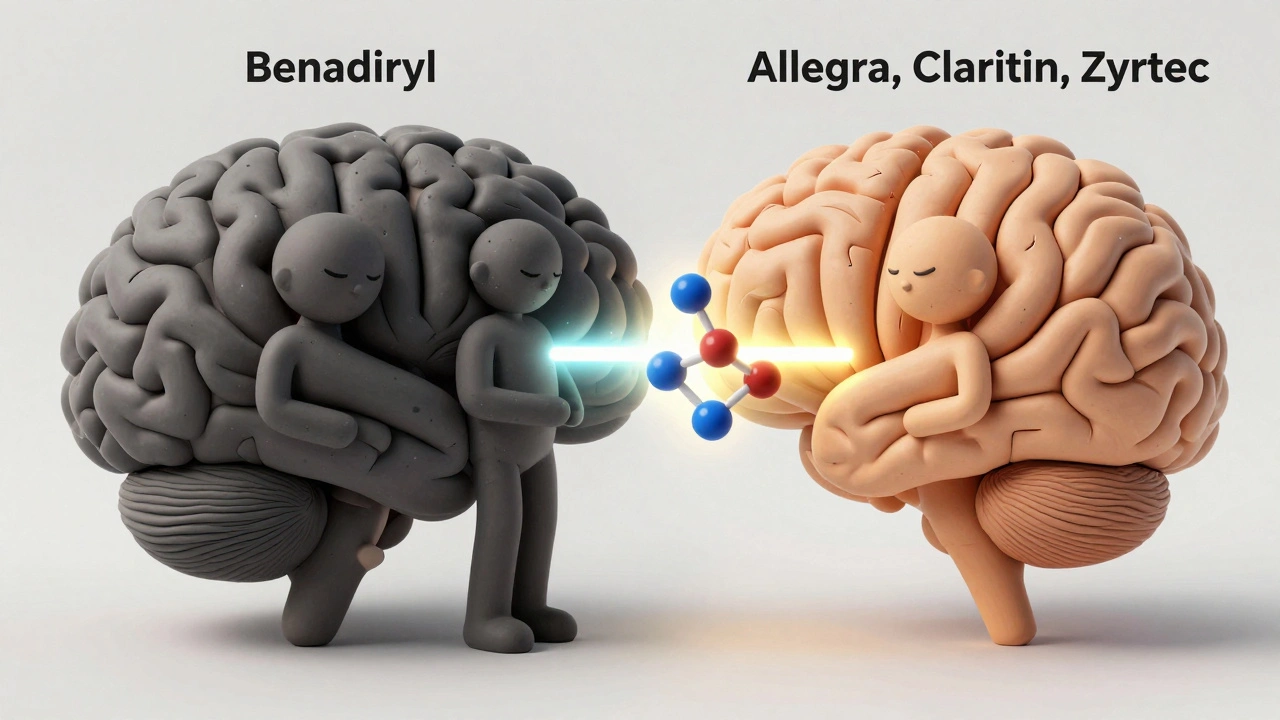
First-generation antihistamines - like diphenhydramine (Benadryl), chlorpheniramine (Chlor-Trimeton), and doxylamine (Unisom) - are designed to cross the blood-brain barrier. That’s why they work so well for sleep. But it’s also why they make you drowsy, foggy, and slow. A 2018 study found about half of users feel noticeably sleepy. Worse, their impairment is similar to having a blood alcohol level of 0.10% - legally drunk in most places.
These aren’t useless. If you need fast relief for a sudden rash or hives, diphenhydramine kicks in within 15 to 30 minutes. And if you’re using it at night for sleep, it’s fine. But if you’re driving, working, or caring for kids, skip these. The risks outweigh the benefits for daily use.
Second- and third-generation antihistamines - like cetirizine (Zyrtec), loratadine (Claritin), and fexofenadine (Allegra) - were made to avoid the brain. They’re less oily, so they don’t slip through the blood-brain barrier easily. That means minimal drowsiness, longer-lasting relief, and once-daily dosing. These are the ones doctors recommend as first-line treatment for allergies.
Which Non-Sedating Antihistamine Is Best for You?
Not all non-sedating options are equal. Here’s how the top three stack up:
| Medication | Generic Name | Onset of Action | Drowsiness Risk | Special Notes |
|---|---|---|---|---|
| Allegra | fexofenadine | 1-2 hours | 6% | Lowest sedation risk. Safe for drivers, surgeons, truckers. Only one labeled for hives by FDA. |
| Zyrtec | cetirizine | ~1 hour | 14% | Strongest allergy relief for many, but causes drowsiness in 1 in 7 users. Avoid if you need alertness. |
| Claritin | loratadine | ~1 hour | 10% | Mild effect. Best for low-symptom users. Reliable, budget-friendly. |
| Xyzal | levocetirizine | ~1 hour | 11% | More potent than Claritin, less than Zyrtec. Not recommended for adults 65+ without doctor approval. |
Based on user reviews from Reddit and Amazon, Allegra is the go-to for people who can’t afford to feel tired. One user wrote: “I take double doses during peak pollen season and still feel 100% alert.” Zyrtec gets high marks for effectiveness but comes with a warning: “Works great - until 3 p.m., then I’m useless.”
Claritin is the most popular overall, thanks to its balance of affordability, reliability, and low side effects. It’s the safest bet if you’re just starting out.

When to Start Taking Them
Don’t wait until your nose is running to reach for your antihistamine. Allergies build up over time. The histamine receptors in your nose and eyes get overwhelmed gradually. If you take the medicine before exposure, you prevent the reaction from starting.
Experts at the Mayo Clinic recommend starting second-generation antihistamines 1 to 2 weeks before pollen season begins. That means if you know spring pollen hits hard in your area, begin in late February or early March. Same goes for ragweed in fall. Prevention beats reaction every time.
What You Should Avoid
There are a few common mistakes people make with OTC antihistamines.
- Don’t mix with alcohol. Even non-sedating antihistamines can make you more impaired when combined with even one drink.
- Avoid grapefruit juice with fexofenadine (Allegra). It can increase blood levels by up to 37%, raising the chance of side effects.
- Don’t give first-generation antihistamines to kids under 6. The American Academy of Pediatrics warns they can cause seizures, rapid heart rate, or even death in young children.
- Don’t take more than the label says. More isn’t better. Higher doses don’t improve allergy relief - they just increase side effects.
Also, if you’re over 65, talk to your doctor before using Xyzal or even Zyrtec. Older adults are more sensitive to drowsiness and have a higher risk of falls or confusion.
Long-Term Use: Safe or Not?
Many people take antihistamines daily for months - or years. Is that okay?
Yes, for second- and third-generation options. There’s no evidence they damage organs or cause addiction. Post-marketing surveillance through 2023 shows no new safety concerns. The American College of Allergy, Asthma, and Immunology confirms they’re safe for long-term use in most people.
But there’s one caveat: a 2022 study in JAMA Internal Medicine looked at older adults (over 75) who took first-generation antihistamines daily for years. They found a small link to increased dementia risk. That risk didn’t show up with non-sedating types. So if you’re older and still using Benadryl nightly, it’s time to switch.
What If Nothing Works?
About 30% of people need to try two or three different antihistamines before finding the right one. Your body reacts differently to each compound. What works for your friend might not work for you.
Start with Claritin. If it doesn’t help after 3-5 days, switch to Allegra. If you still need more, try Zyrtec - but accept that drowsiness might come with it. Keep a simple log: what you took, when, and how you felt. That helps you - and your doctor - figure out patterns.
If you’ve tried all three and still struggle, it might not be allergies. Sinus infections, nasal polyps, or even hormonal changes can mimic allergy symptoms. See an allergist if you’re not improving after 4-6 weeks of consistent use.
What’s New in 2025?
The antihistamine field is evolving. In April 2023, the FDA approved a new version of Allegra-D with extended-release decongestant - giving 12 hours of nasal relief alongside 24-hour allergy control. That’s useful if you’re dealing with congestion on top of sneezing.
Sanofi is also preparing to launch a nasal spray version of rupatadine in 2024. It targets local inflammation in the nose, which could mean faster relief without swallowing a pill.
Overall, the trend is clear: non-sedating options are winning. The U.S. allergy medication market is worth over $3 billion, and 78% of that comes from second- and third-generation antihistamines. People are choosing alertness over drowsiness - and the science backs them up.
Final Tips for Safe OTC Use
- Always read the label. Dosing varies by age and product form (liquid, tablet, dissolvable).
- Check for other ingredients. Many OTC allergy meds combine antihistamines with decongestants or pain relievers. Don’t double-dose.
- Store them out of reach of kids. Even non-sedating types can be dangerous in overdose.
- Use apps like the AAAAI’s Allergy Relief Finder to compare options based on your symptoms and lifestyle.
- When in doubt, call the ACAAI helpline: 1-800-842-7777. They answer thousands of questions every year.
Antihistamines aren’t magic - but they’re one of the most effective, safe, and simple tools we have for managing allergies. Choose wisely, start early, and don’t settle for drowsiness. You deserve to feel better - without being knocked out.
Can I take antihistamines every day?
Yes, second- and third-generation antihistamines like Claritin, Zyrtec, and Allegra are safe for daily use. They’re designed for long-term allergy management. First-generation options like Benadryl are not recommended for daily use due to sedation and cognitive risks.
Is Allegra better than Zyrtec?
It depends on your priorities. Allegra (fexofenadine) has the lowest risk of drowsiness - only 6% of users report it. Zyrtec (cetirizine) is slightly more effective for severe symptoms but causes drowsiness in 14% of users. If you need to stay alert, choose Allegra. If you need stronger relief and don’t mind feeling a little sleepy, Zyrtec may work better.
Why does my antihistamine stop working after a few weeks?
It’s not that the medicine stopped working - it’s that your allergy exposure may have increased. Pollen counts rise, you’re exposed to new triggers, or your body’s sensitivity changes. Try switching to a different antihistamine. About 30% of people need to try two or three before finding the right match.
Can children take OTC antihistamines?
Second-generation antihistamines like Claritin and Zyrtec are approved for children as young as 2 years old, but only in child-appropriate doses. First-generation antihistamines like Benadryl are not recommended for children under 6 due to serious safety risks, including seizures and heart problems.
Do antihistamines cause weight gain?
Some people report weight gain while taking antihistamines, especially first-generation ones. This may be due to increased appetite or reduced activity from drowsiness. There’s no strong evidence that non-sedating antihistamines cause weight gain directly, but if you notice changes, talk to your doctor.
What’s the best time of day to take antihistamines?
For non-sedating types (Claritin, Allegra), take them in the morning - they last 24 hours. If you’re using a sedating antihistamine like Benadryl, take it at night. For seasonal allergies, start taking them 1-2 weeks before your allergy season begins, even if you feel fine.
If you’ve been struggling with allergies and feeling tired all the time, you’re not failing - you’re just using the wrong tool. The right antihistamine can give you back your energy, your focus, and your life. Start with Allegra or Claritin. Stick with it for a week. Track how you feel. You might be surprised how much better you can feel - without the crash.
Gareth Storer
December 4, 2025 AT 20:07So let me get this straight - we’re paying $3 billion a year so we can be *less* tired while our allergies rage? Brilliant. Next they’ll sell us caffeine-infused nasal sprays. At least Benadryl gives you an excuse to nap. Now I’m just guilty for not being productive enough while sneezing.
George Graham
December 5, 2025 AT 16:58I’ve been on Claritin for years and it’s been a game-changer. Used to take Zyrtec until I realized I was falling asleep at my desk by 2 p.m. - not great when you’re a teacher. Switched to Claritin and now I’m actually present during parent meetings. Small wins, right?
John Filby
December 5, 2025 AT 17:52Allegra for the win 🙌 I work in ER and can’t afford to zone out. Tried Zyrtec once - felt like I’d been punched in the brain. Allegra? Zero drowsiness, even on high pollen days. Also, no grapefruit juice. Learned that the hard way 😅
Elizabeth Crutchfield
December 7, 2025 AT 03:16i swear zyrtec makes me so tired i forget why i walked into the kitchen… like literally stand there staring at the fridge like a confused potato 🥔
Ben Choy
December 8, 2025 AT 09:58Just started taking Allegra before pollen season and I’m already feeling like a new person. No more 3 p.m. crashes. Also, I’m telling everyone I know - if you’re still on Benadryl daily, please, for the love of all that’s holy, switch. Your brain will thank you.
Scott van Haastrecht
December 10, 2025 AT 01:12This article is a joke. You’re telling people to avoid Benadryl like it’s poison? It’s been around for 70 years and works faster than any of these fancy new pills. People who can’t handle a little drowsiness shouldn’t be driving anyway. The real problem? Lazy, entitled consumers who want magic pills without consequences. Wake up.
Bill Wolfe
December 10, 2025 AT 01:50Let’s be honest - if you’re relying on OTC antihistamines at all, you’ve already lost the war against modern allergens. The real solution is environmental control: HEPA filters, nasal irrigation, avoiding synthetic fabrics, and reducing VOC exposure. These pills are just temporary bandages on a systemic failure of urban design and industrial agriculture. Also, fexofenadine’s bioavailability is suboptimal without fasting - did the article mention that? No. Because it’s written for the masses who think ‘once-daily’ means ‘magic.’
Ollie Newland
December 10, 2025 AT 08:07For anyone still confused: the H1 receptor affinity profile of cetirizine vs. fexofenadine explains the differential CNS penetration. Fexofenadine’s pKa and logP values keep it out of the BBB - hence the low sedation. Zyrtec’s higher affinity for peripheral H1 receptors makes it more potent but also more likely to cross in susceptible individuals. TL;DR: Allegra = brain-safe, Zyrtec = brain-slow.
Rebecca Braatz
December 10, 2025 AT 09:05If you’re reading this and feeling overwhelmed - you’re not alone. Start small. Pick one non-sedating option. Give it a week. Track your energy. You don’t need to be perfect, just consistent. And if you’re still struggling? Find an allergist. You deserve to breathe easy - no shame in that.
Jordan Wall
December 10, 2025 AT 11:07Allegra? Pfft. You know what’s *actually* effective? Prescription nasal corticosteroids. OTC antihistamines are just placebo for people who don’t want to see a doctor. Also, ‘non-sedating’ is a marketing lie - try taking them with caffeine and see how long your ‘alertness’ lasts. 🤡
Yasmine Hajar
December 12, 2025 AT 04:13My 8-year-old takes Zyrtec daily and it’s been life-changing. No more missed school, no more itchy nights. I get it - some people freak out about kids on meds. But if it helps them thrive? That’s not overmedicating. That’s parenting. And yes, we started it two weeks before spring. Proactive > reactive.
val kendra
December 12, 2025 AT 20:22Been on Claritin for 5 years. Zero drowsiness. Zero regrets. Just don’t take it with grapefruit juice. And if you’re over 65? Talk to your doc. Don’t assume it’s fine just because it’s OTC.
Isabelle Bujold
December 14, 2025 AT 03:32I used to take Benadryl every night because I thought it was the only thing that worked. Then I read the JAMA study linking it to dementia risk in older adults. I switched to Allegra and my memory improved within weeks. I didn’t realize how foggy I’d been. If you’re over 60 and still using first-gen antihistamines daily - please, for your future self, change now. It’s not just about sleep. It’s about staying sharp.